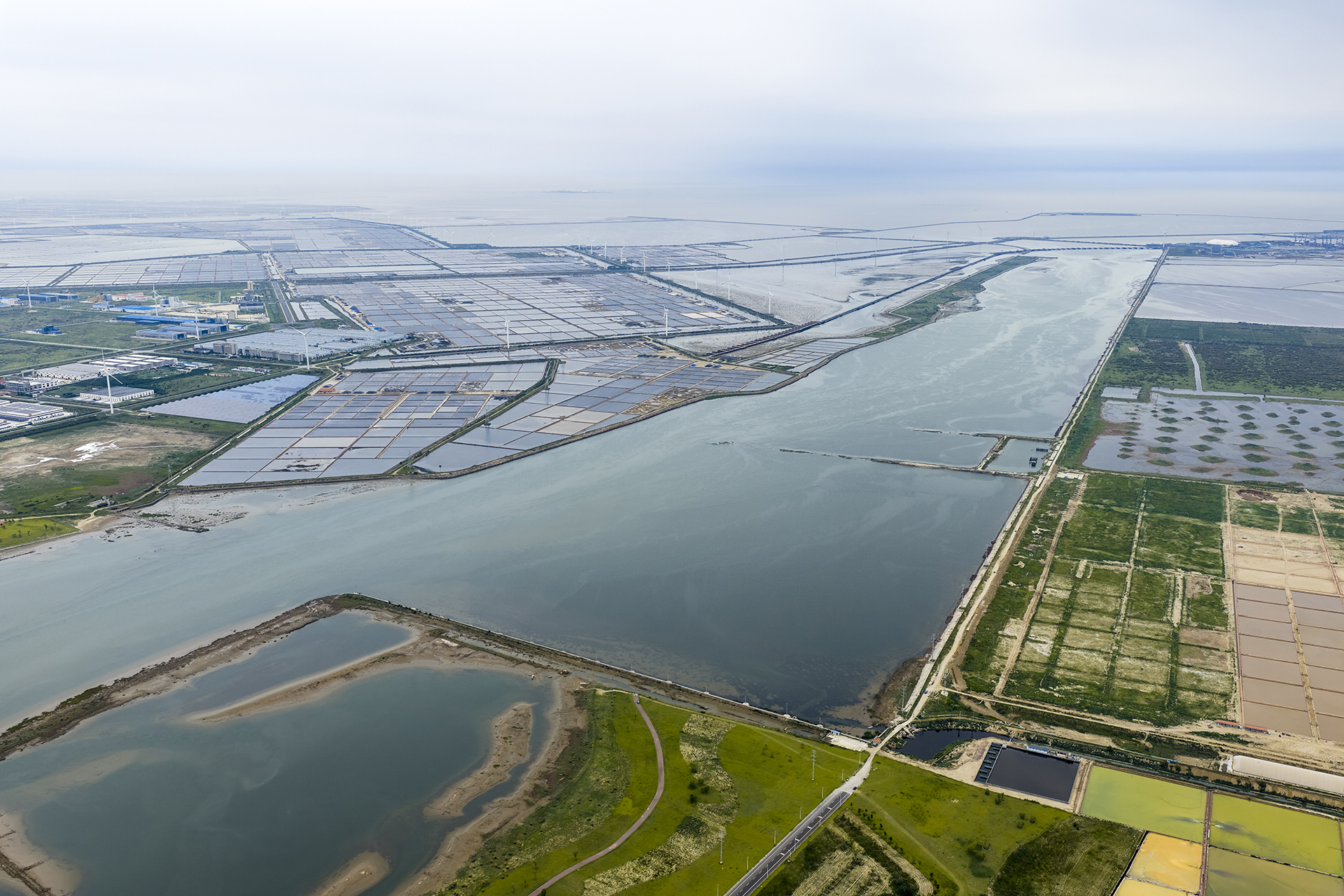
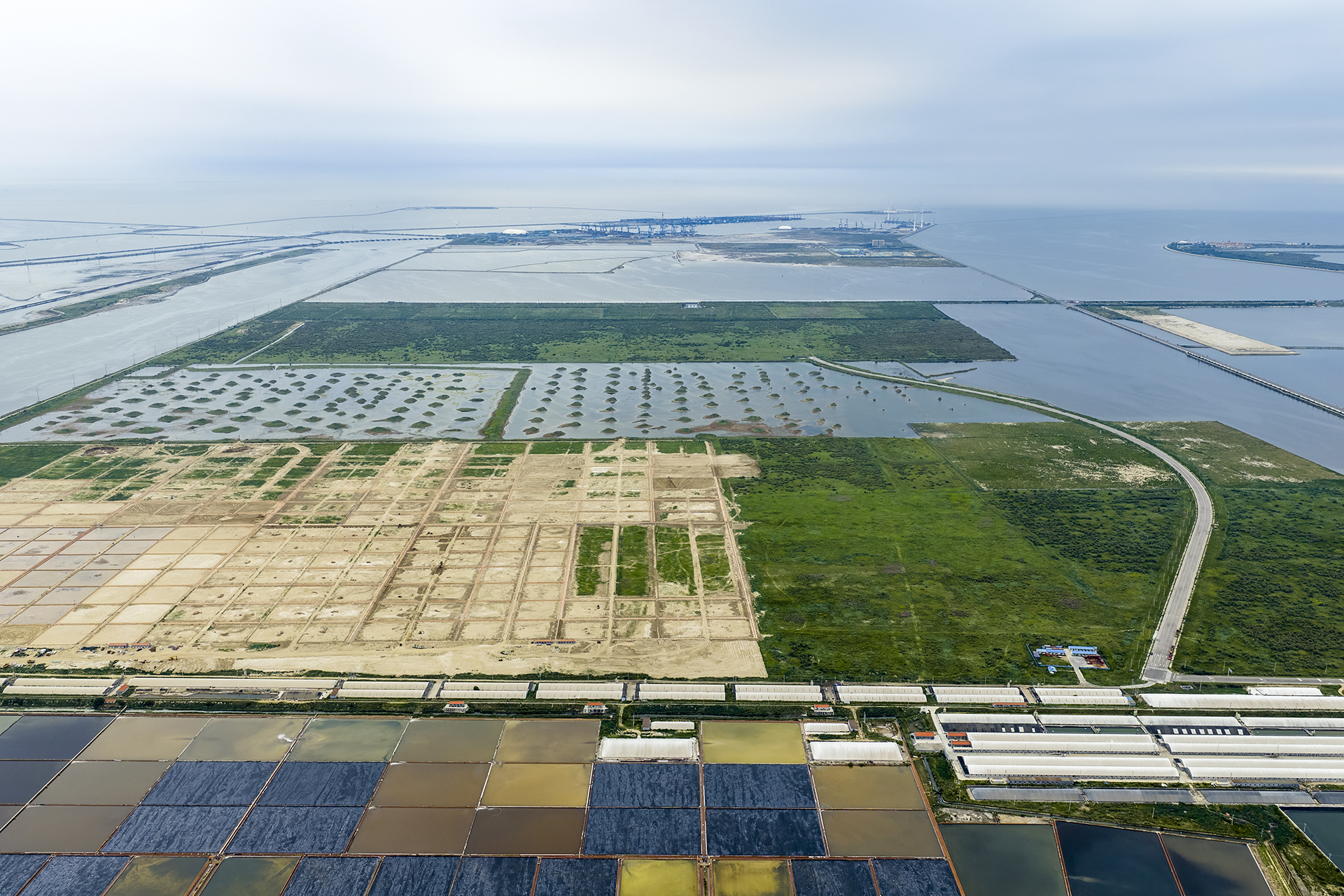
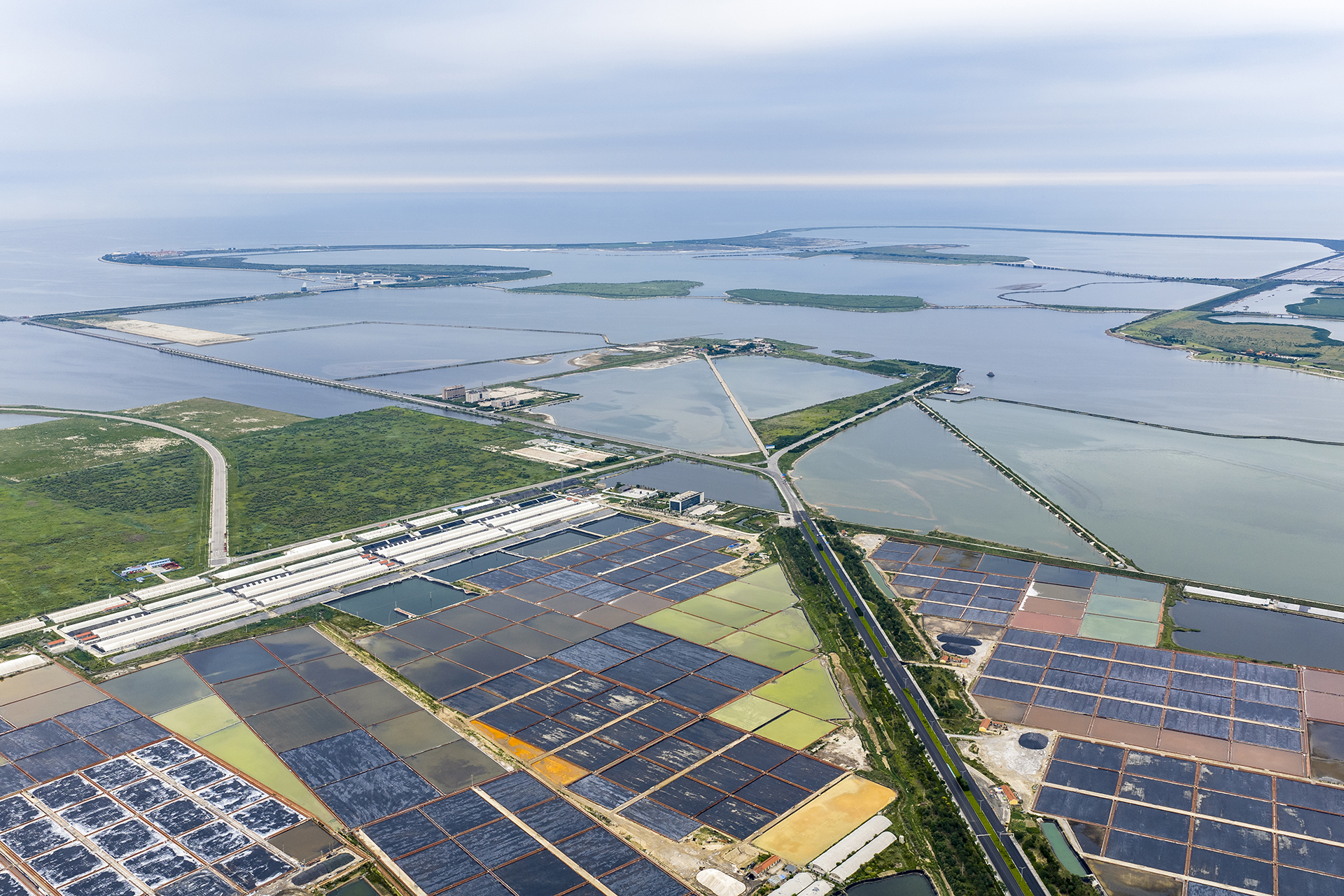
Laizhou Bay is located in the southern part of the Bohai Sea in China, at 37°25.6’ north latitude and 119°29.6’ east longitude. It starts from the Yellow River estuary in Shandong Province in the west and ends at the high corner of Qimu Island in Shandong Province in the east. It is one of the three major bays of the Bohai Sea and the largest bay in Shandong Province. Laizhou Bay has a coastline of approximately 320 kilometres and a sea area of approximately 6,060 square kilometres. After 1855, with the continued silting up of the Yellow River Delta, the original Bohai Bay was split into two parts, forming Laizhou Bay which became the youngest bay in China. It is shallow and silty. The abundant nutrients brought by the Yellow River have made it a major fishing ground in China, particularly renowned for its shrimp. Its coastal areas also have significant reserves of oil and brine.
From 1980 to 1983, the Shandong Salt Industry Science Research Institute conducted an investigation and experimental research on the underground brine resources along the coast of Laizhou Bay. The findings indicate that the six counties along the coast – Kenli, Guangrao, Shouguang, Hanting (formerly known as Weifang), Changyi and Laizhou – contain the province’s largest and most concentrated underground brine reserves. Within the 80-metre-deep soil layer, located along a flat coastal zone 120 kilometres long from east to west and 10-20 kilometres wide, covering an area of 1,500 square kilometres, the brine typically has a salinity of 9-16 degrees Baume (salinity of 100-176 grams per litre), with total reserves of approximately 7.4 billion cubic metres. The state has invested in the construction of two million-ton salt fields in Laizhou City and Hanting District, Weifang City.
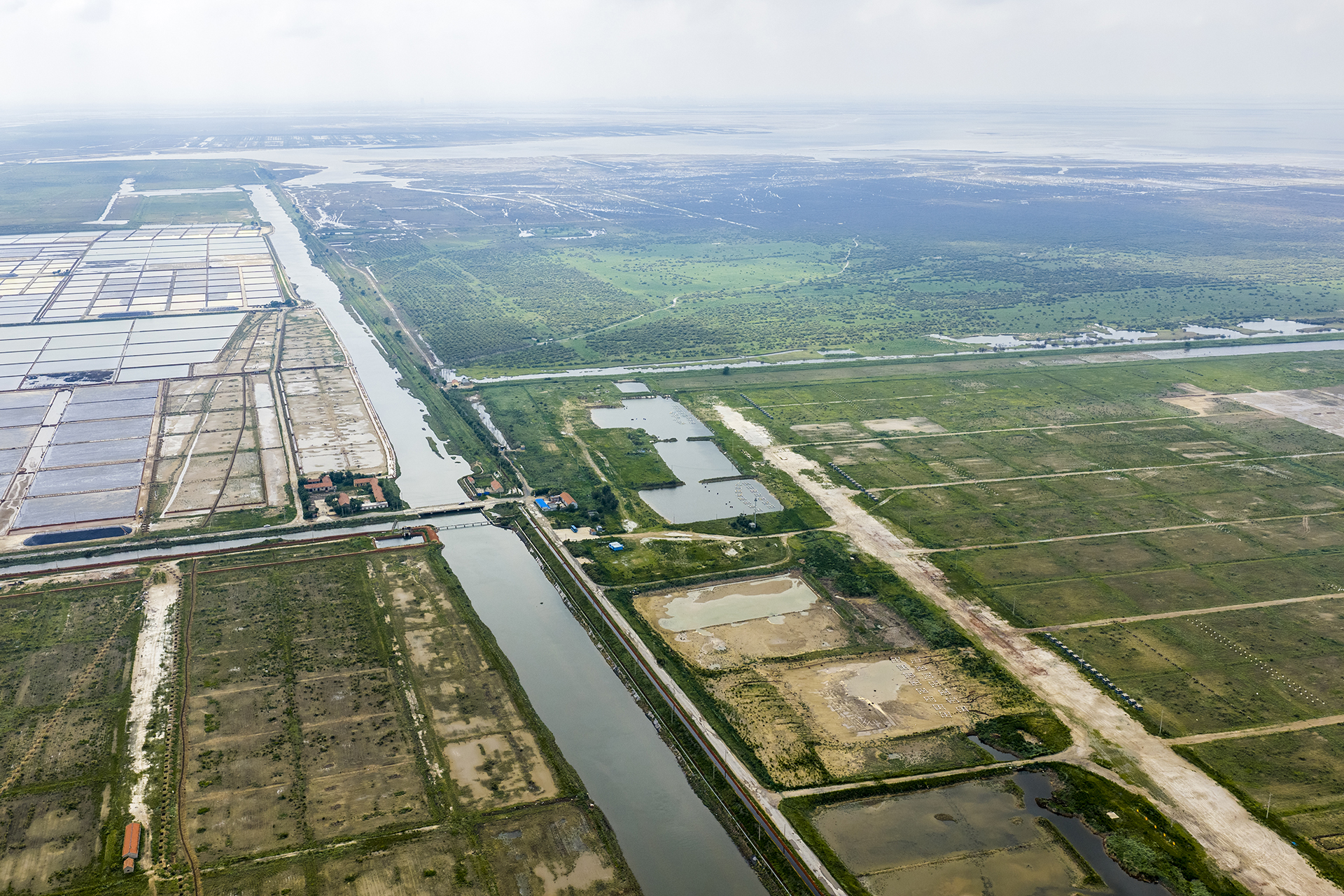
Salt production has been taking place in Laizhou Bay since as early as the Spring and Autumn Period (770-476 BC). To create stable evaporation and crystallisation ponds, the ancients began constructing dams and enclosing land on the mudflats. This can be considered the earliest, small-scale land reclamation. With China’s rapid economic development, the purposes for land reclamation have diversified. Salt fields are only one of the main drivers. Key driving forces include aquaculture, where the high economic returns of seafood like shrimp and shellfish lead to the reclamation of vast tidal flats into aquaculture ponds, a trend particularly prevalent in the 1980s and 1990s; agricultural land for the cultivation of salt-tolerant crops like cotton and wheat; and industrial and port development. From the 1970s to the end of the 2010s, the total area of land reclaimed along the coast of Laizhou Bay exceeds 2,000 square kilometres.
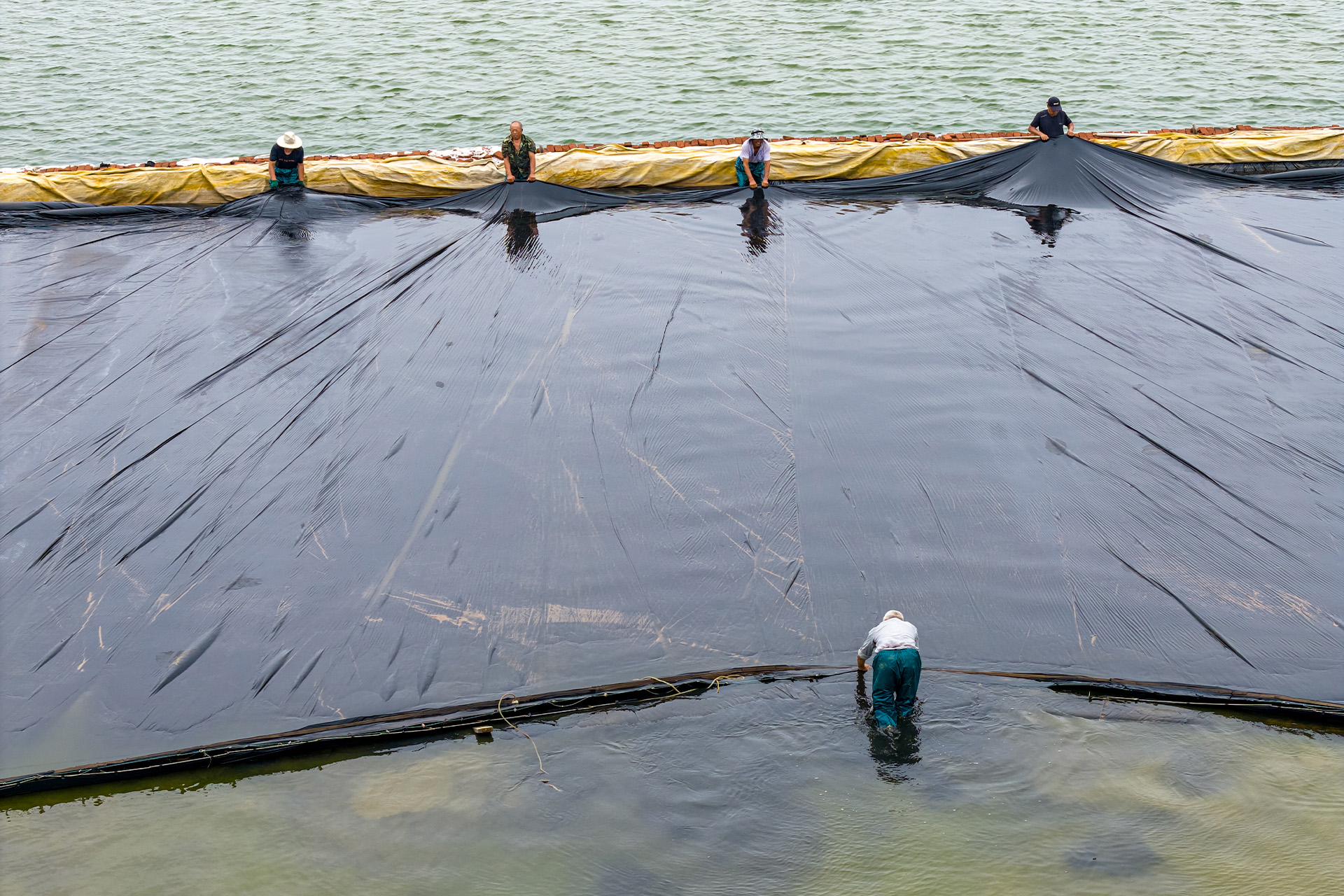
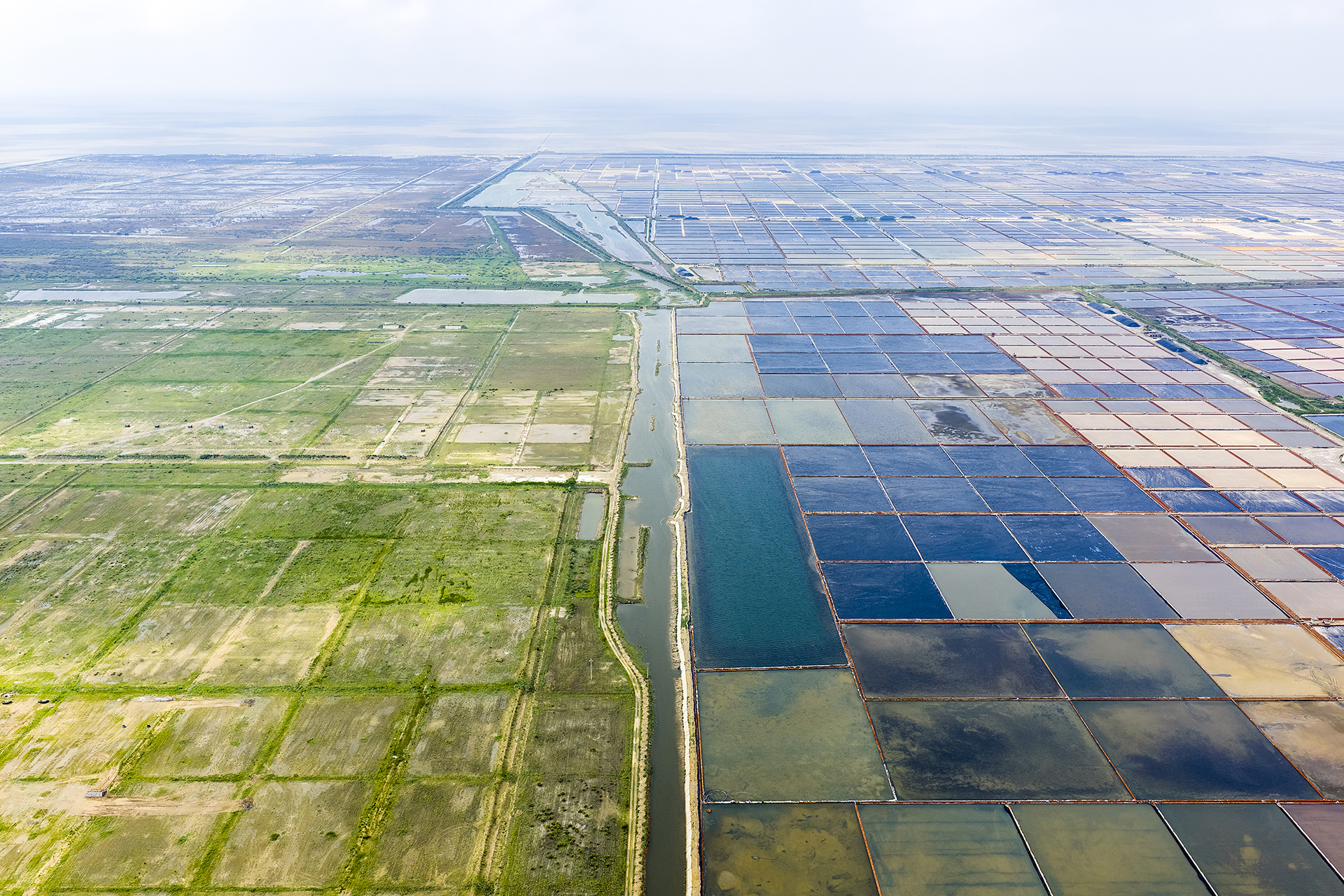
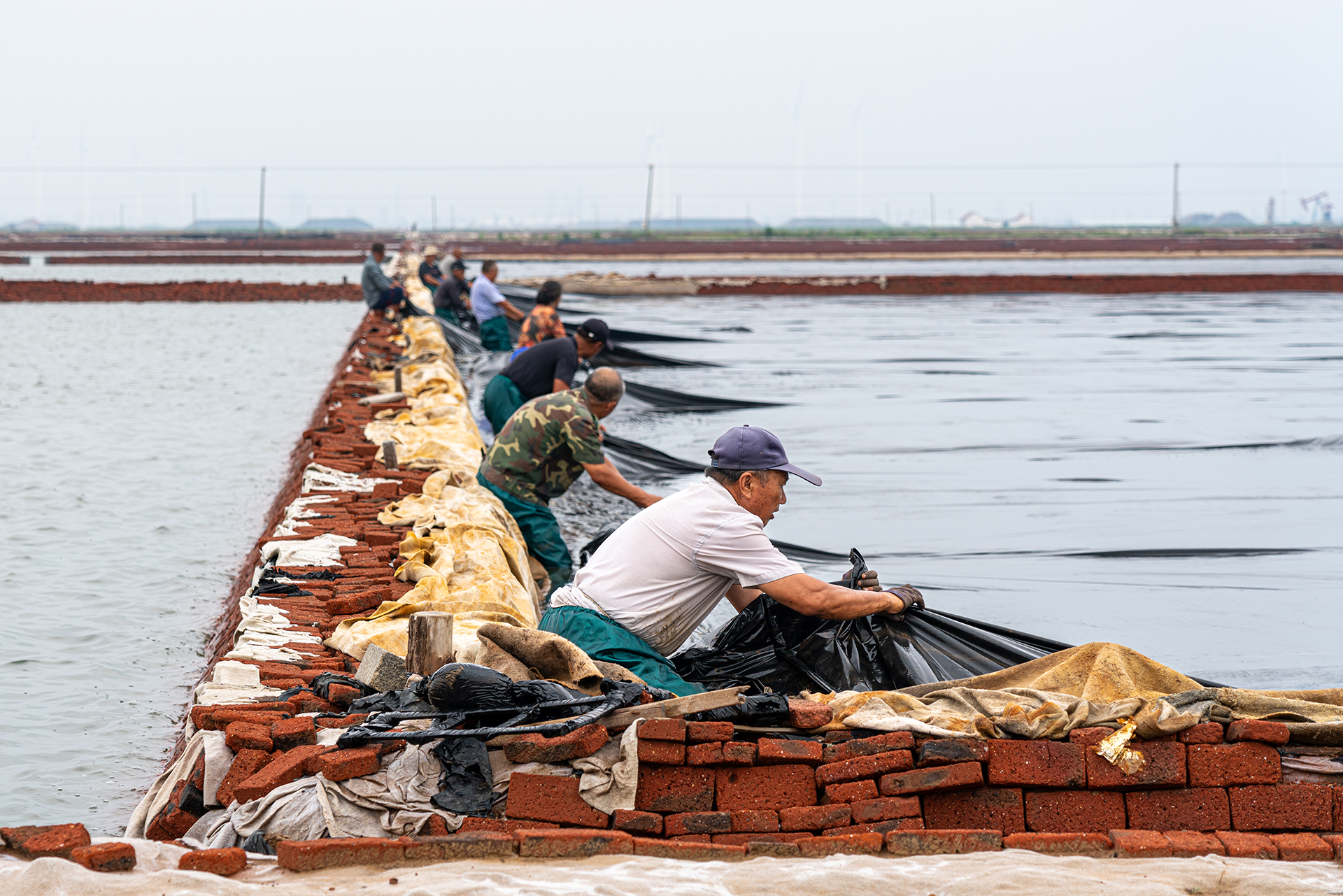
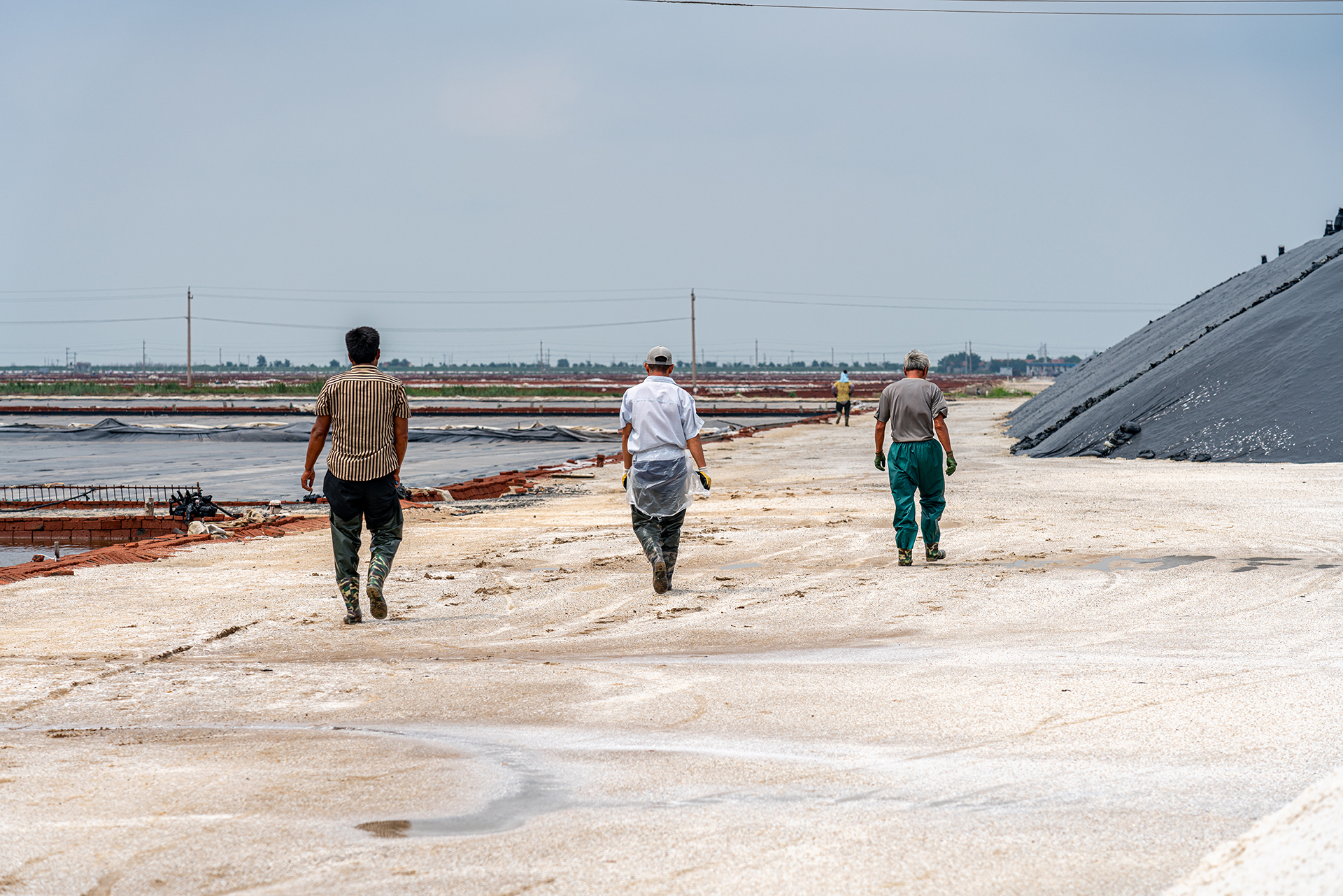
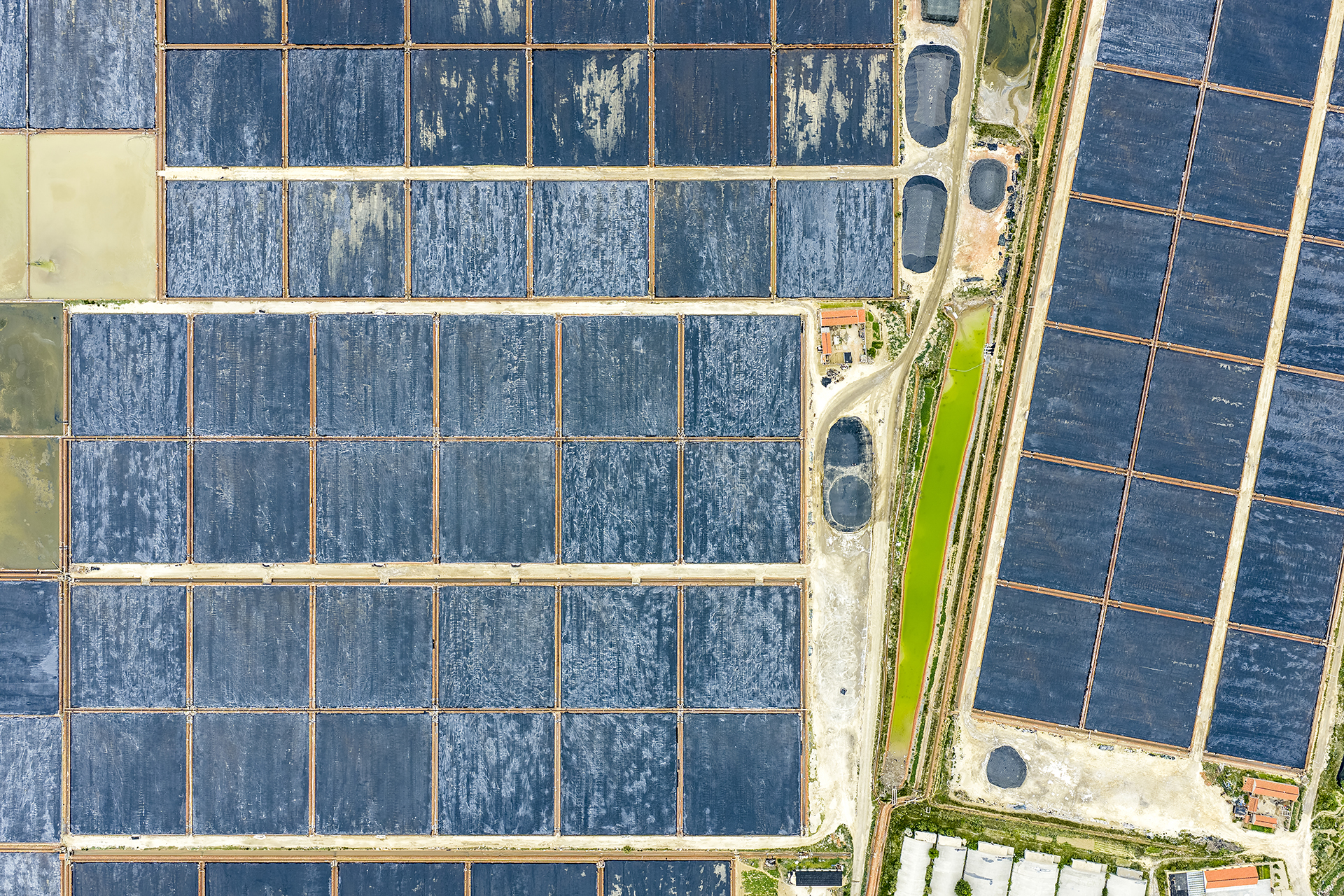
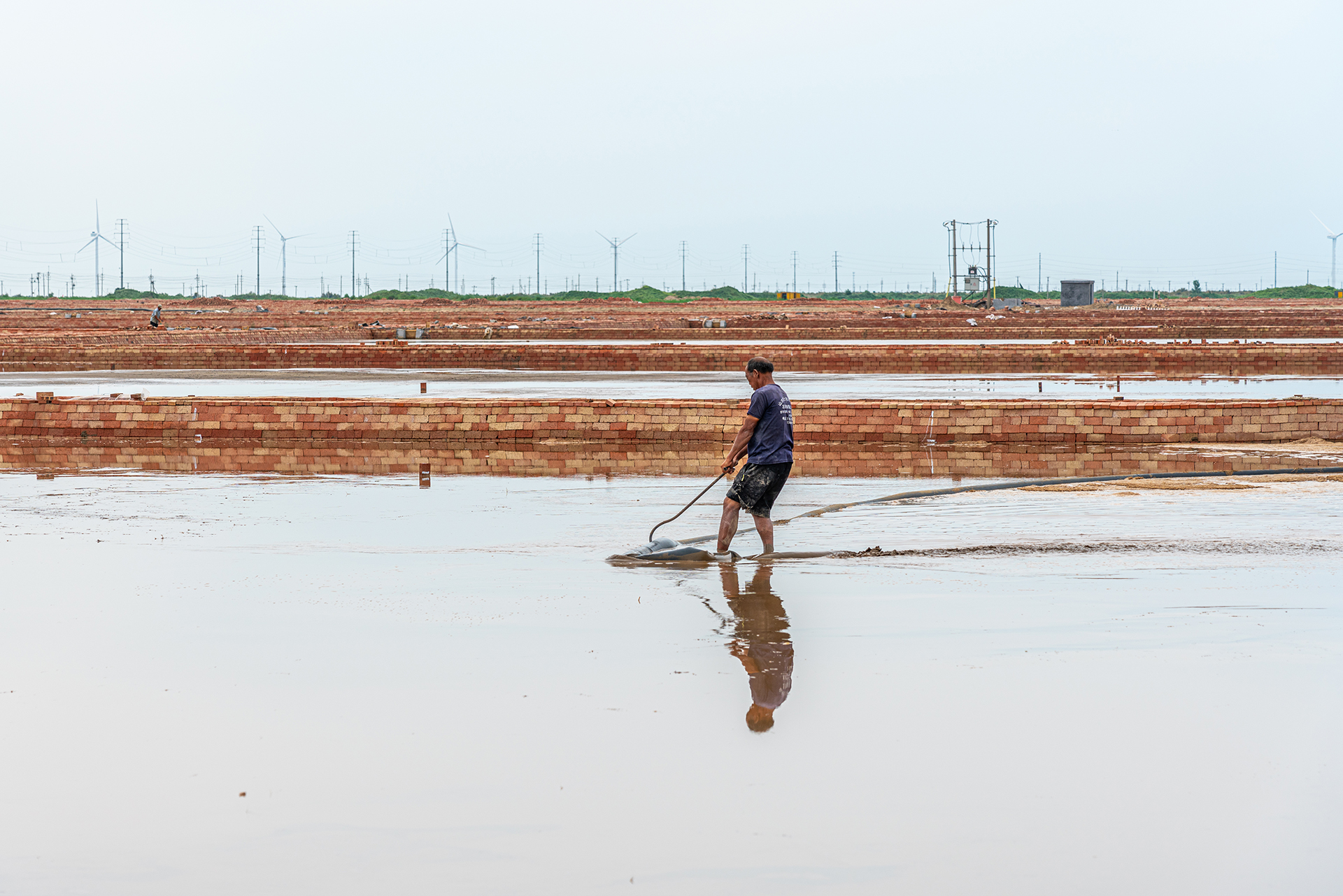
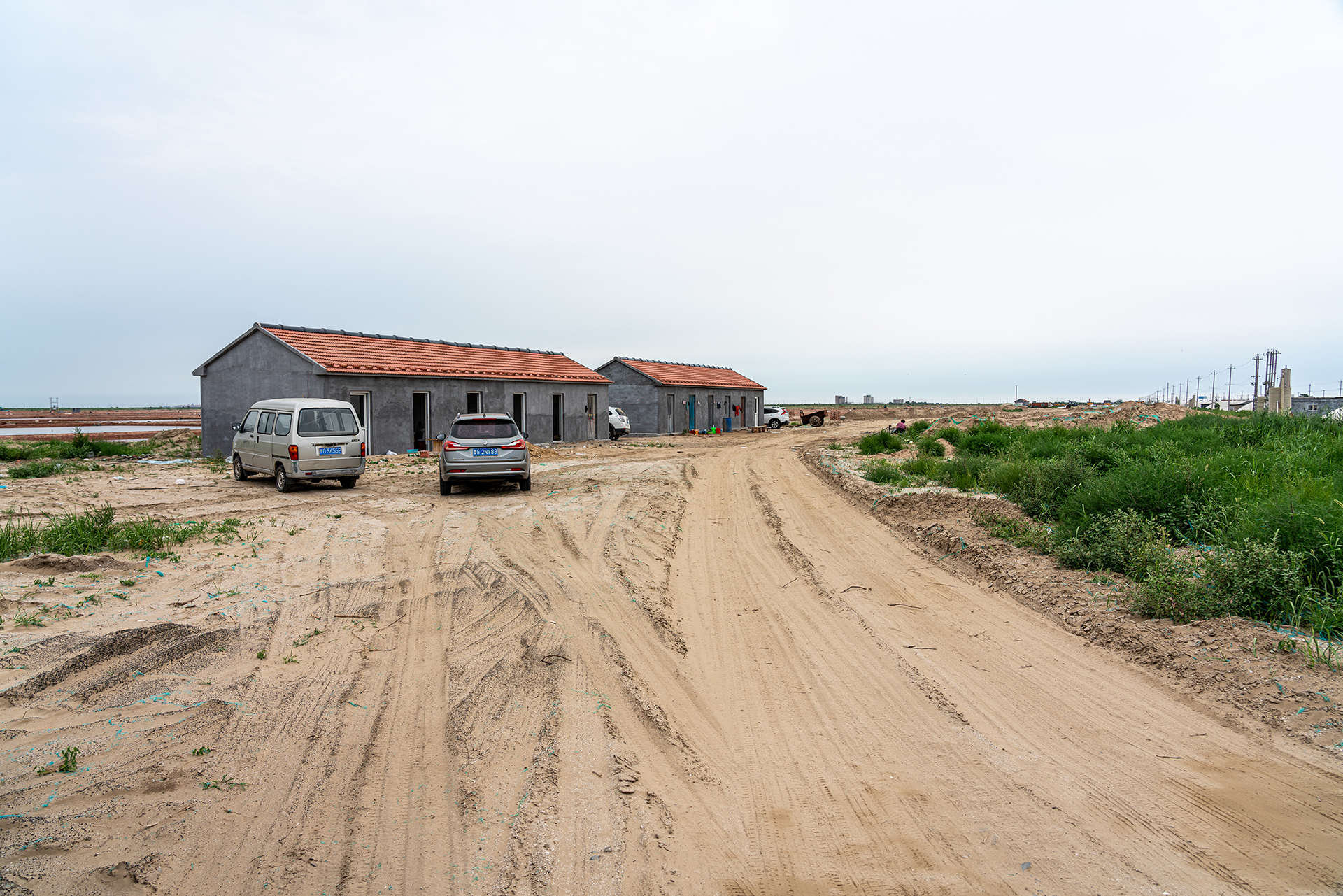
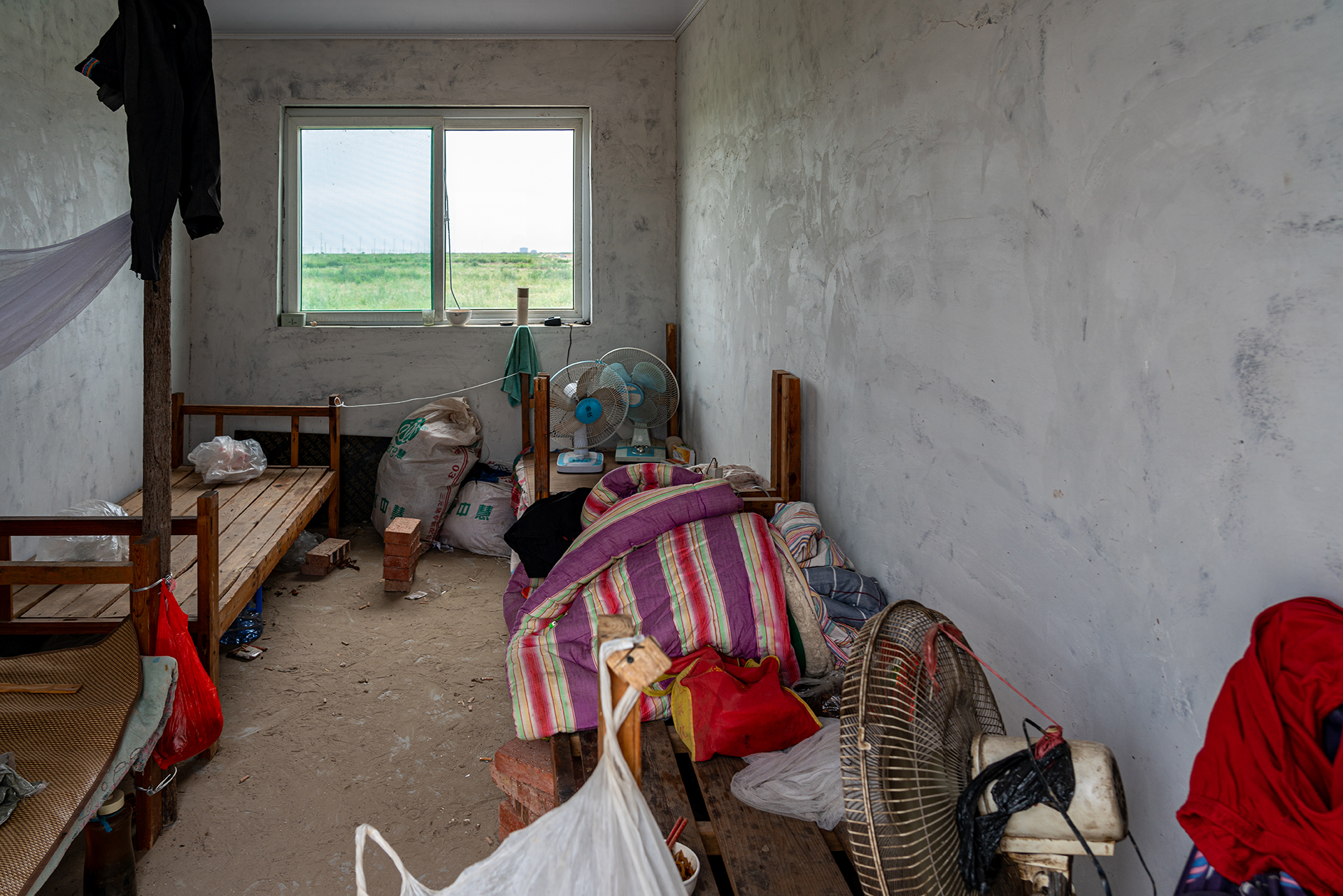
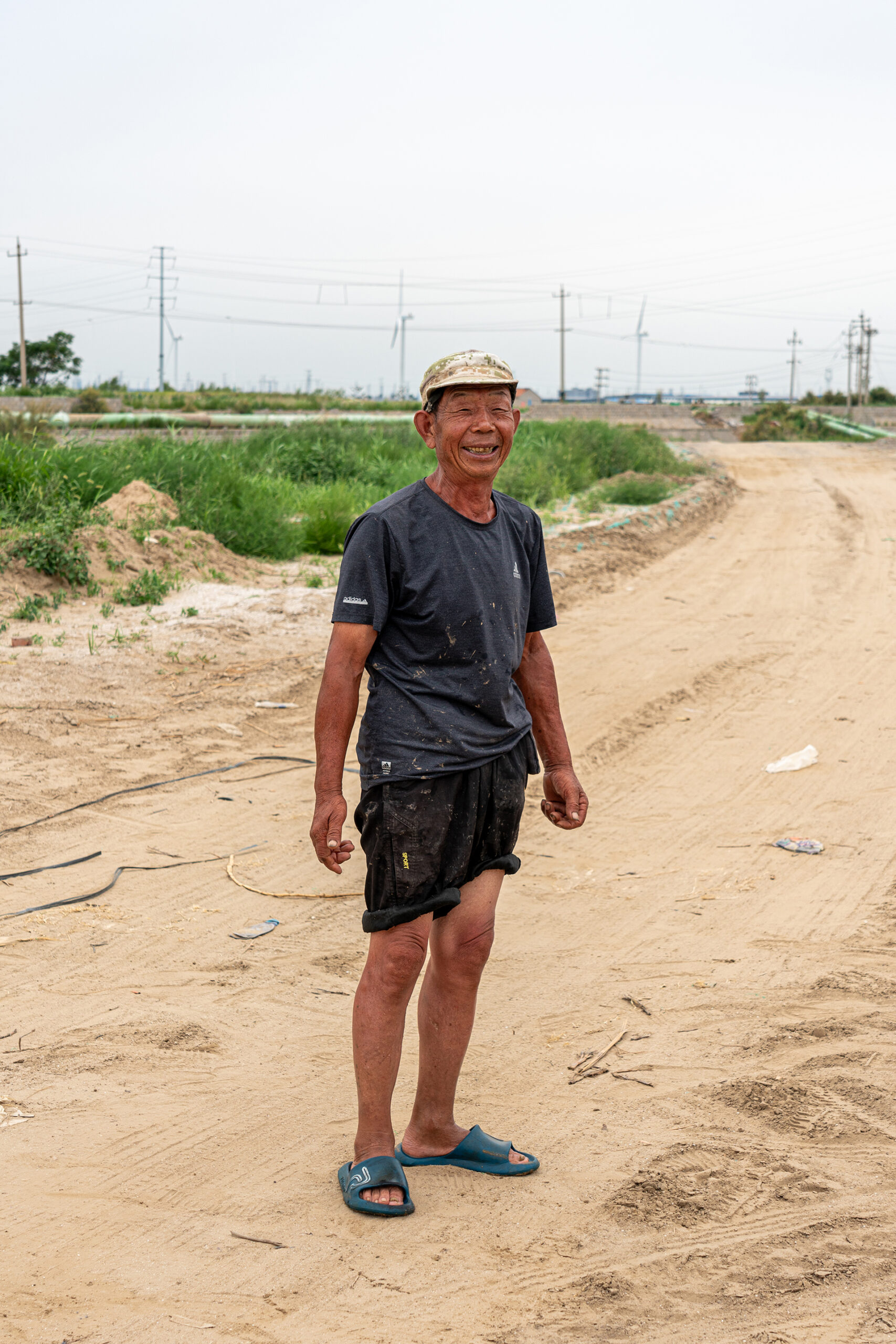
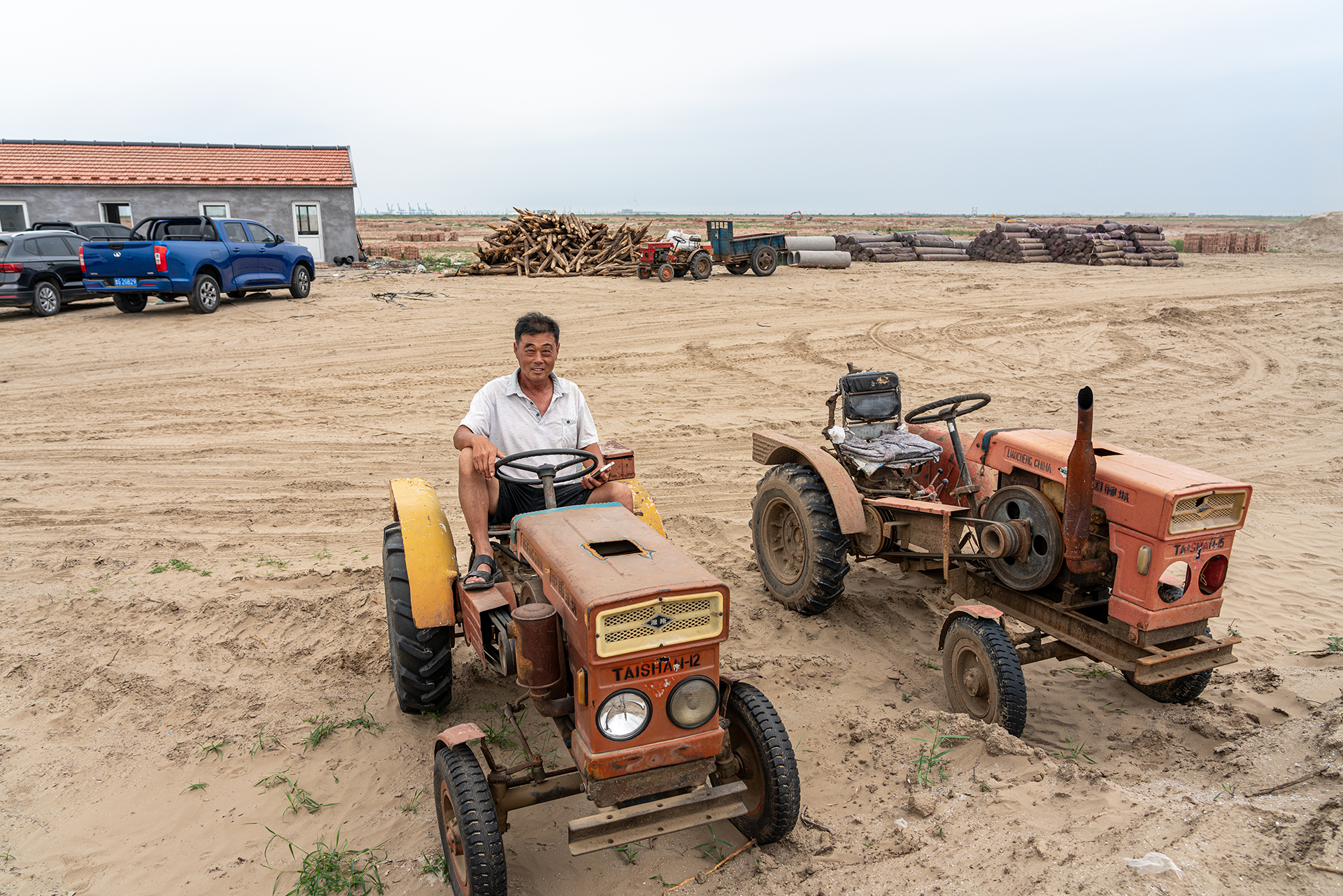
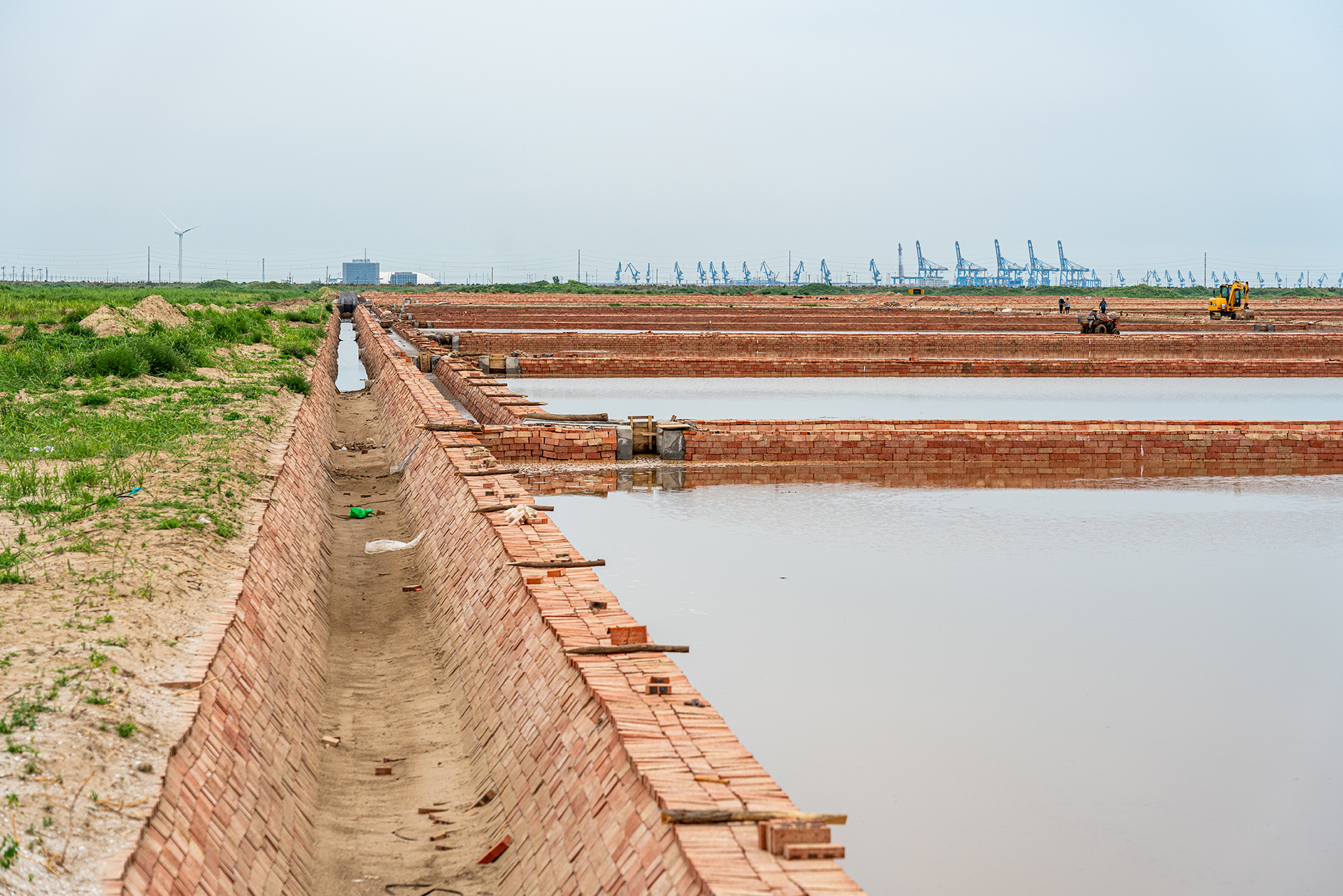
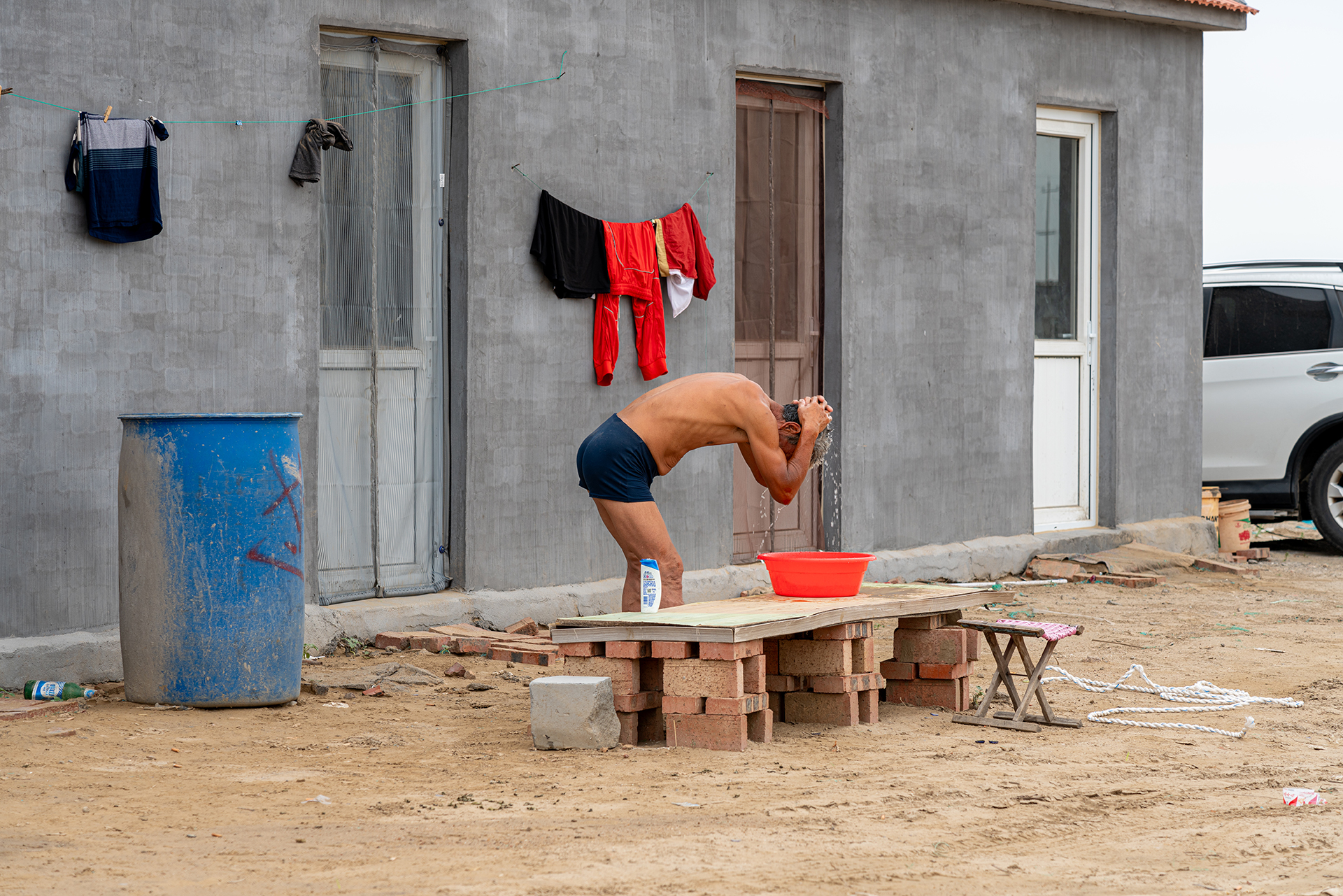
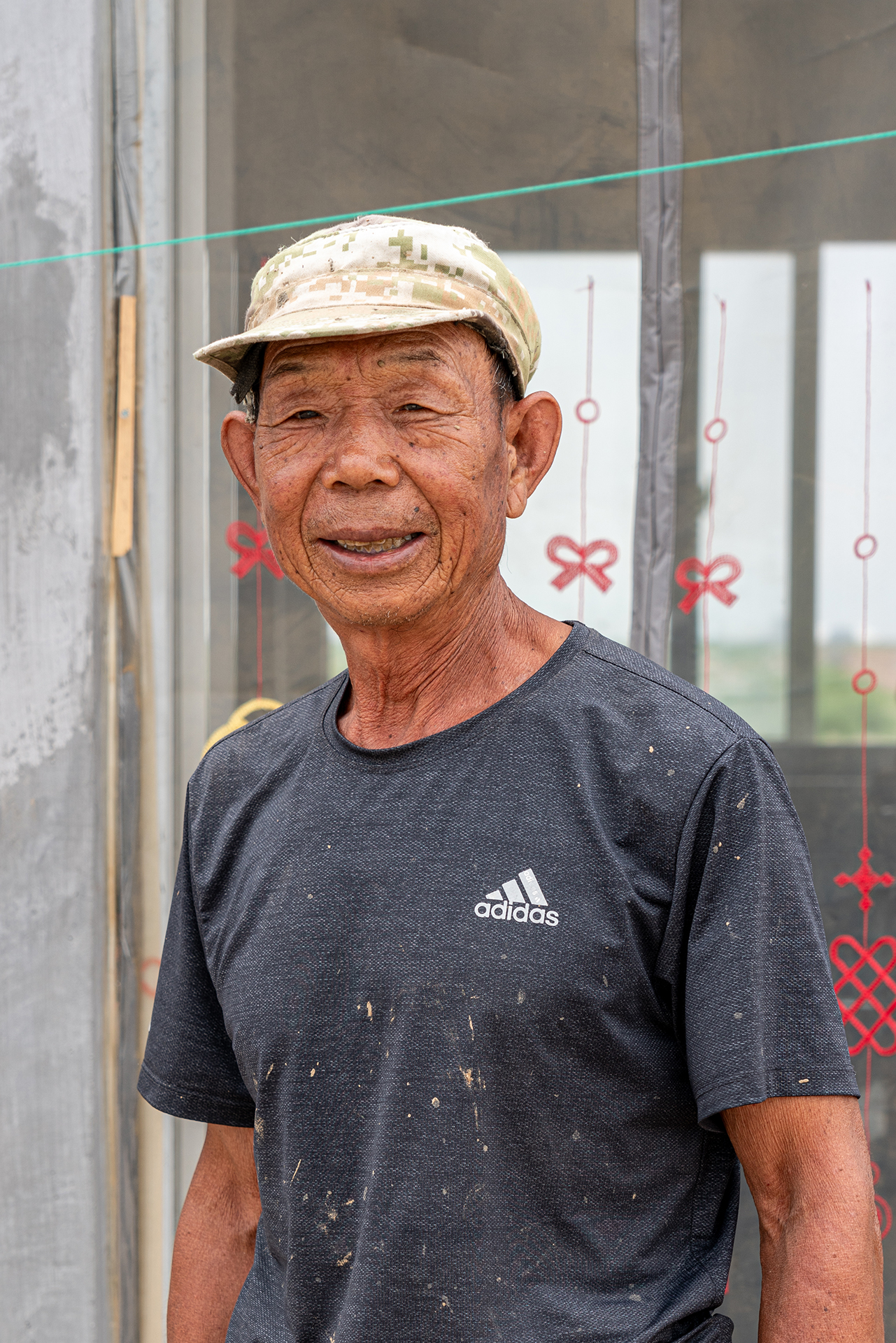
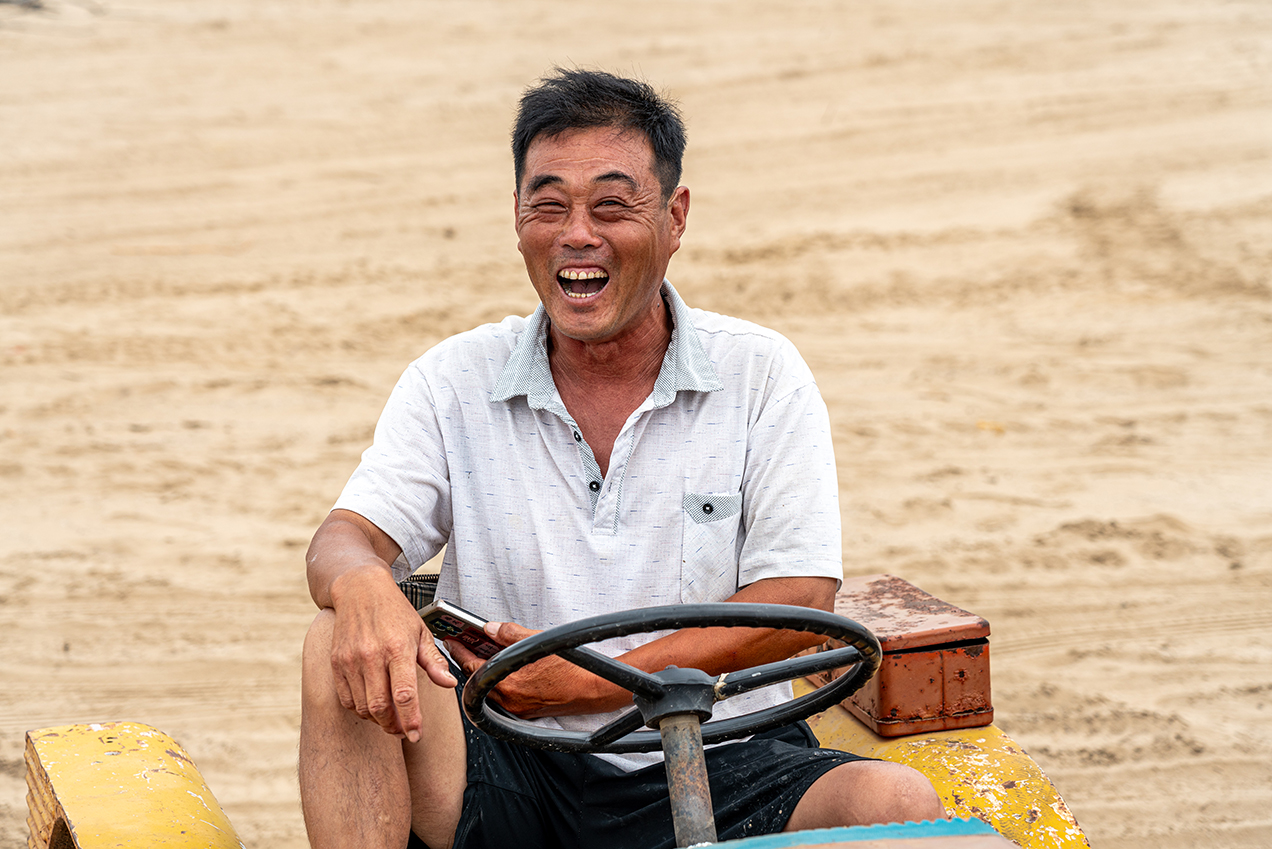
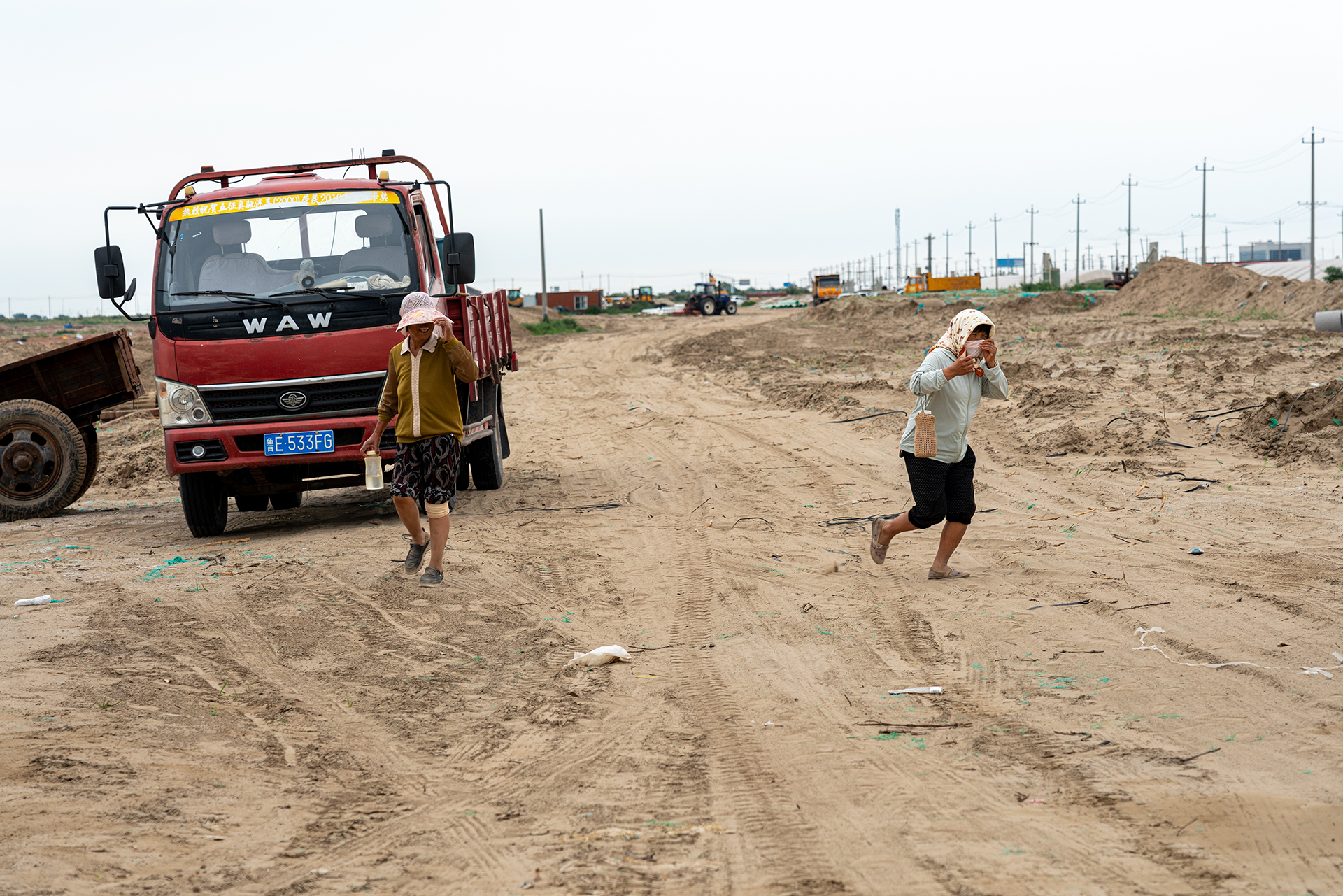
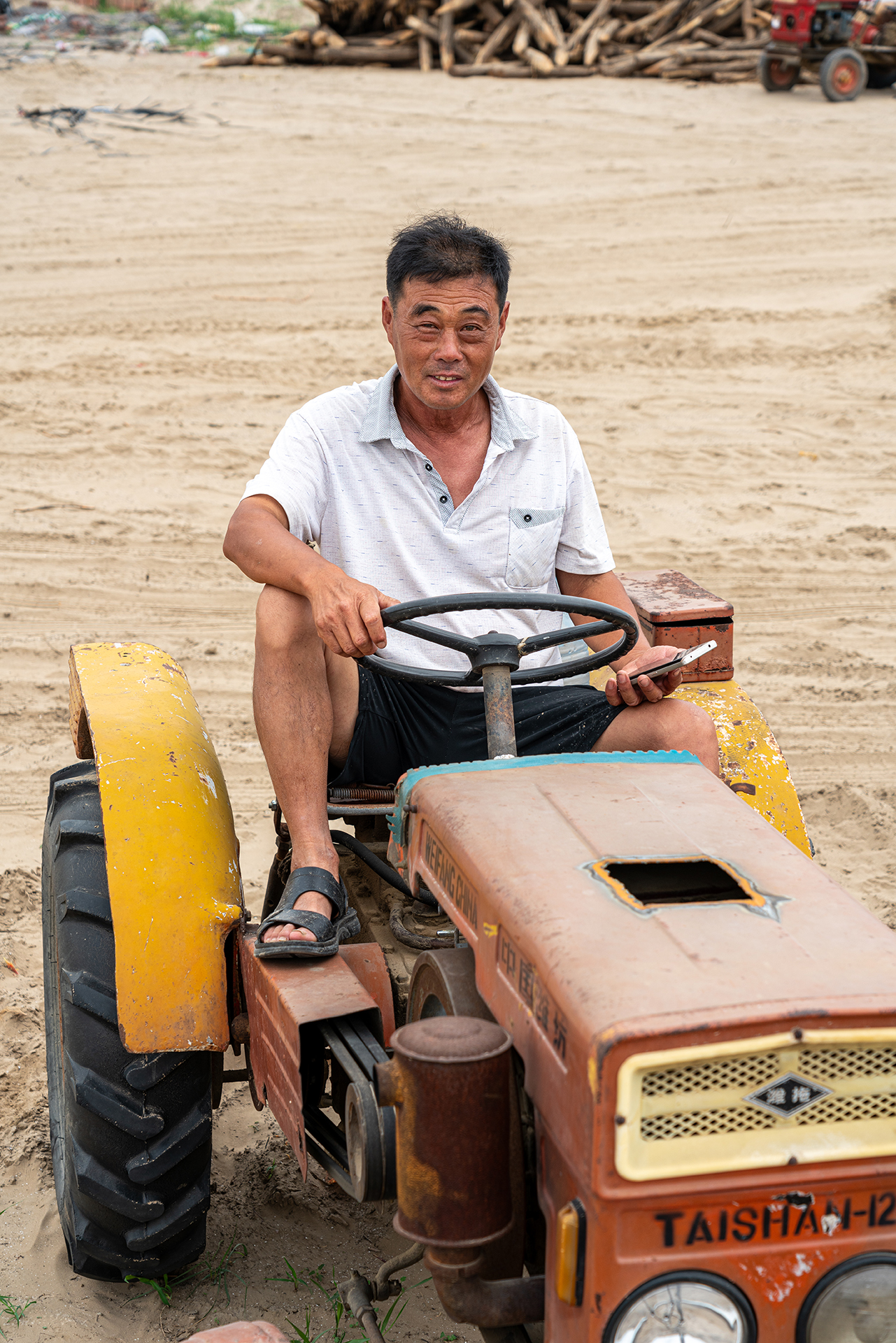
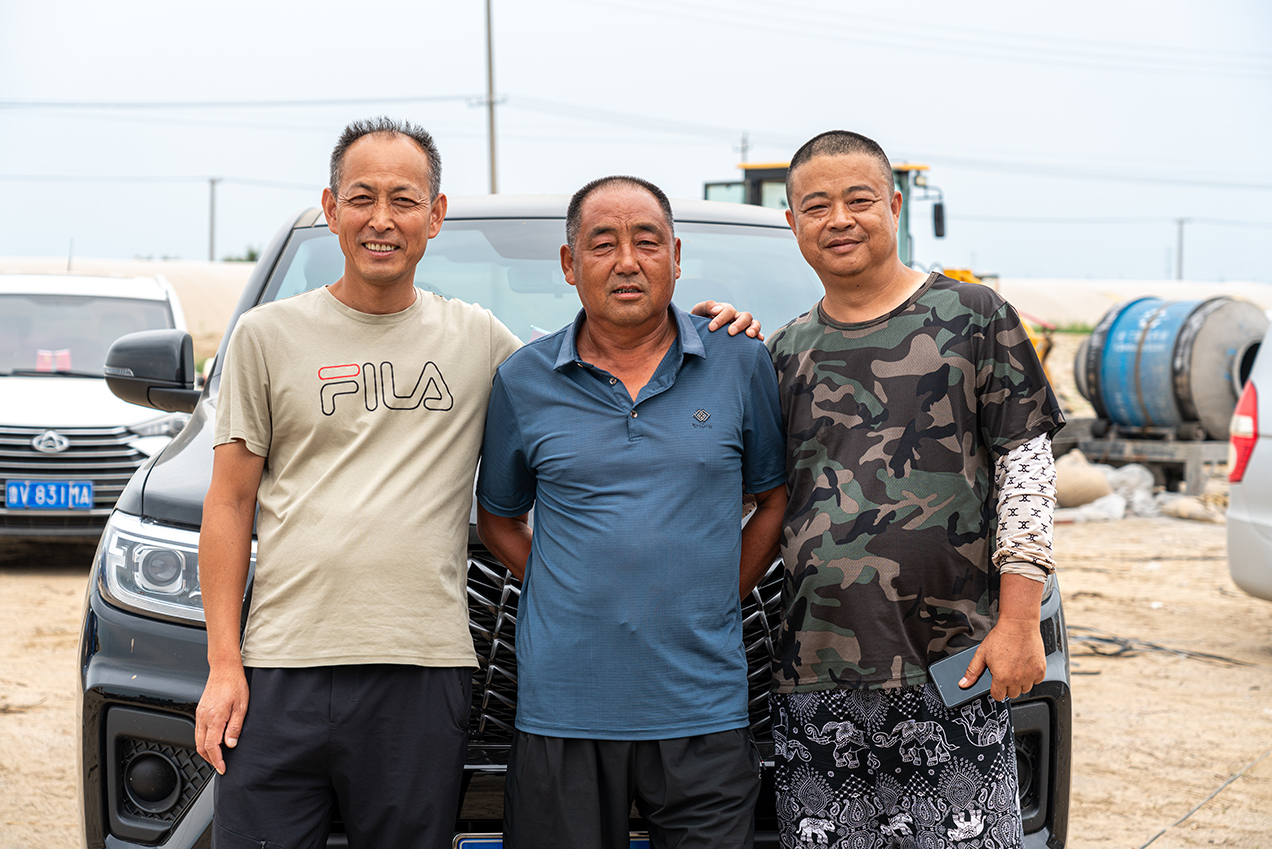
The photographic works of Laizhou Bay mainly focus on salt fields and the lives of their workers. As evident from the satellite images, there has been a significant shift of coastline towards the Bohai Sea. The reclaimed land are mainly used for building salt fields and aquaculture ponds, and is generally owned by large companies. These companies employ a large number of local and out-of-town workers and provide basic accommodation near the salt fields. Some companies provide housekeepers to cook and wash clothes for the workers, while others offer lunch and dinner delivery. The workers, both men and women, range in age from 20 to 60 years old. Some have two generations working in the same salt fields, while others have three brothers working in the same field. Their daily wage is 80 yuan (8.6 pounds), though sometimes wages are delayed. While they find the salt fields work hard and tiring, they cherish the job opportunities afforded by land reclamation.
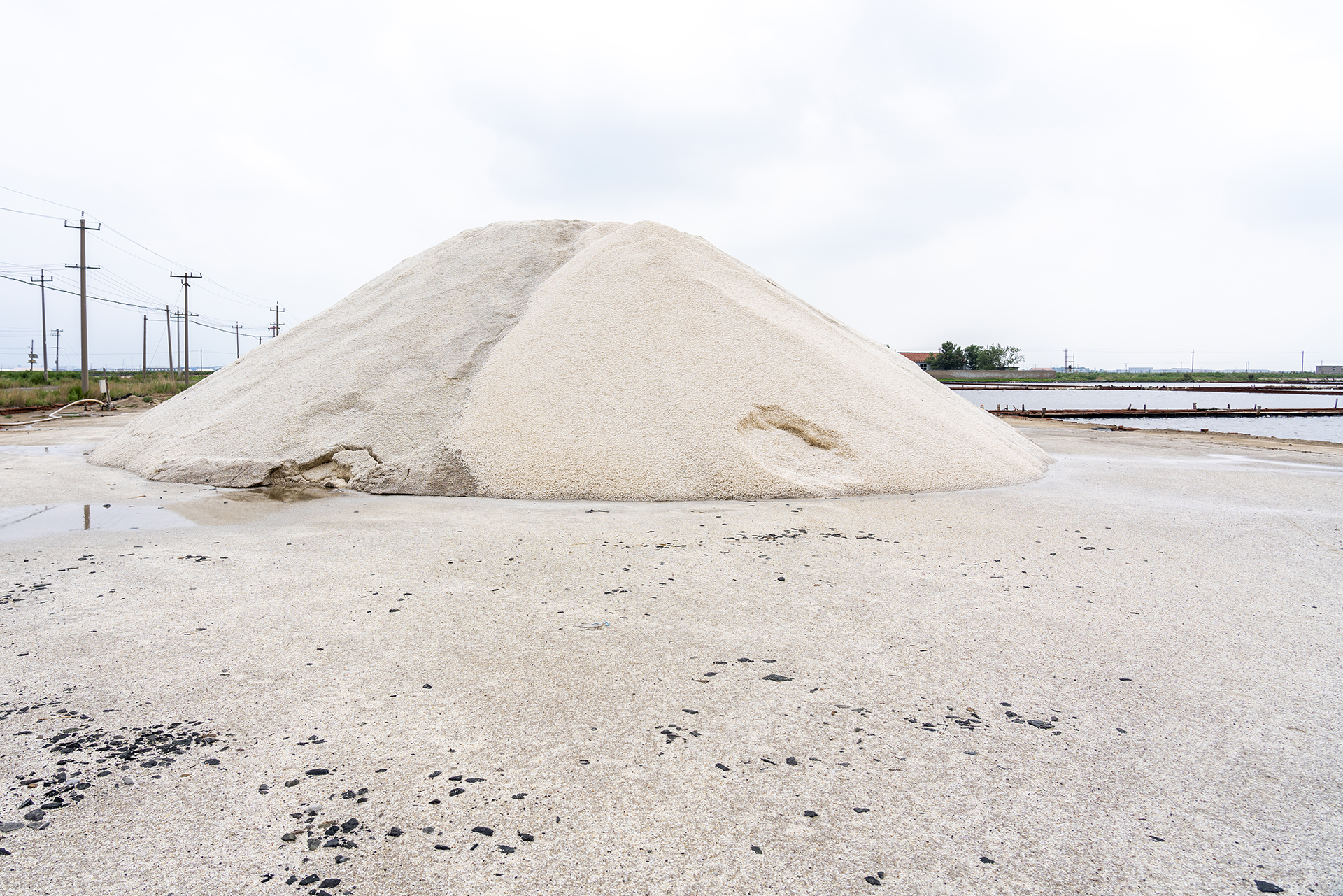
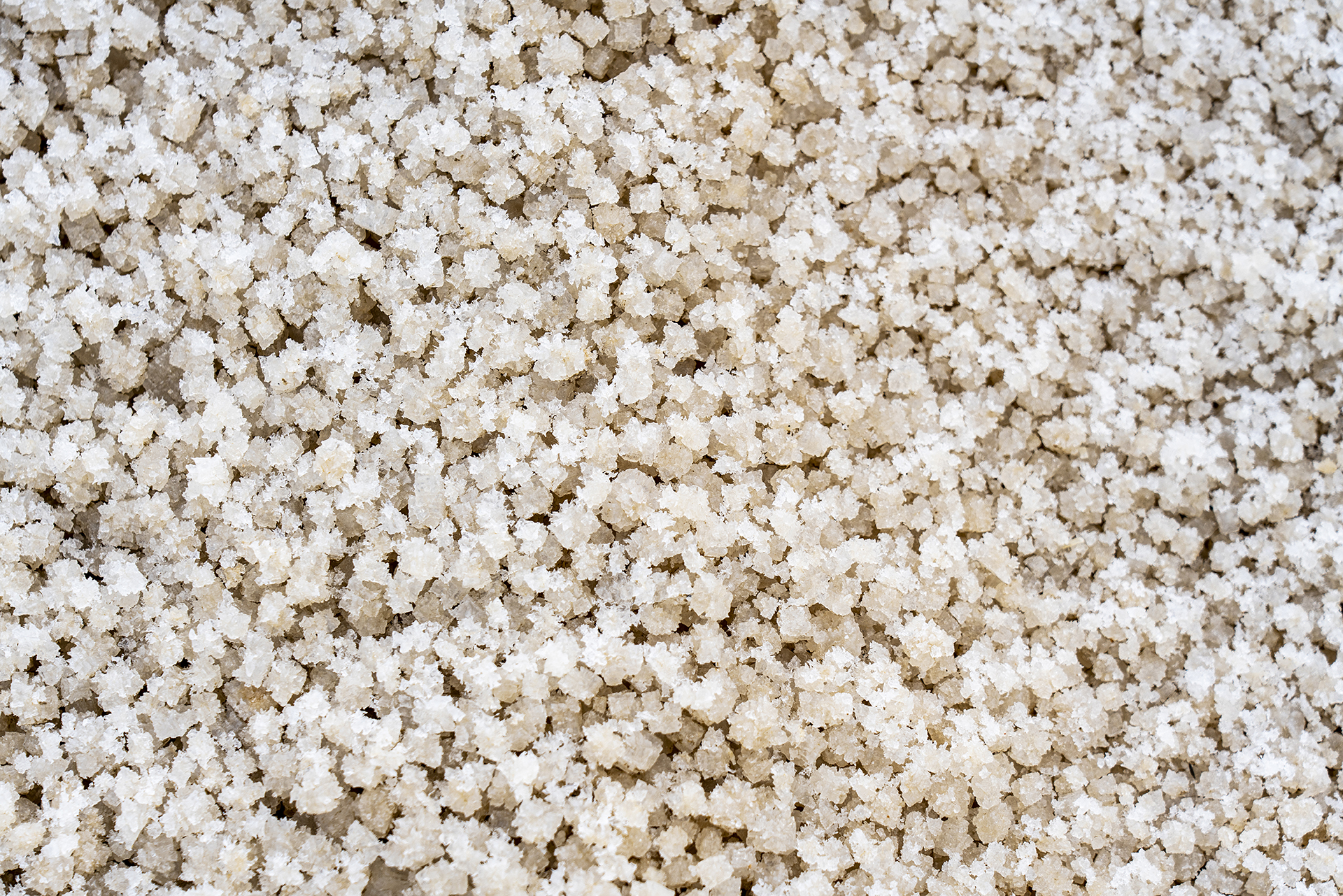
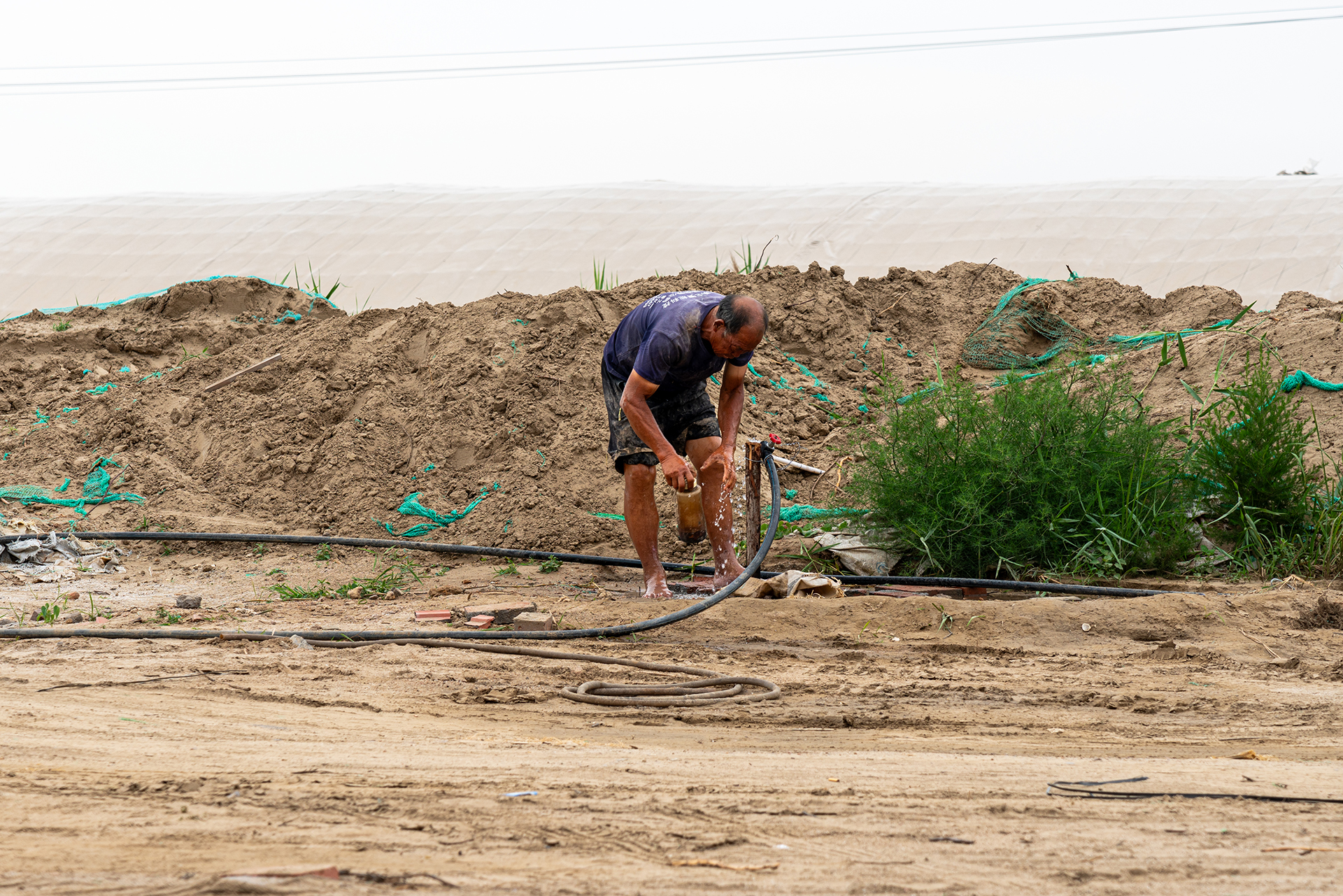
Instead of drawing water directly from the sea, workers dig 120-metre-deep wells to extract underground brine and then pump it into evaporation ponds. According to the workers, due to the high concentration of brine, the cycle from brine to salt crystallisation is greatly shortened, which usually takes three months. They can have three cycles per year. As the most serious environmental and geological consequence of large-scale extraction of underground brine, seawater begins to seep inland, and salinises freshwater resources and causes soil salinisation. This directly impacts agricultural production and residents’ livelihoods.