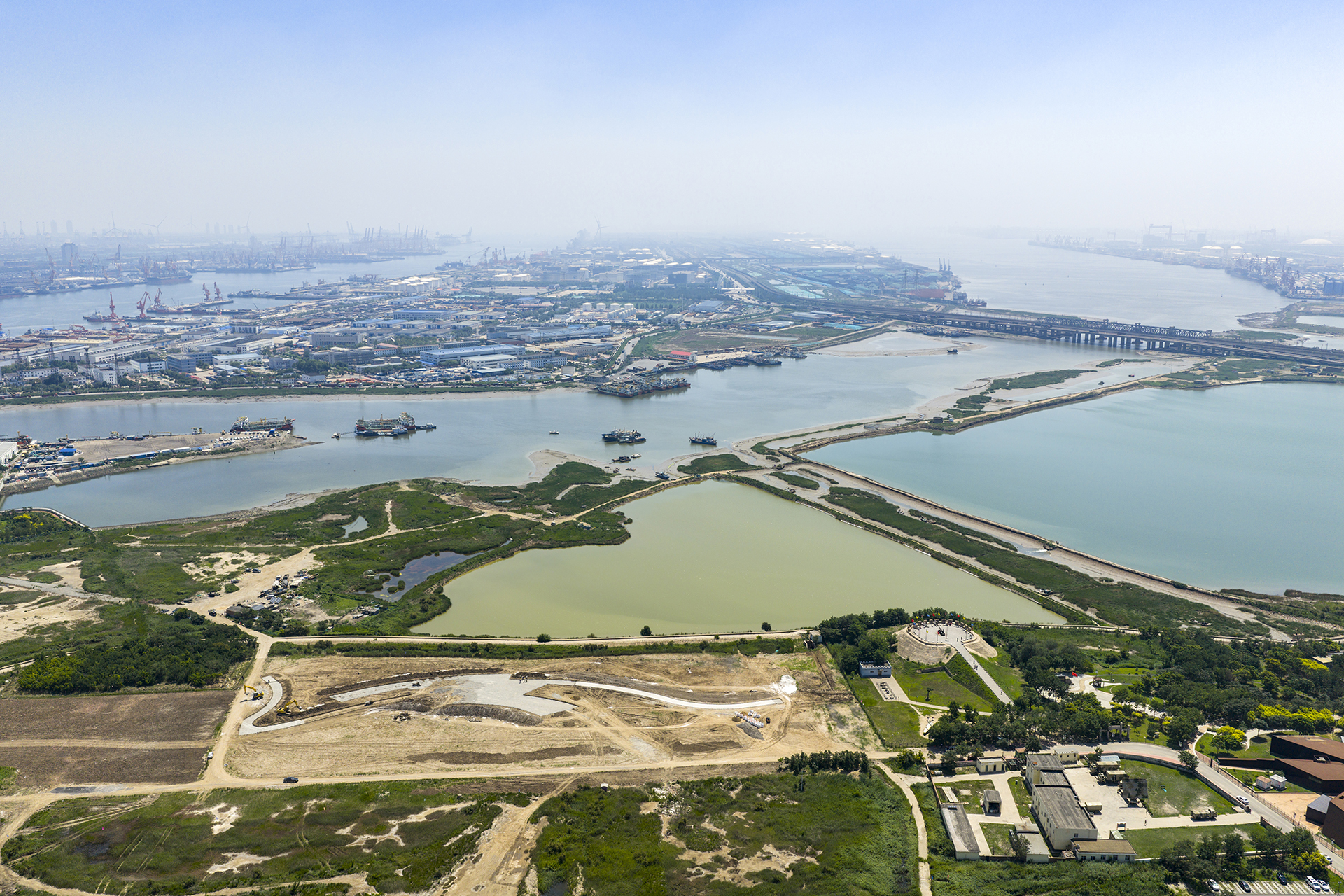
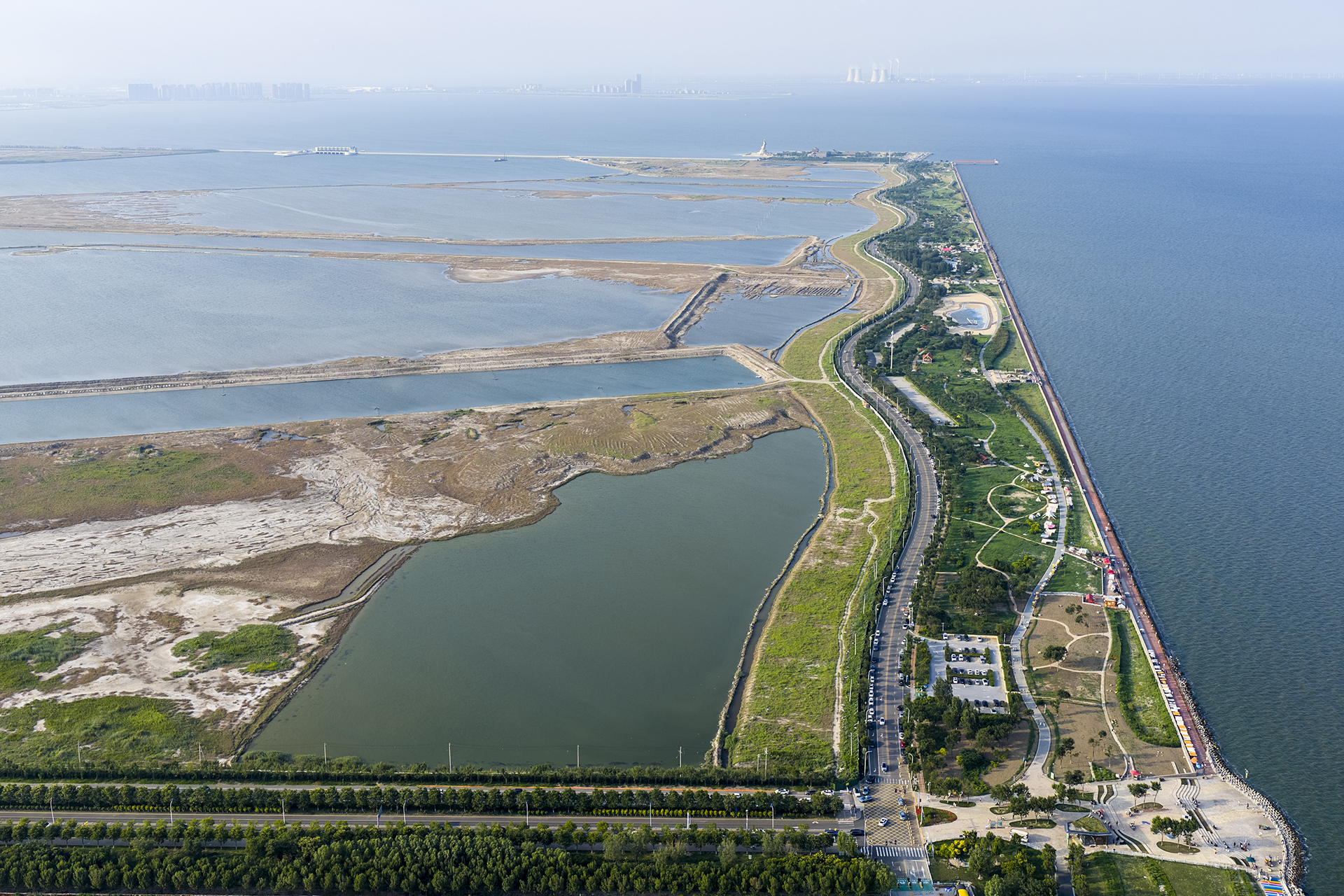
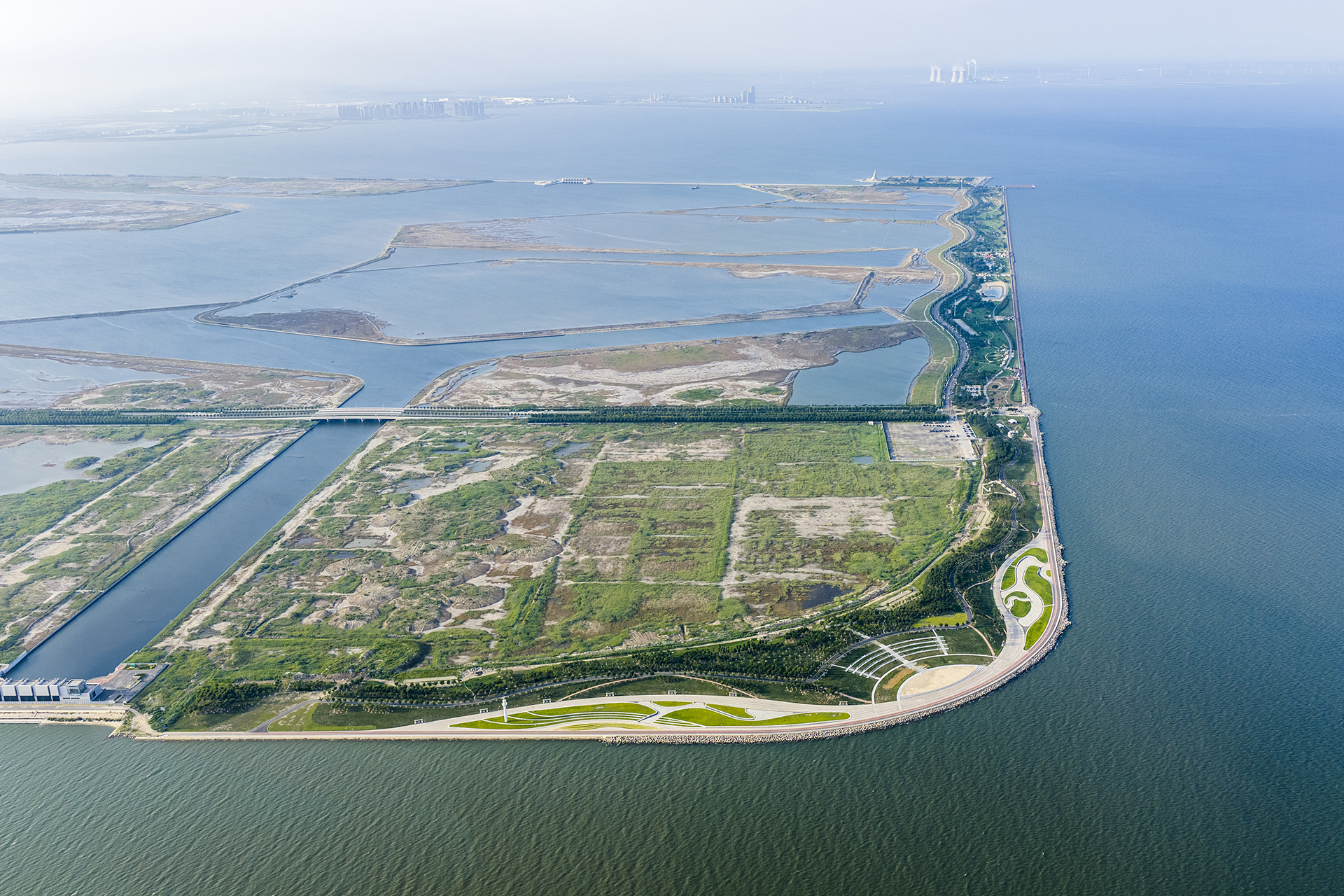
Bohai Bay is located in the western part of the Bohai Sea in China, at 38°35.6’ north latitude and 118°12.6’ east longitude. It starts from the Daqing River estuary in Hebei Province in the north and ends at the Yellow River estuary in Shandong Province in the south. It is one of the three major bays of the Bohai Sea. Bohai Bay has a coastline of approximately 1,400 kilometres and a sea area of approximately 15,900 square kilometres. The coastline is relatively straight and predominantly composed of muddy beaches with extensive tidal flats, which are formed by the Yellow River and Haihe River carrying large amounts of sediment into the sea.
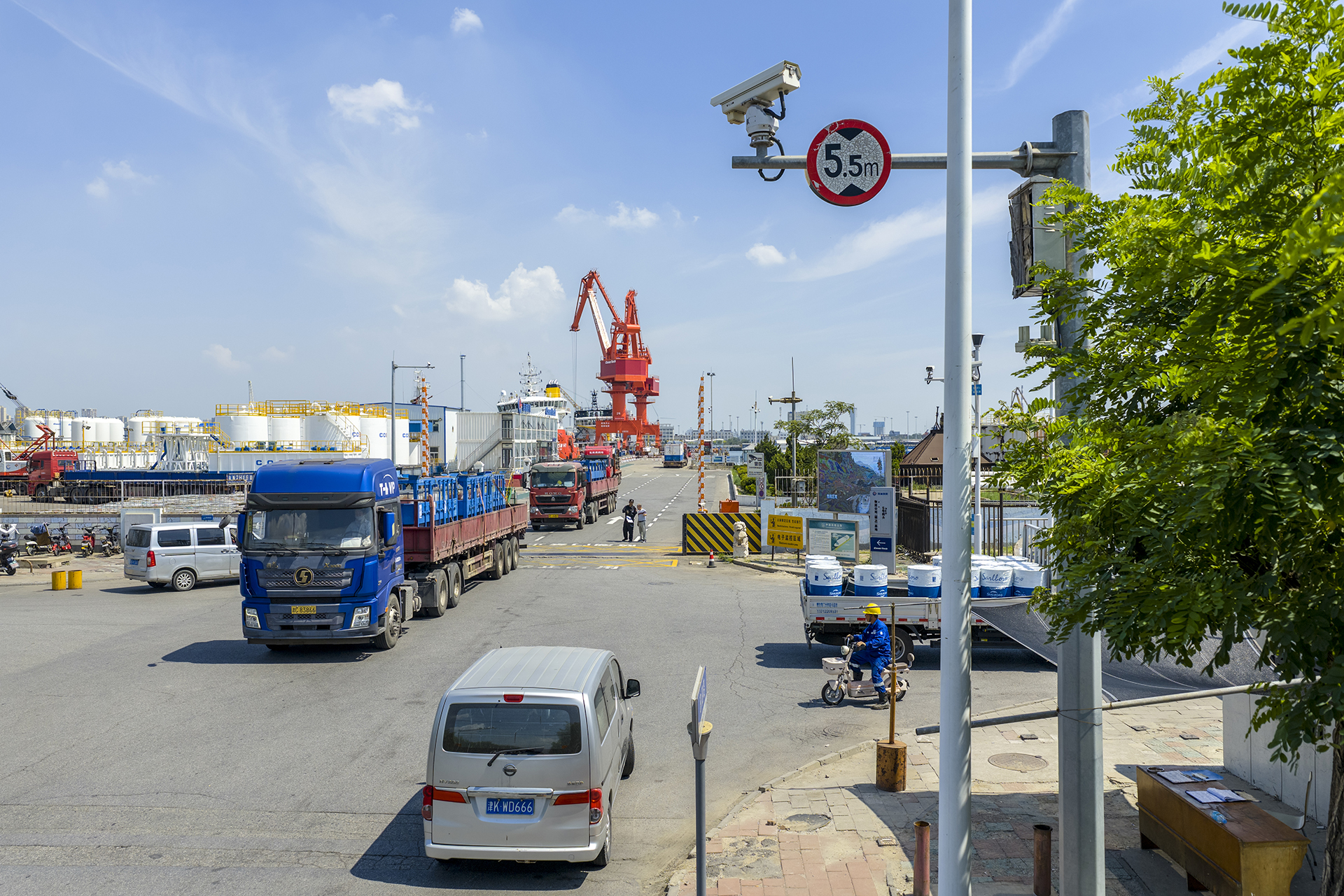
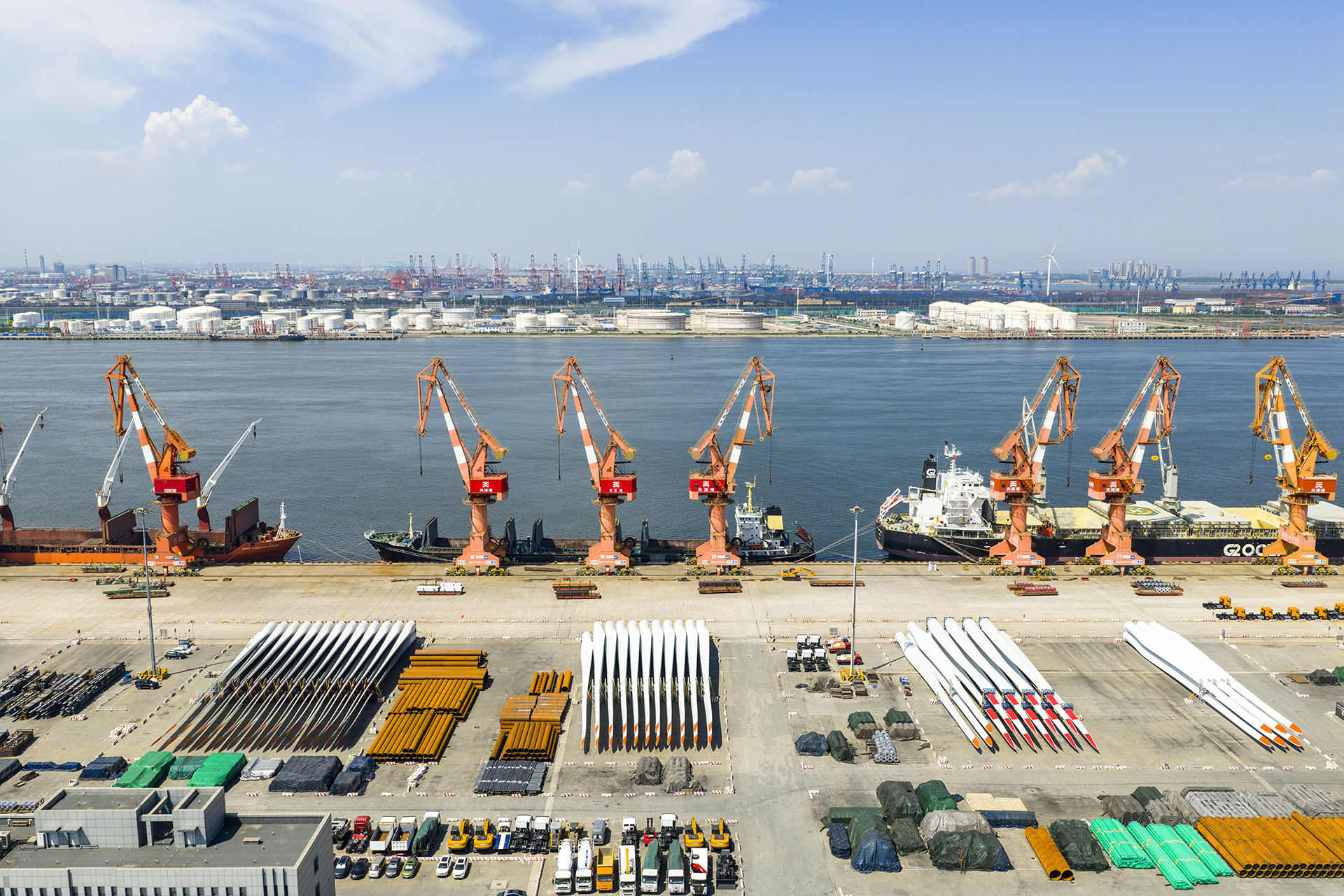
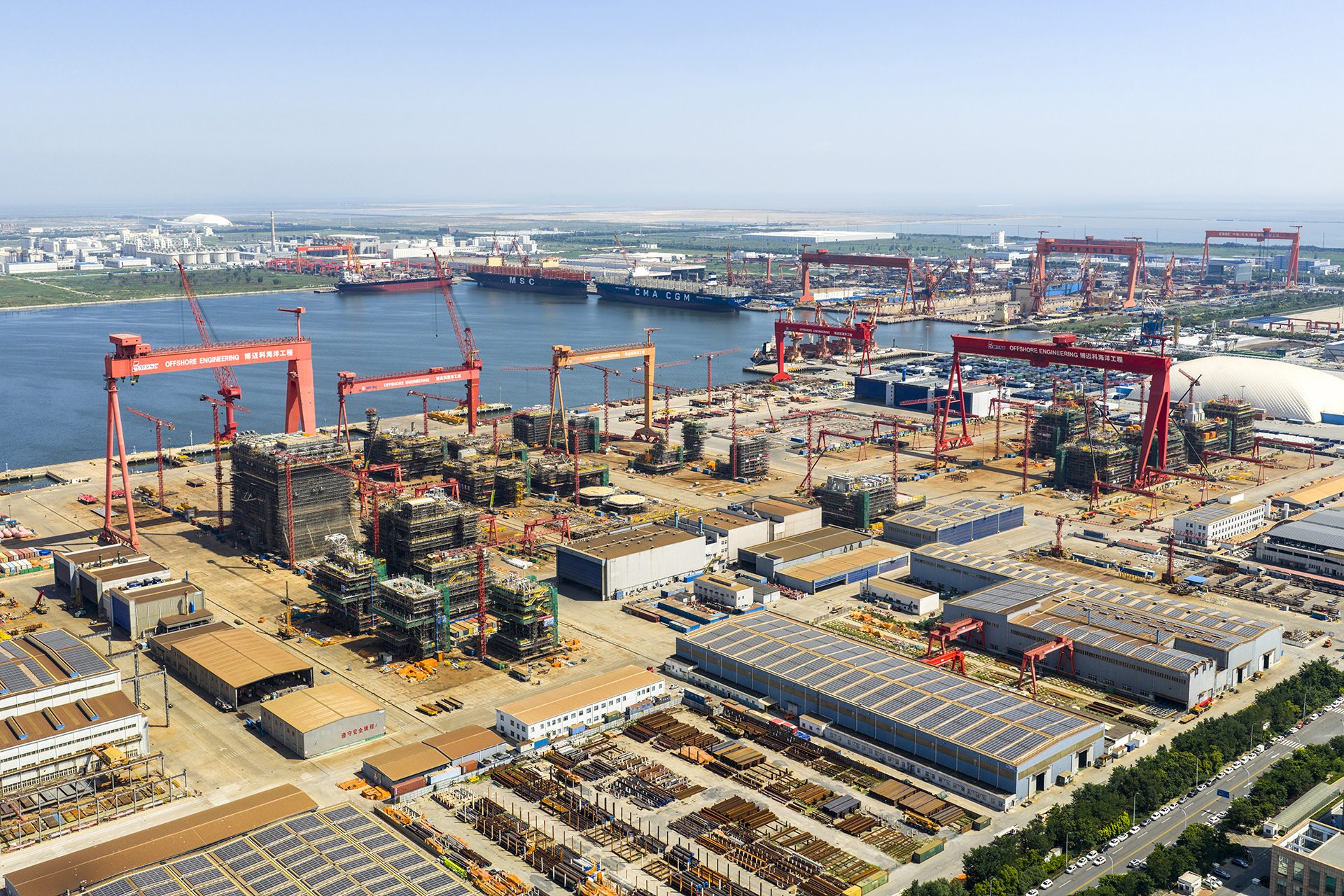
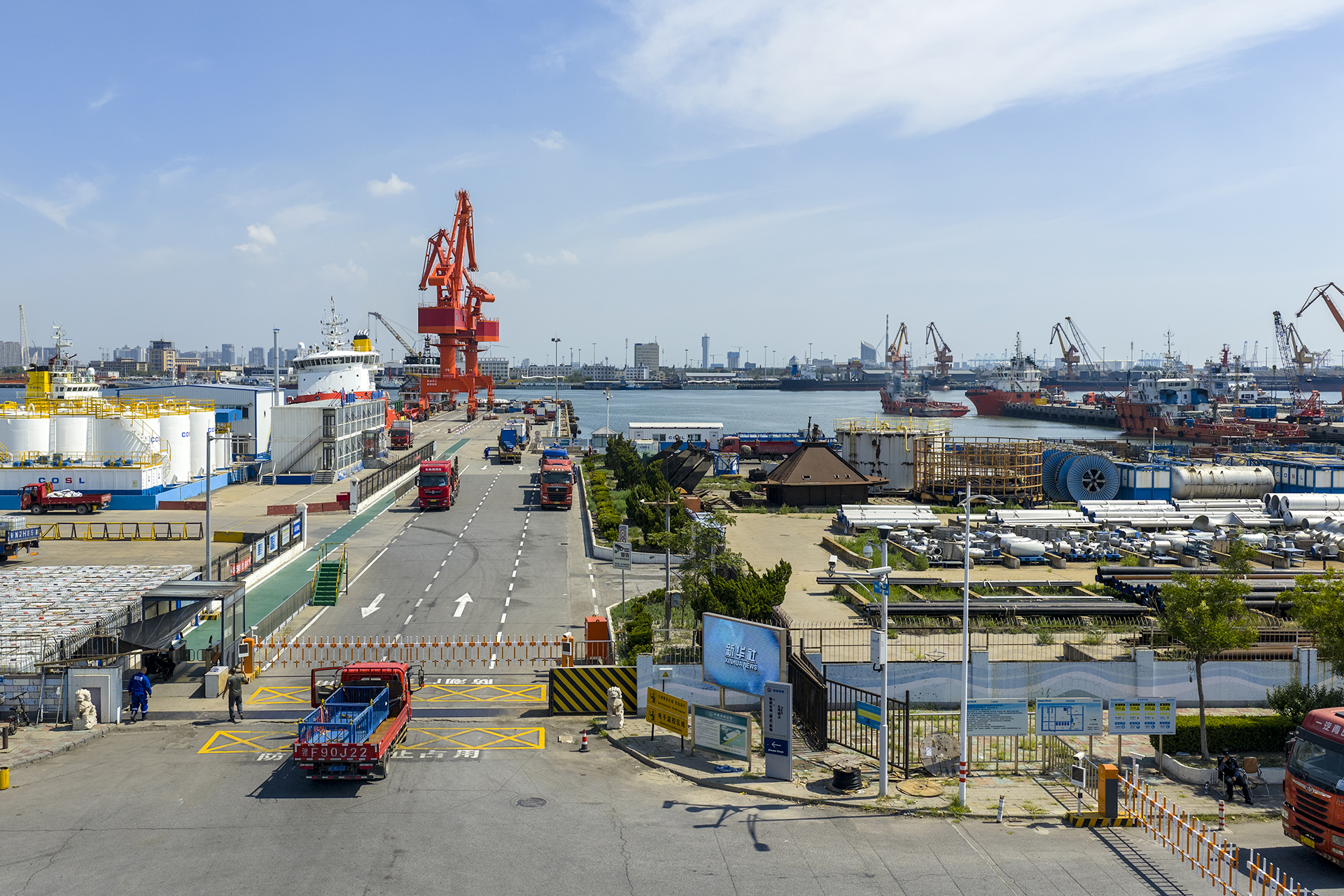
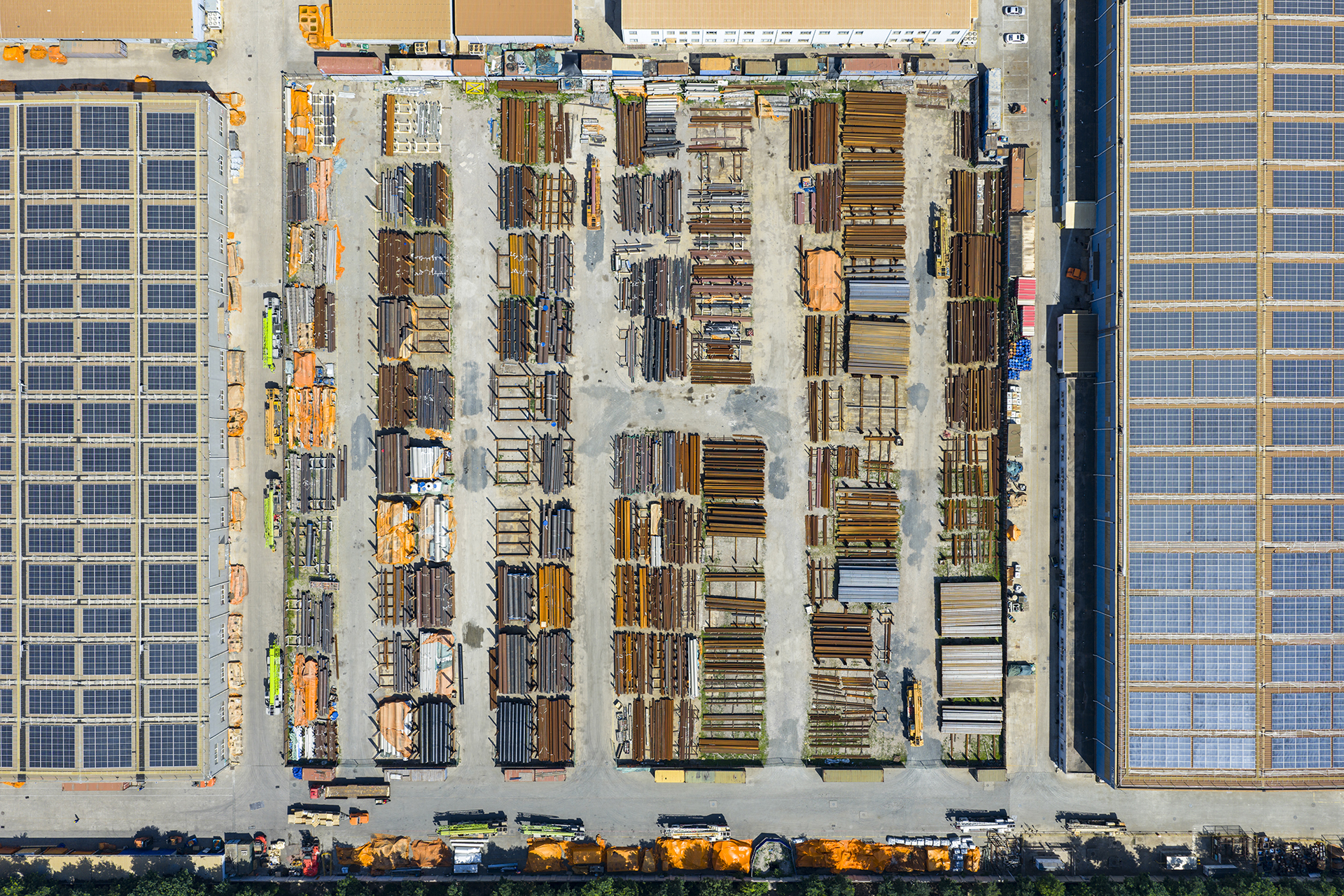
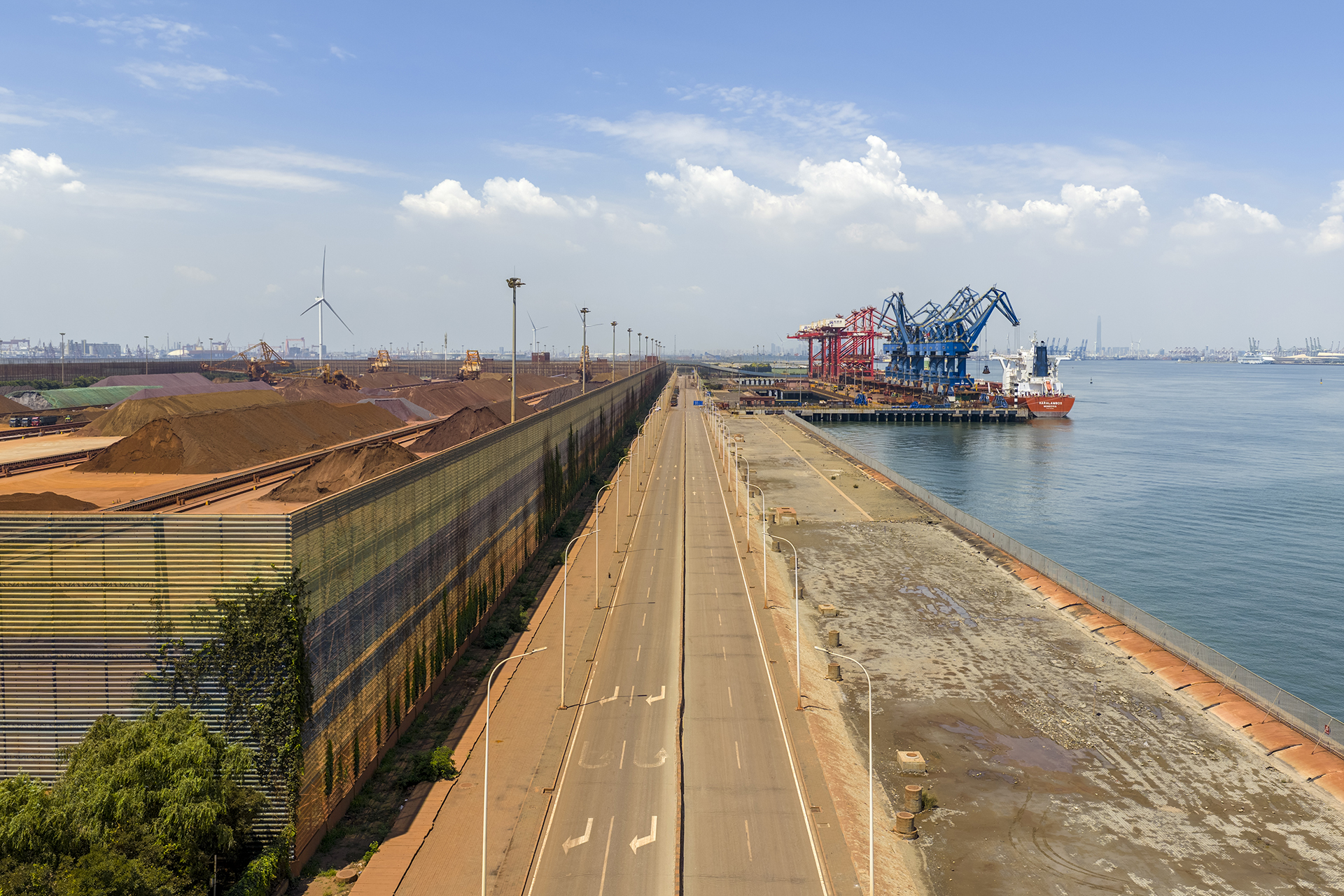
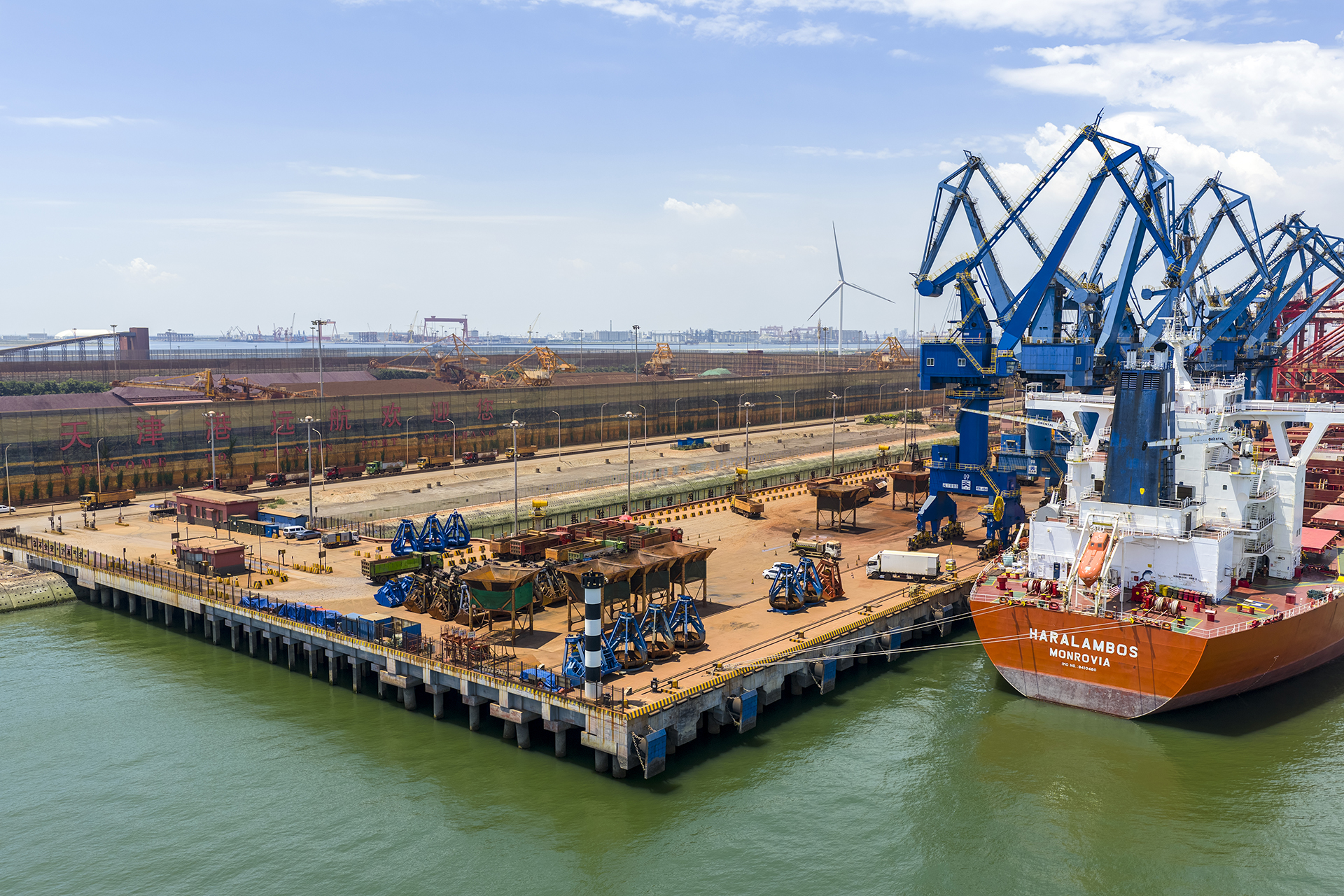
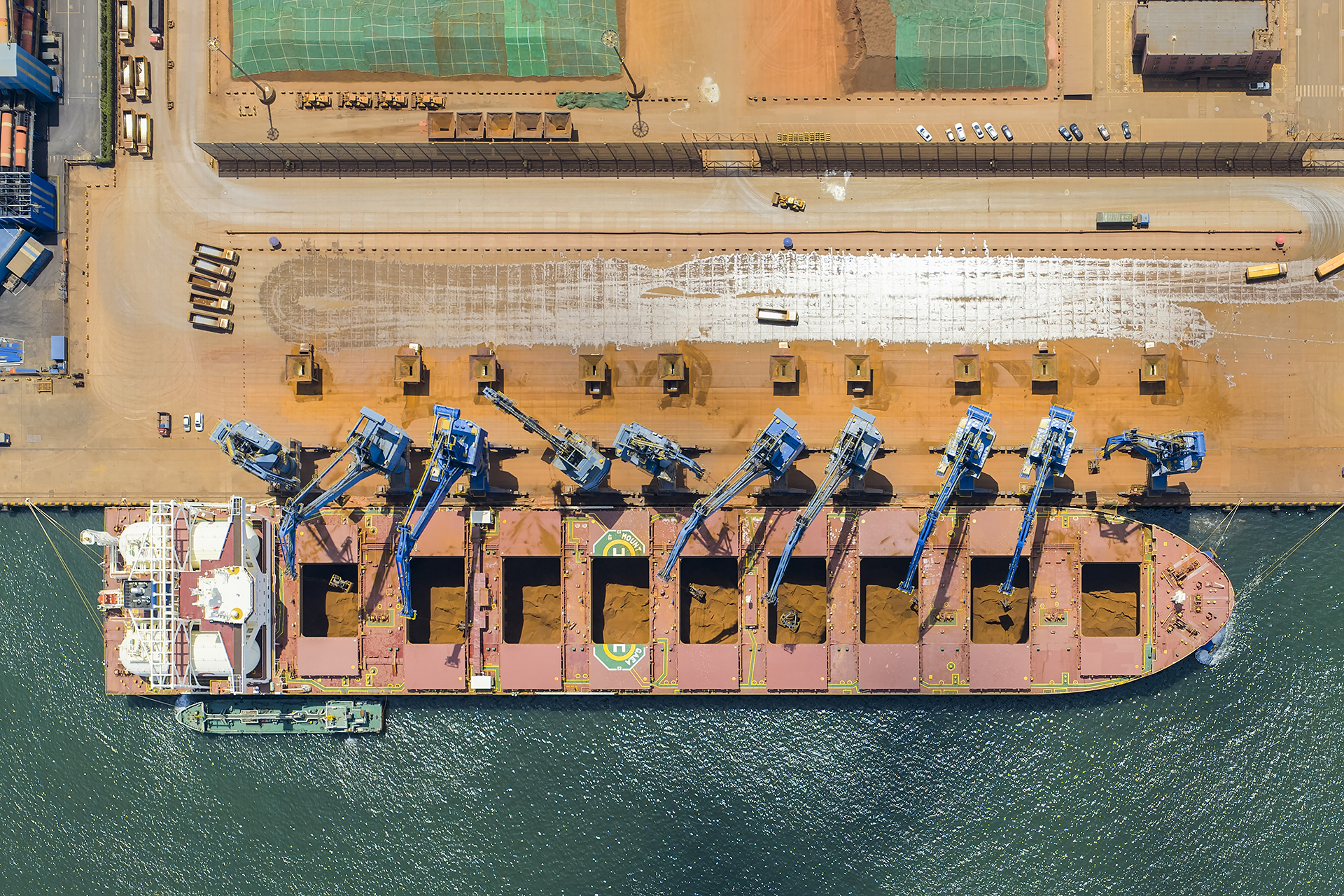
Tianjin Port, located on the west coast of the Bohai Bay at the mouth of the Haihe River in Tianjin Municipality, has a long history. In 1860, it opened to foreign trade and became a treaty port. Since the reform and opening up, the port has developed rapidly, with the Tianjin New Port, which began construction in 1952, becoming a gateway to the Beijing-Tianjin-Hebei region. Through large-scale land reclamation, the local government has built numerous wharves, berths, storage yards and logistics parks at Tianjin Port, successfully transforming it from a regional port into one of the world’s top ten ports, with 176 berths for containers, ore, steel, large equipment and international cruise ships. The main area of the port is not a natural harbour, but rather the world’s most advanced artificial deep-water port built over nine years through dredging sandbars and excavating channels. The main channel has a water depth of -22 metres, allowing free passage for 300,000-ton ships.
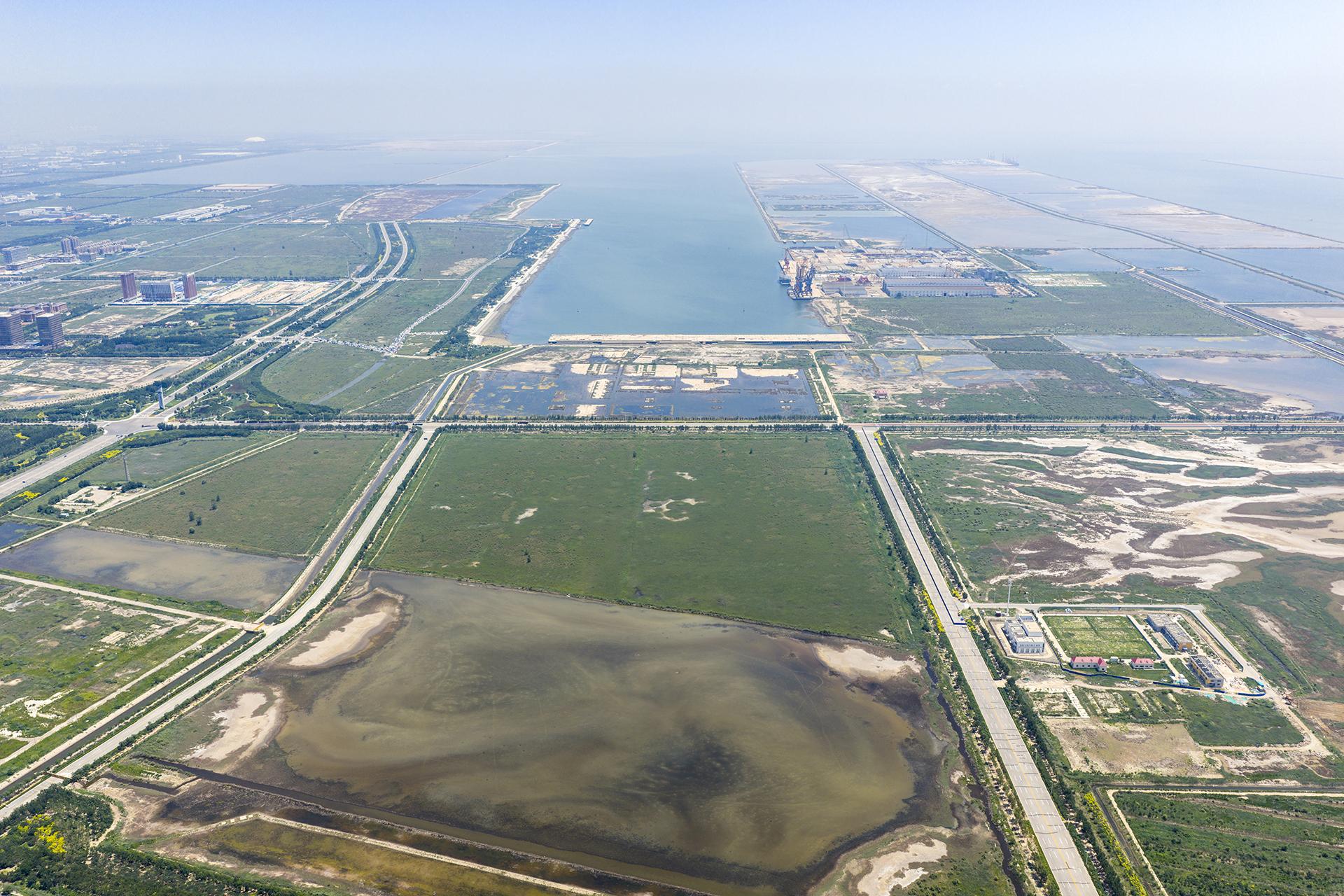
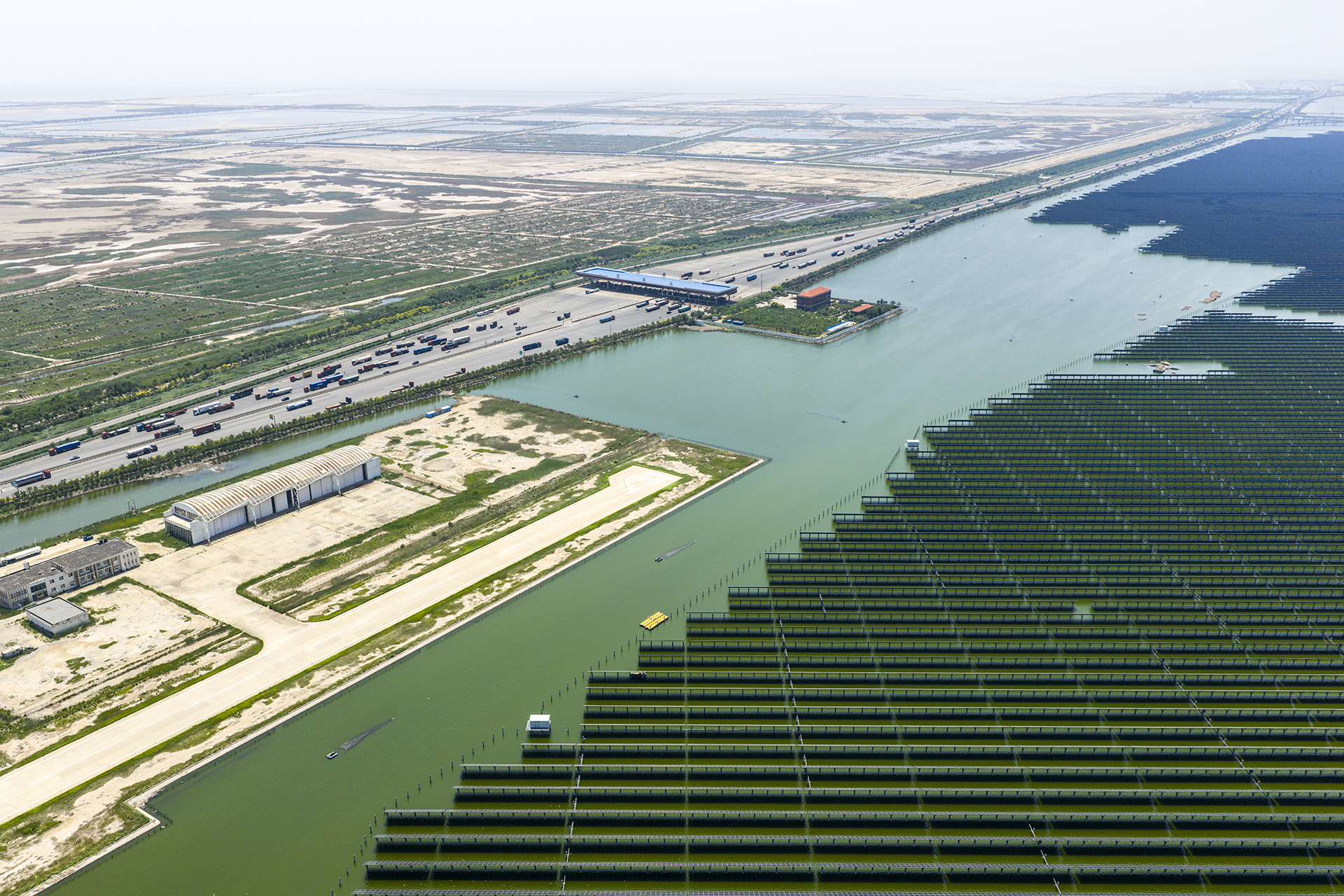
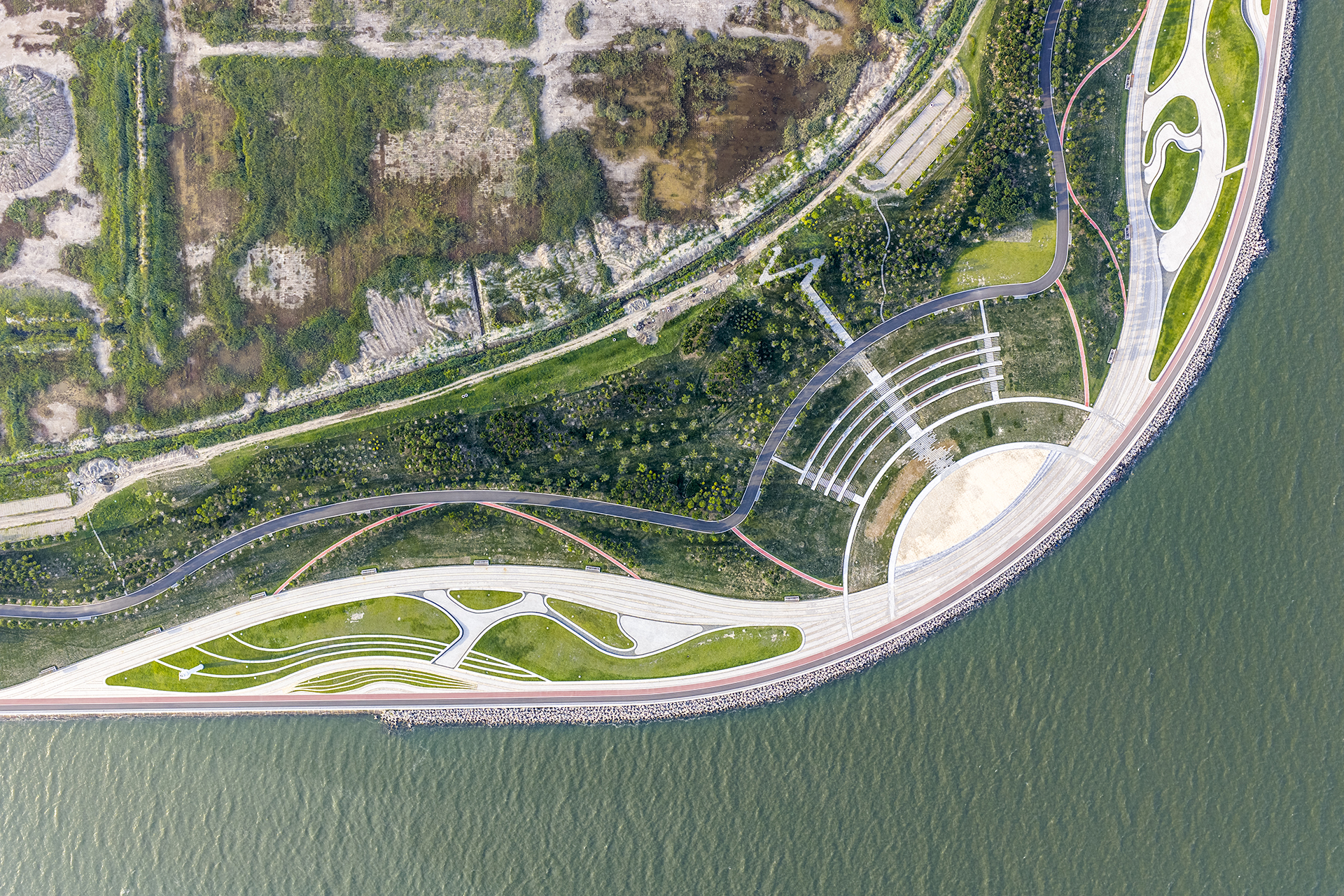
The construction of Tianjin Port is one of the most important and core driving forces of land reclamation in Bohai Bay. It has catalysed a regional wave of reclamation projects. Centred on Tianjin Port and the Tianjin Binhai New Area, these reclamation activities have expanded northwards and southwards, encompassing Caofeidian and Huanghua Port in Hebei Province, as well as parts of coastal Shandong Province. This has formed a ‘reclamation economic belt’ in the western Bohai Sea. Since the 1950s, the total land reclamation area in Bohai Bay is estimated to exceed 2,500 square kilometres. The Dongjiang Port Area alone (the core zone of the Tianjin Free Trade Zone) accounts for over 30 square kilometres of reclaimed land. The total area of land reclaimed at Tianjin Port (shown as a red dot on the satellite image on previous page), combined with the industrial and residential land supporting the Binhai New Area, is approximately 1,000 square kilometres. Where the Binhai New Area has reclaimed 330 square kilometres of land over the past 40 years, during which time its GDP surged from 11.2 billion yuan (1.2 billion pounds) to 784 billion yuan (83.8 billion pounds). Caofeidian in Hebei Province (shown in the upper right corner of the satellite images on previous page), originally a small offshore sand island, has been reclaimed to create over 200 square kilometres of land connected to the mainland. Its planned reclamation area could eventually reach over 1,000 square kilometres.
The total cost of land reclamation in Bohai Bay is astronomical and cannot be accurately calculated. The infrastructure investment for the first and second phases of Tianjin Port alone exceeded tens of billions of yuan (billions of pounds). The investment in the 30 square kilometres of land reclamation in the Dongjiang Port Area is at the level of hundreds of billions of yuan (tens of billions of pounds). In 2009, the government invested 1.5 trillion yuan (160 billions pounds) in the development of ten key areas within the Binhai New Area, including Nangang and Lingang of Tianjin Port.
The rapid reclamation and development of Tianjin Port, coupled with a long-term lack of safety awareness, a malfunctioning regulatory system, unclear political and business relationships, and irrational urban planning, led to a major industrial safety accident that caused significant casualties and property losses – the Explosion accident in Tianjin Binhai New Area on 12 August 2015. According to the State Council’s investigation report, the total energy of the explosion was approximately 450 tons of TNT equivalent. This accident caused a total of 165 deaths, 8 missing persons and 798 injuries; 304 buildings, 12,428 commercial vehicles and 7,533 containers were damaged, with an estimated direct economic loss of 6.866 billion yuan (734 million pounds). At the end of 2015, Tianjin’s permanent population was 15.47 million. As of 2023, the number was 13.63 million, a decrease of nearly 2 million people compared to eight years earlier. Local residents believe this is the direct result of the explosion accident.