Lingdingyang Bay is located in the centre of the Pearl River Delta in Guangdong Province, China, at 22°46.0’ north latitude and 113°03.0’ east longitude. It starts from Humen in Guangdong Province in the north and ends in the waters near Hong Kong and Macao Special Administrative Regions in the south. It is an estuary bay of the Pearl River mainstream. Lingdingyang Bay has a coastline of approximately 330 kilometres and a sea area of approximately 2,100 square kilometres. Its underwater landscape primarily consists of the Lingding Channel, mudflats and islands. These areas have extensive mangroves and wetlands, providing important habitats for migratory birds and marine life. It is also a breeding ground for Chinese white dolphins.
Lingdingyang Bay is the central area of the Guangdong-Hong Kong-Macao Greater Bay Area, which includes the Hong Kong Special Administrative Region, the Macao Special Administrative Region, and the cities of Guangzhou, Shenzhen, Zhuhai, Foshan, Huizhou, Dongguan, Zhongshan, Jiangmen and Zhaoqing in Guangdong Province, covering a total area of 56,000 square kilometres. In 2024, the Greater Bay Area’s permanent resident population exceeded 87 million, and its total economic output increased from 10.8 trillion yuan (1.2 trillion pounds) in 2018 to 14.79 trillion yuan (1.6 trillion pounds) in 2024. Its total GDP exceeds that of more than 90% of the countries in the world and is comparable to that of countries such as Canada, Russia and South Korea. With less than 0.6% of China’s total land area, it has created one-ninth of the country’s total economic output. The Outline Development Plan for the Guangdong-Hong Kong-Macao Greater Bay Area, released in 2019, clearly stated that the region should be developed into a vibrant world-class urban cluster, an internationally influential science and technology innovation centre, an important support for the construction of the Belt and Road Initiative, and a demonstration zone for in-depth cooperation between the mainland and Hong Kong and Macao.
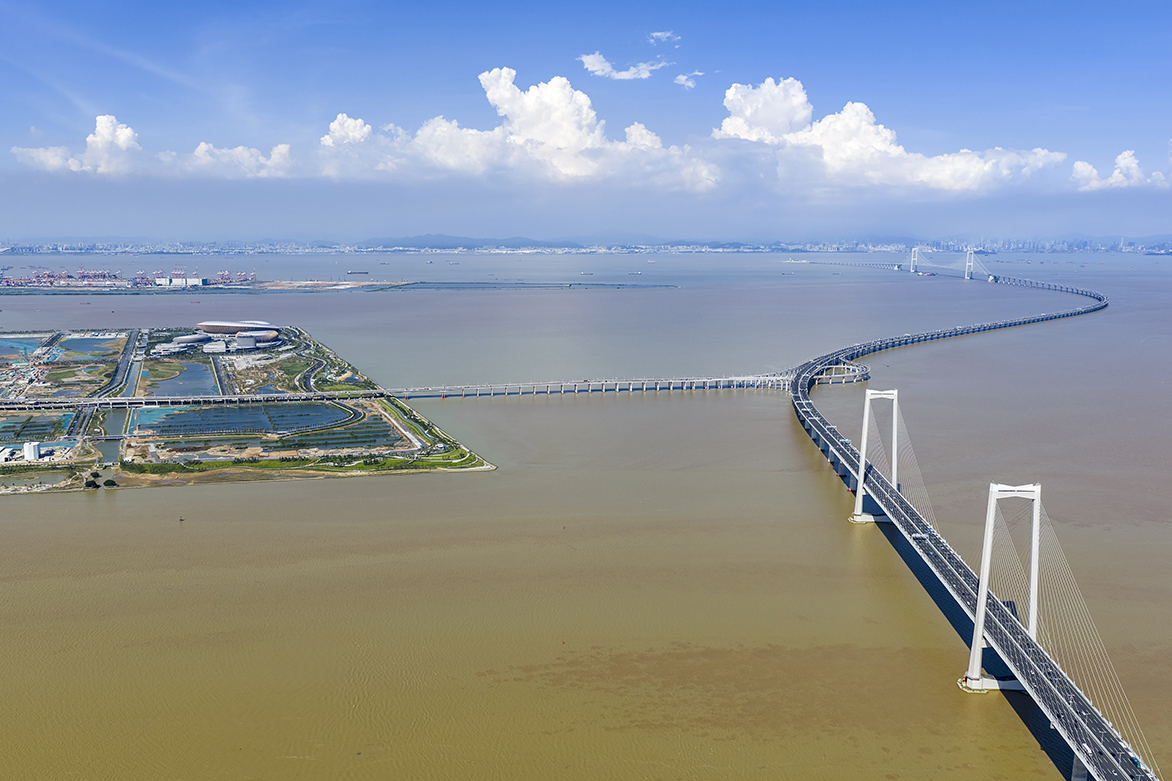
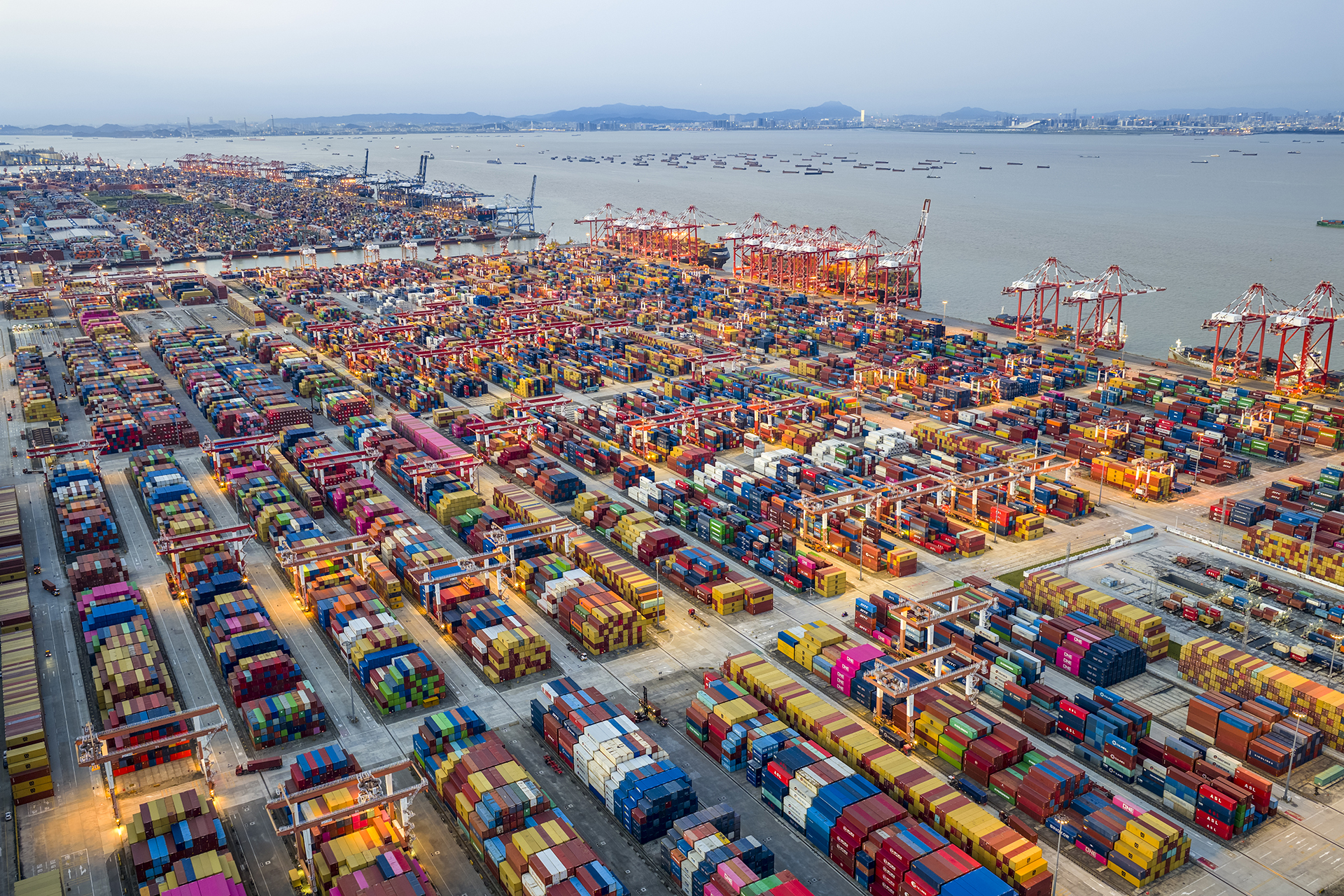
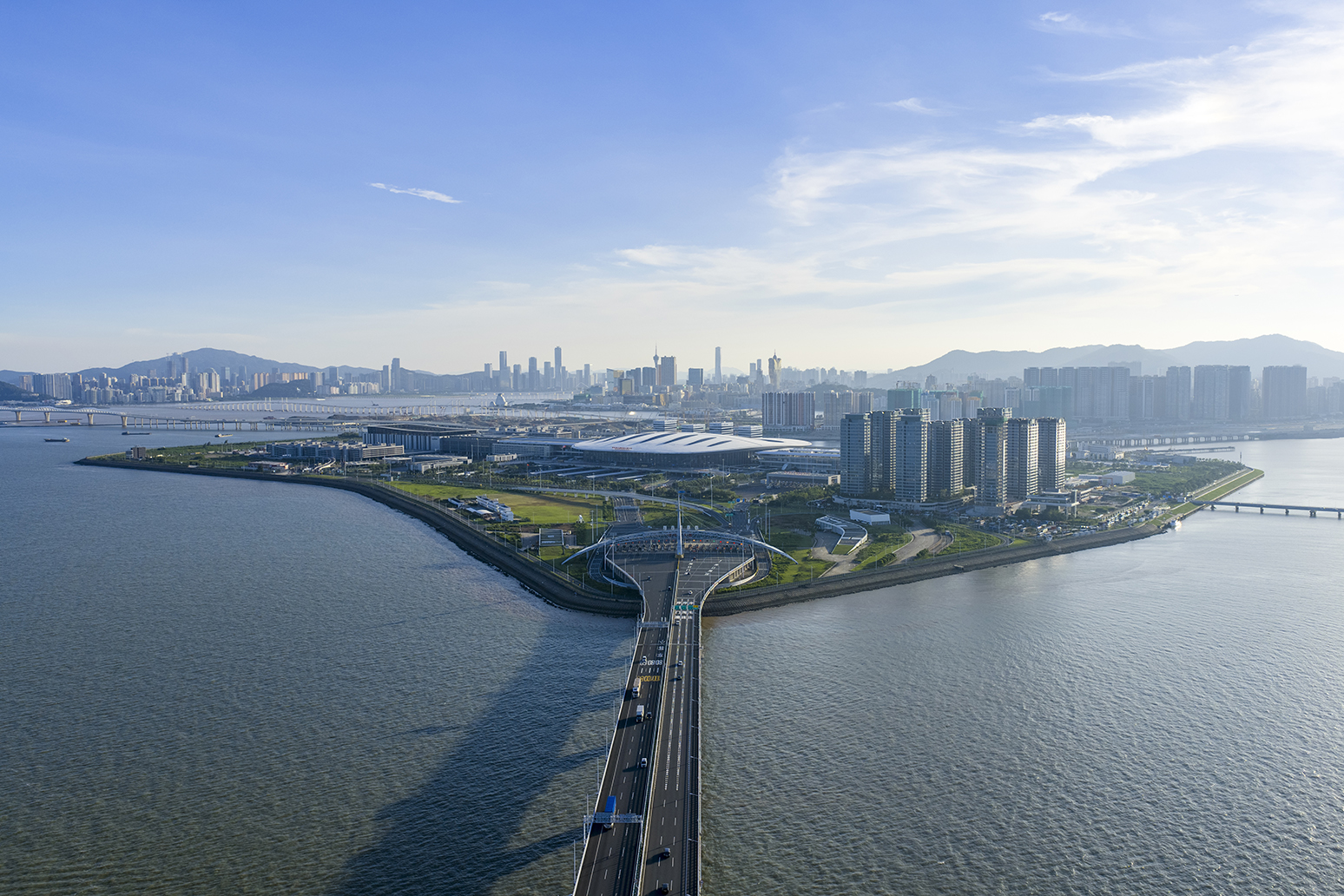
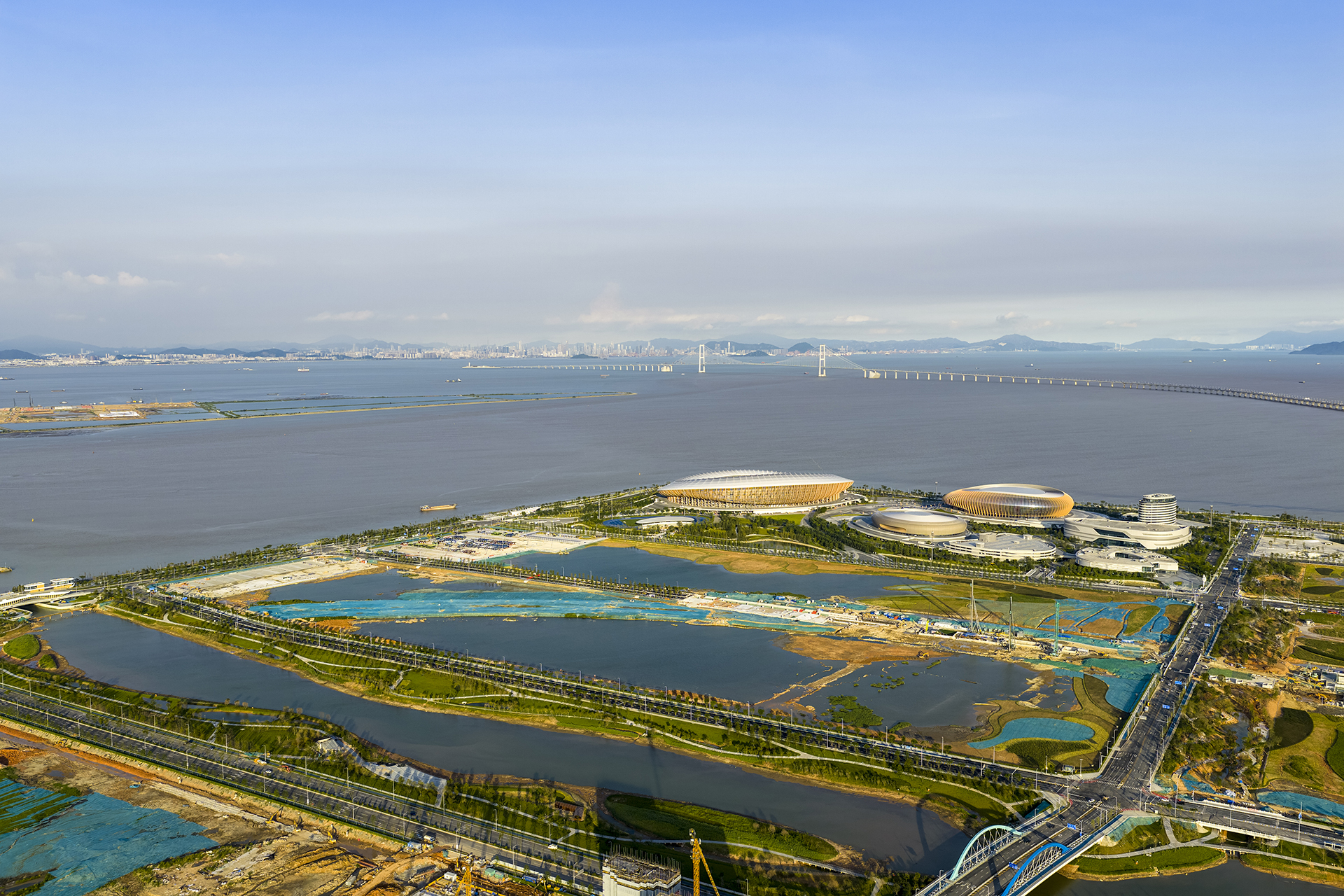
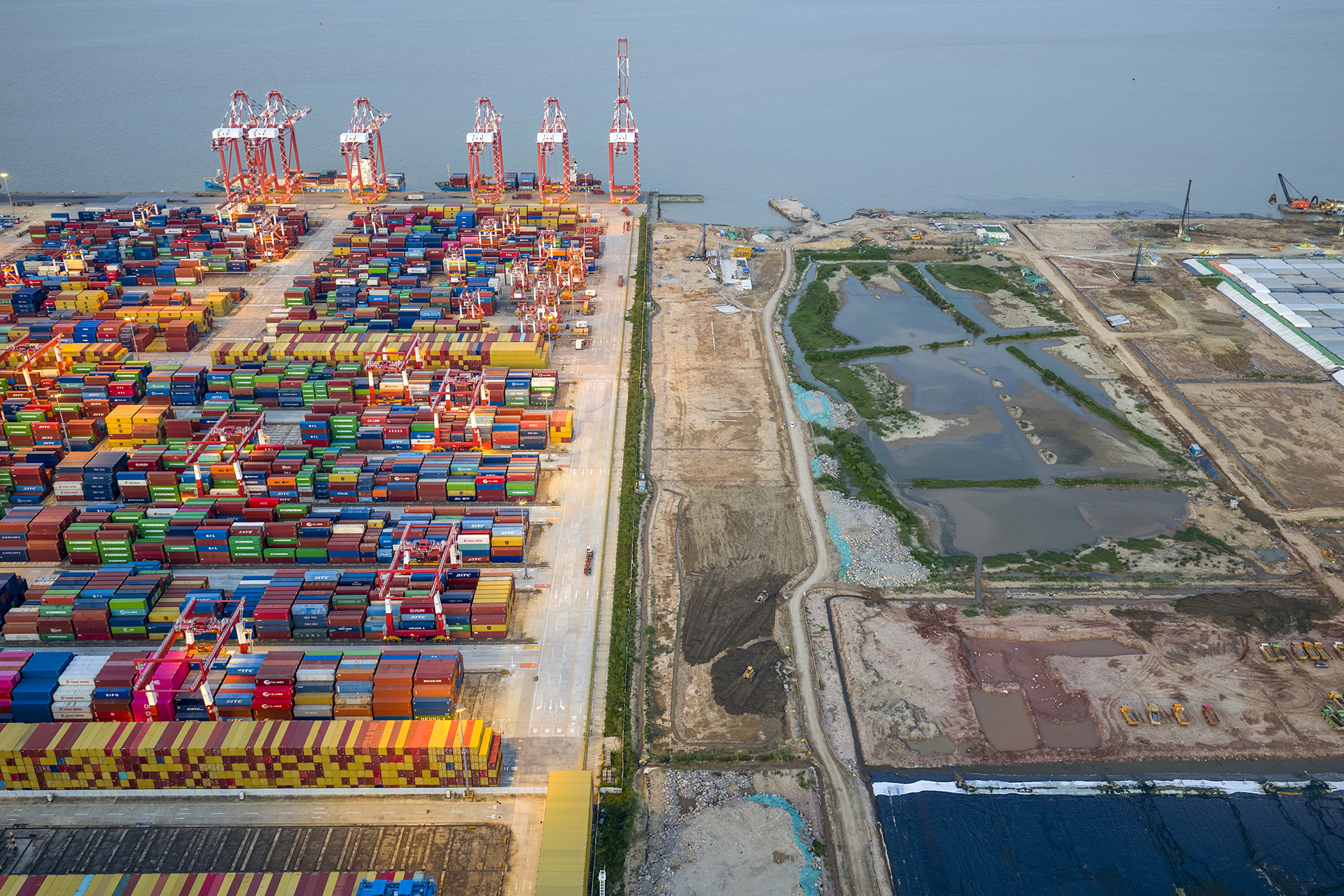
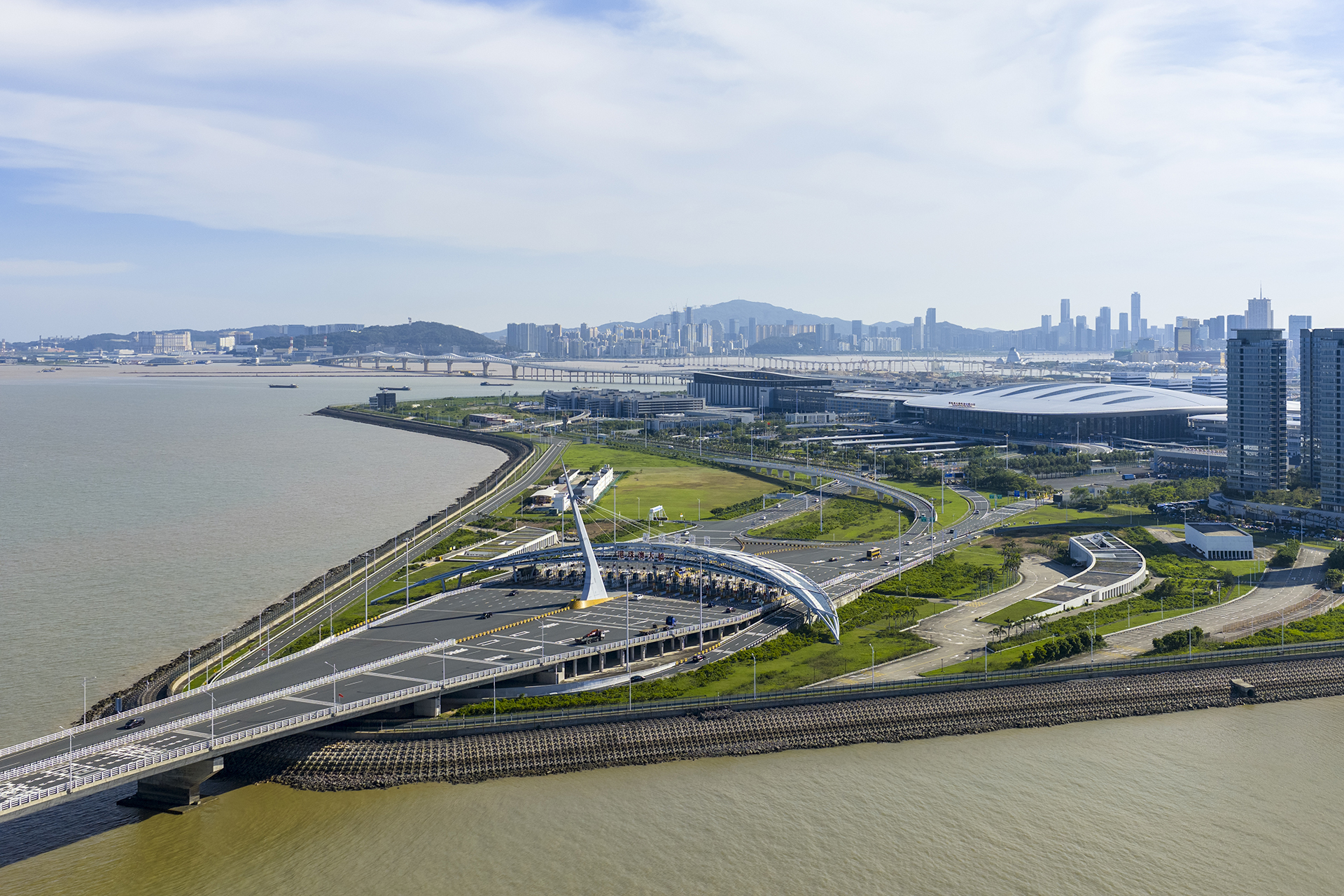
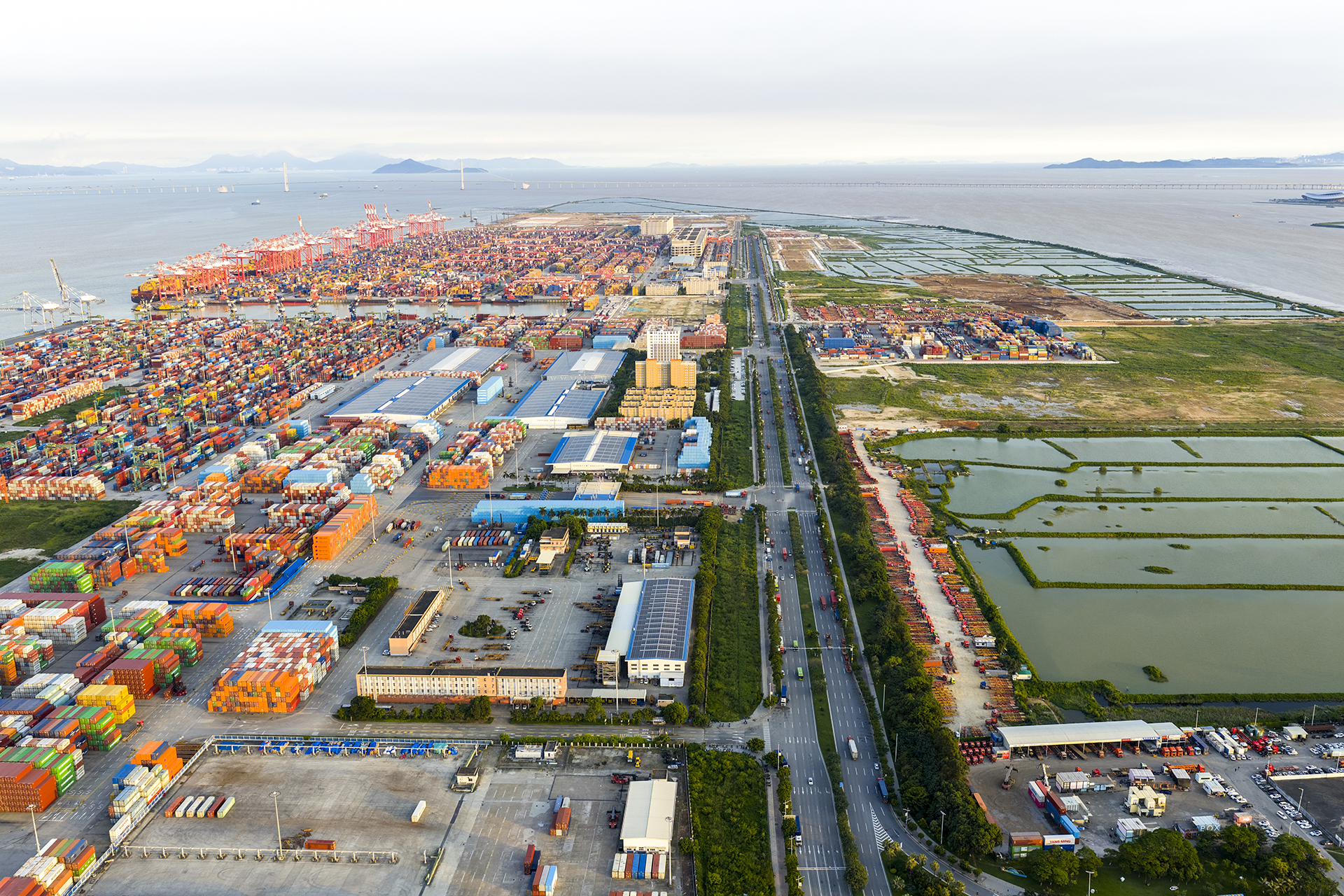
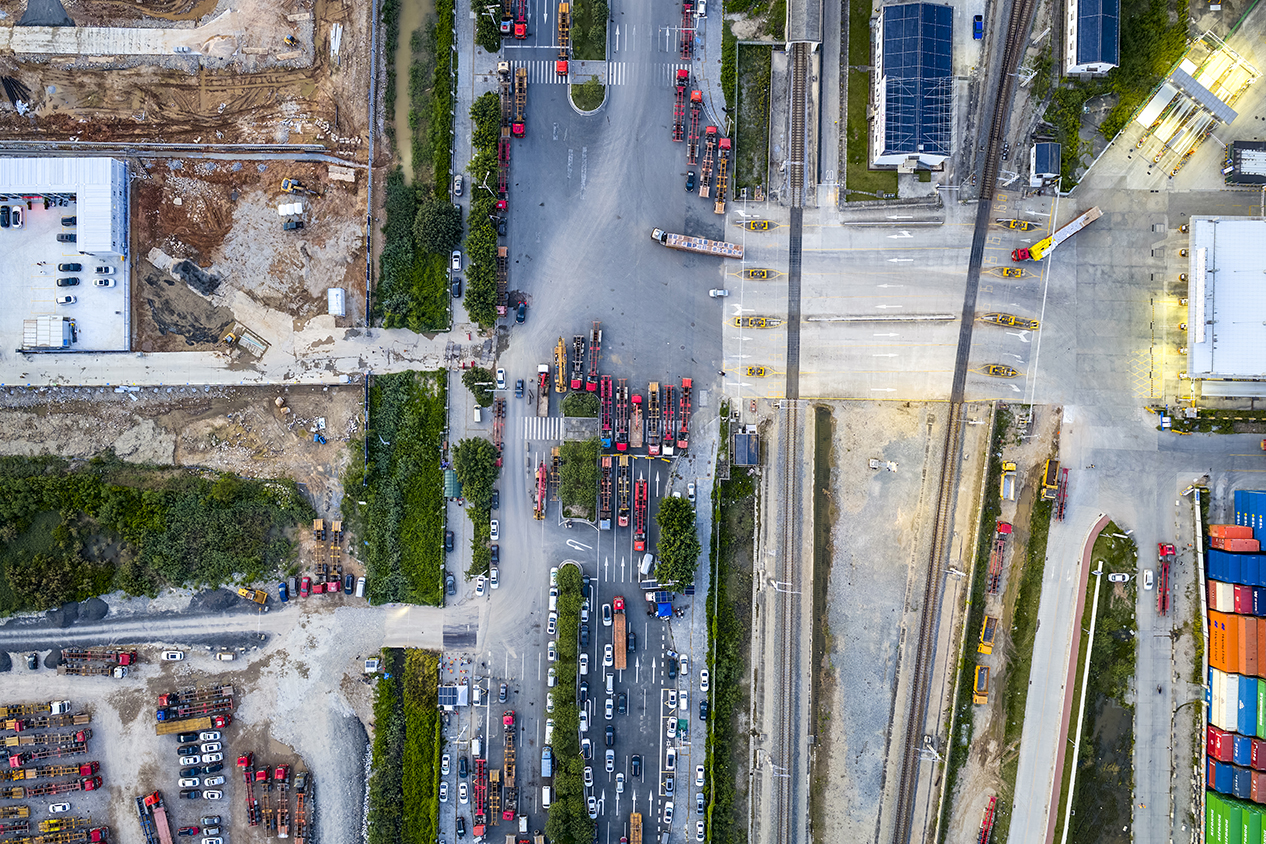
Lingdingyang bay forms a natural barrier between the east and west coasts of Guangdong Province. To improve this inconvenient transportation pattern, the government has constructed three super-large cross-river passages in the upper, middle and lower reaches of the bay: the Humen Bridge, the Shenzhen-Zhongshan Link and the Hong Kong-Zhuhai-Macao Bridge. These bridges, combined with coastal highways, broke the previous situation where land transportation had to detour through the northern part of the bay. The artificial islands and landing points of these bridge were created through land reclamation. The port cluster of the Greater Bay Area, including the ports of Shenzhen, Guangzhou and Hong Kong, and the airport cluster, including the three major international aviation hubs of Hong Kong, Guangzhou and Shenzhen, have also made extensive use of reclaimed land. Land reclamation in Lingdingyang Bay is not only a means of building the Greater Bay Area, but also the premise and foundation for its formation and development. Since the 1980s, more than 700 square kilometres of new land have been reclaimed from the bay, and some studies suggest the area is approaching 1,000 square kilometres. This means that more than one-third of the water area has been transformed into land.
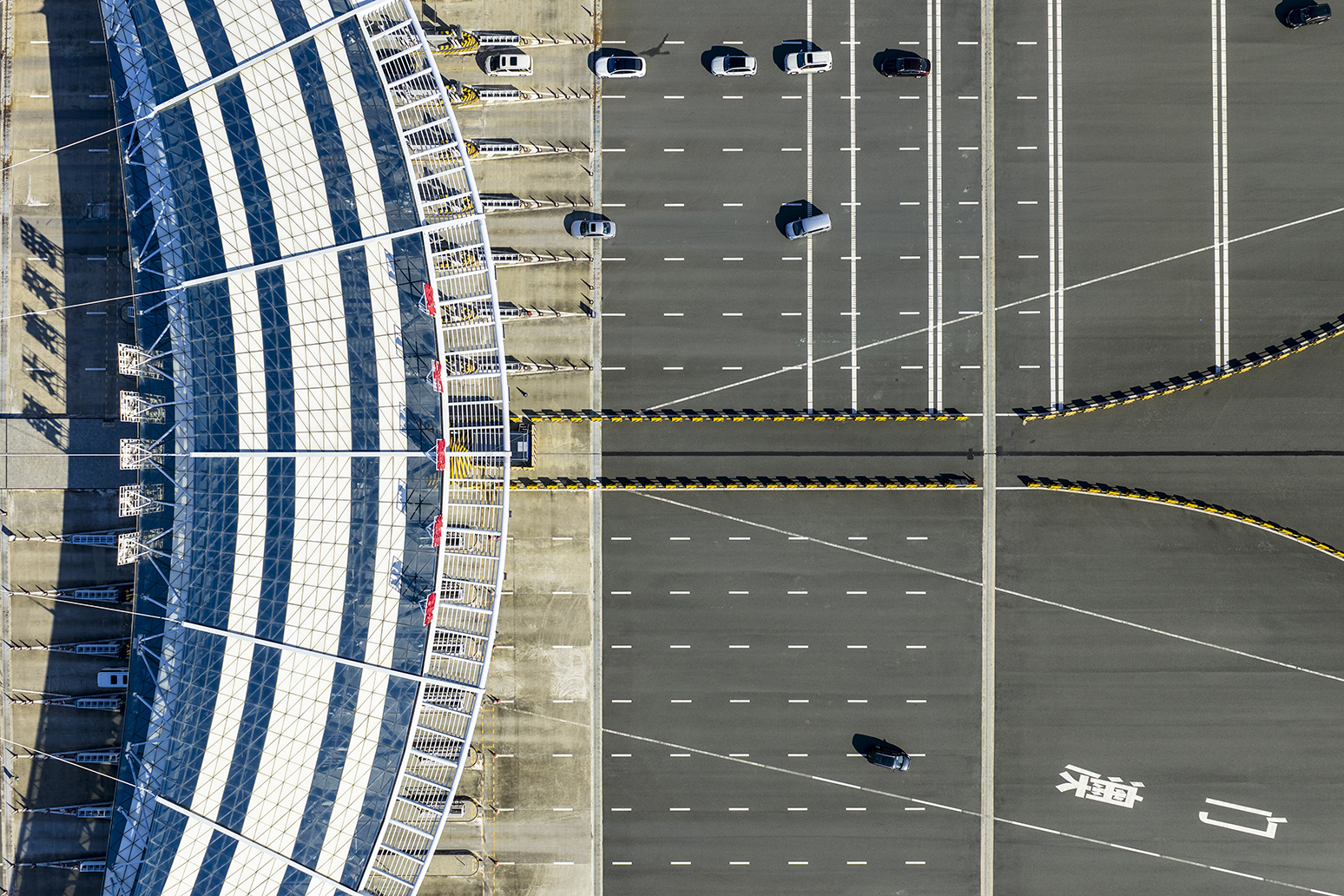
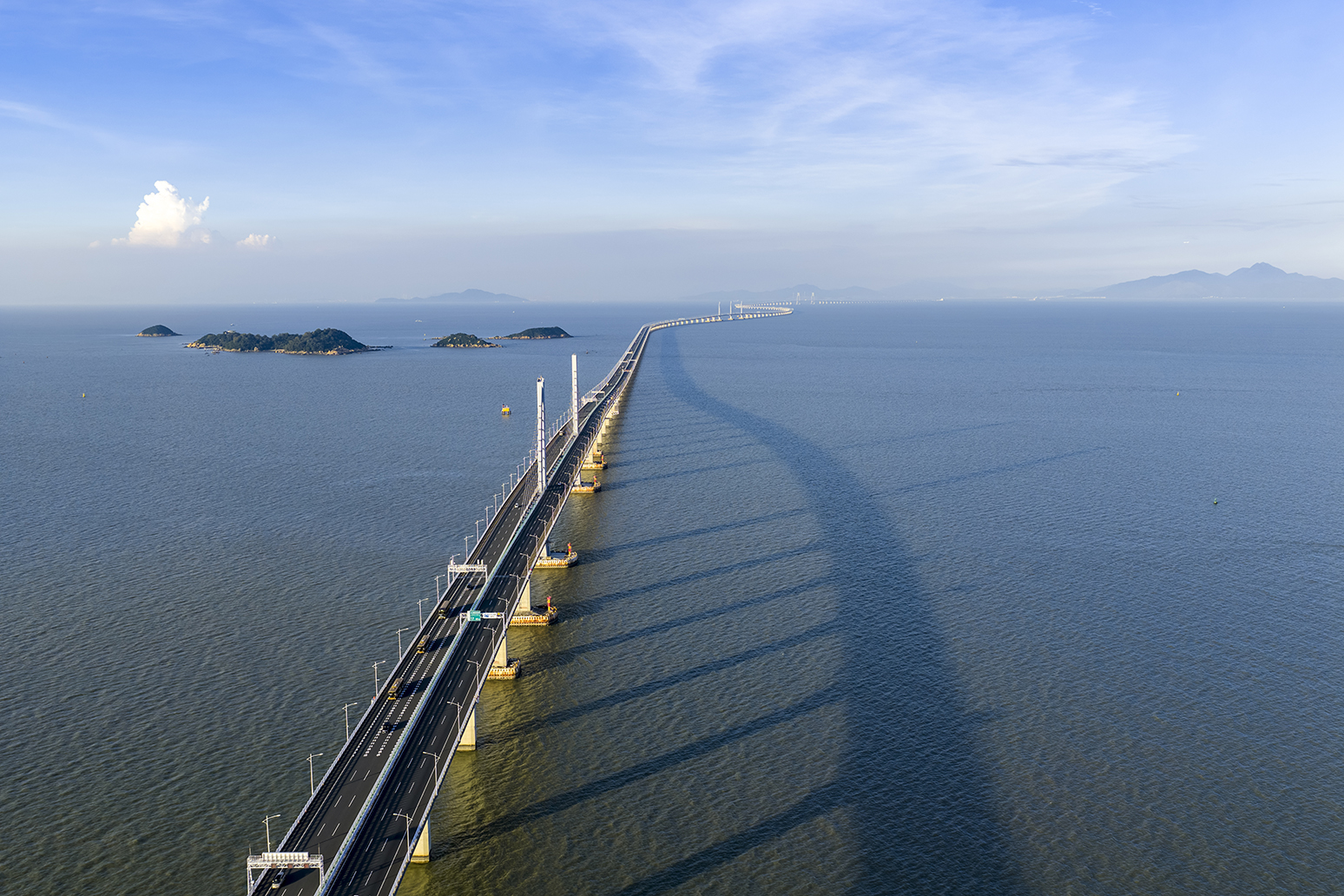
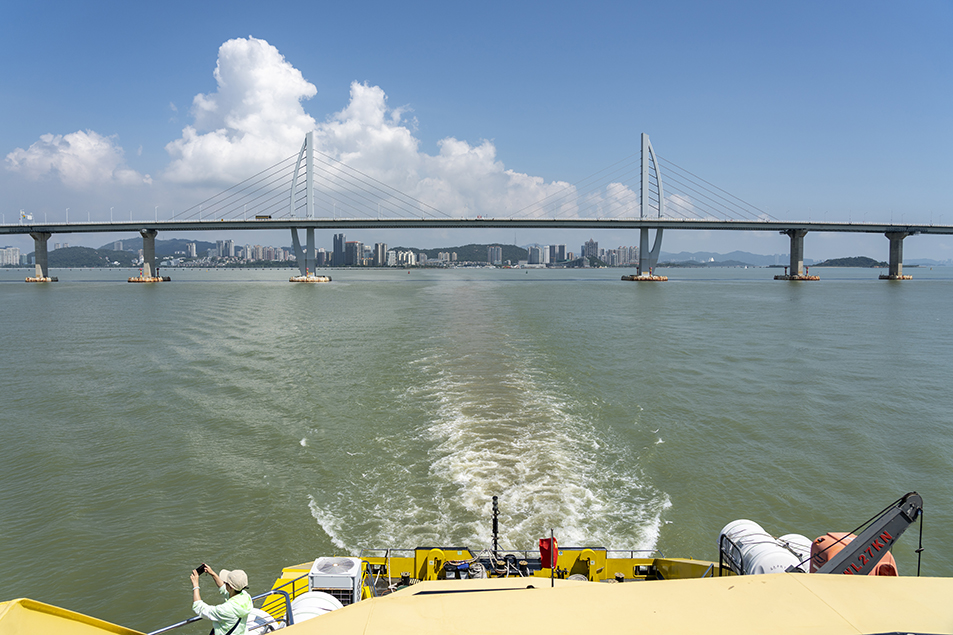
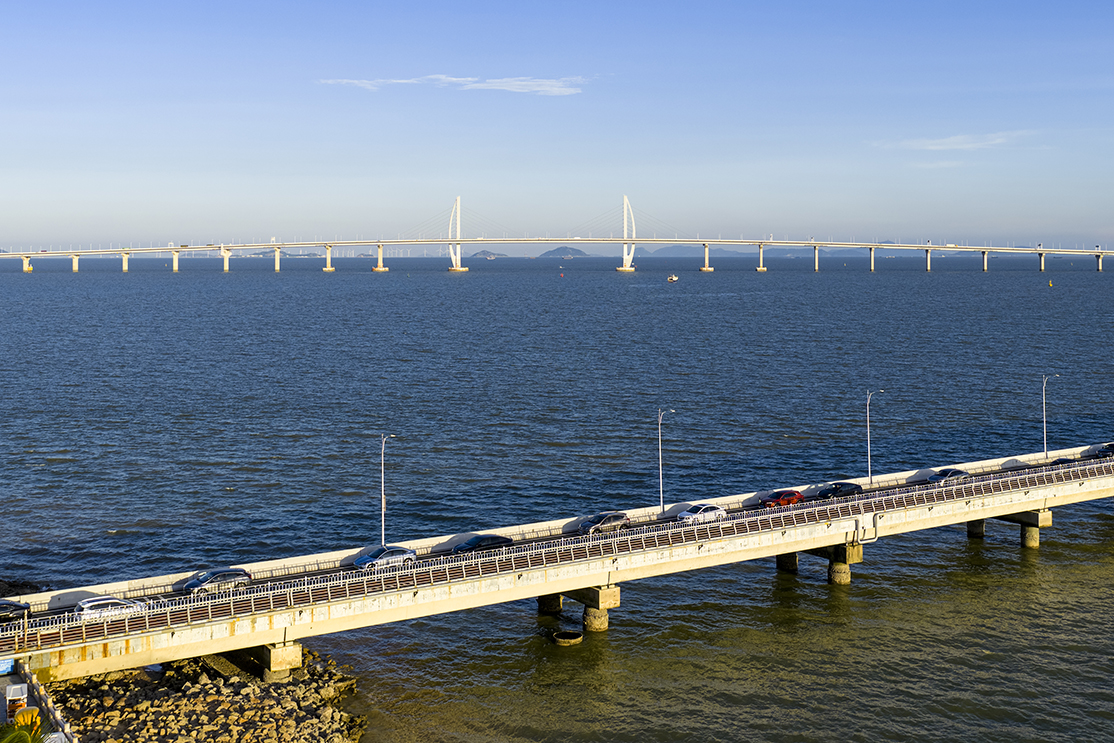
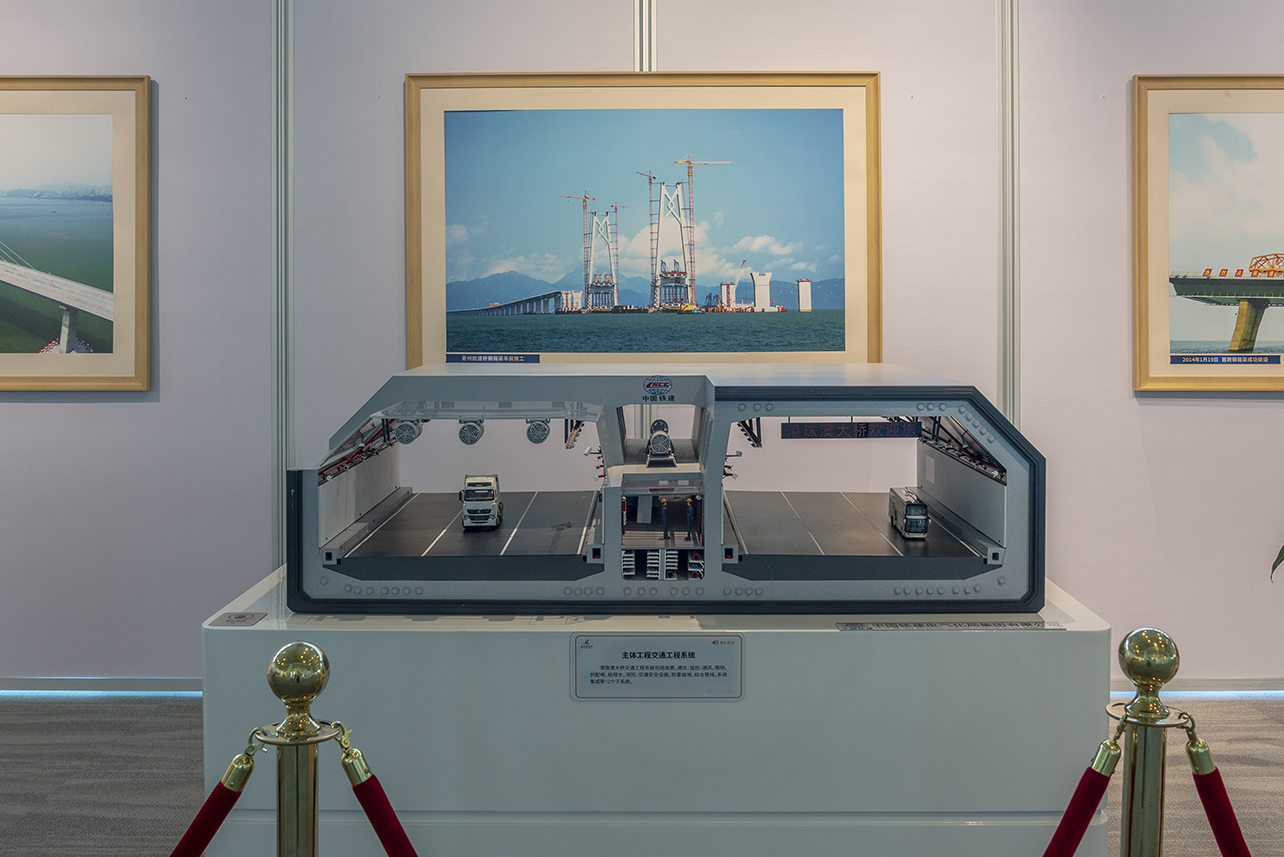
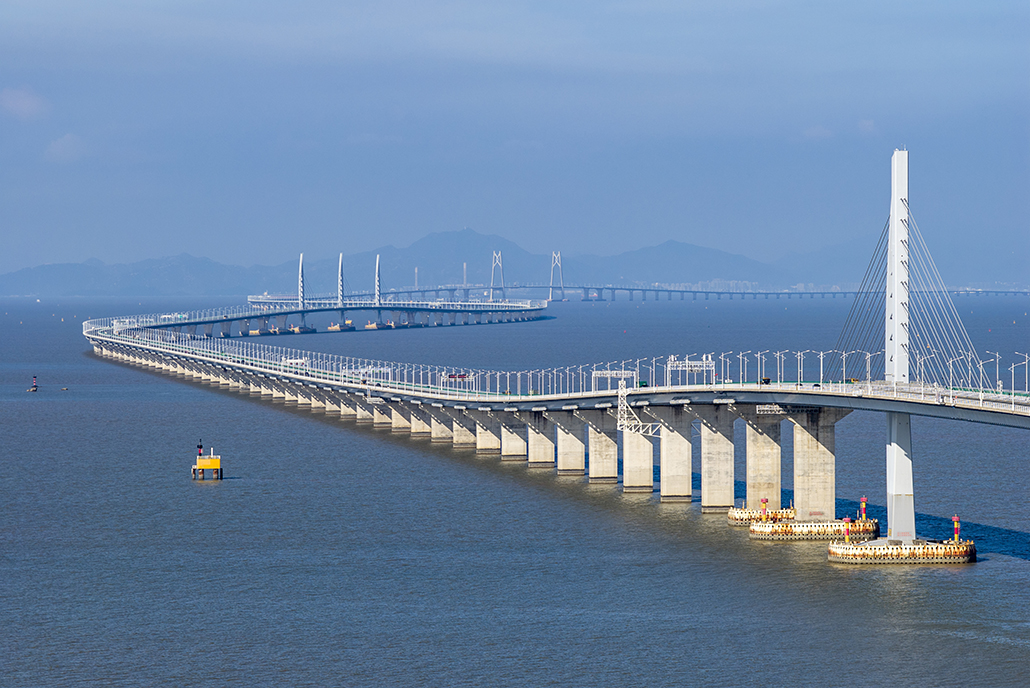
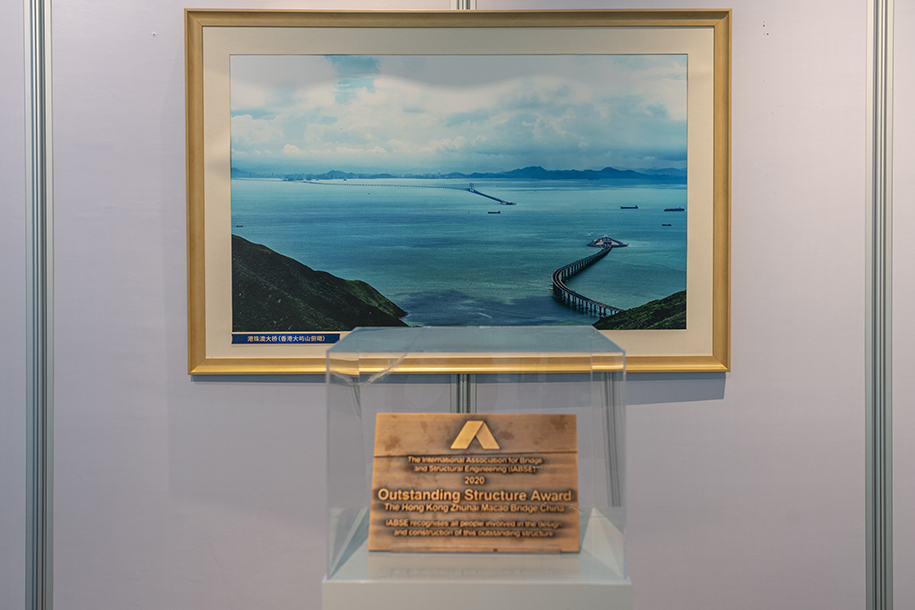
The Hong Kong-Zhuhai-Macao Bridge, a massive cross-sea passage connecting Hong Kong, Zhuhai, and Macao, is the world’s longest cross-sea bridge with a total length of 55 kilometres. It consists of three navigation bridges, an undersea tunnel and four artificial islands, with a total investment of 126.9 billion yuan (13.7 billion pounds). The construction began in December 2009 and took nine years to complete. By October 2025, the number of passengers traveling between Guangdong, Hong Kong and Macao via the Zhuhai Port of the bridge has exceeded 93.34 million, and the cumulative number of vehicles has exceeded 19.42 million.
During the bridge’s construction, at least 20 people died and more than 600 were injured, some seriously. The casualties were mainly caused by the high-risk offshore construction environment and multiple industrial accidents. A study by the Hong Kong Dolphin Conservation Society shows that between 2012 and 2017, the population of Chinese white dolphins declined by 40%, from 80 to 33. Land reclamation of artificial island has also severely impacted dolphins, with no sightings of them in northeastern Lantau Island for three years. According to the report Long-term Monitoring of the Population Dynamics of Chinese White Dolphins in the Lingdingyang of the Pearl River Estuary, after the construction of the Hong Kong-Zhuhai-Macao Bridge, the number of Chinese white dolphins dropped from 1,200 to 900, a 20% decrease. In the southern Lingdingyang waters overlapping with the bridge, only 301 white dolphins were recorded in 2017-2018, a decrease of approximately 30% and 33% compared to 431 in 2015-2016 and 450 in 2005-2006, respectively.