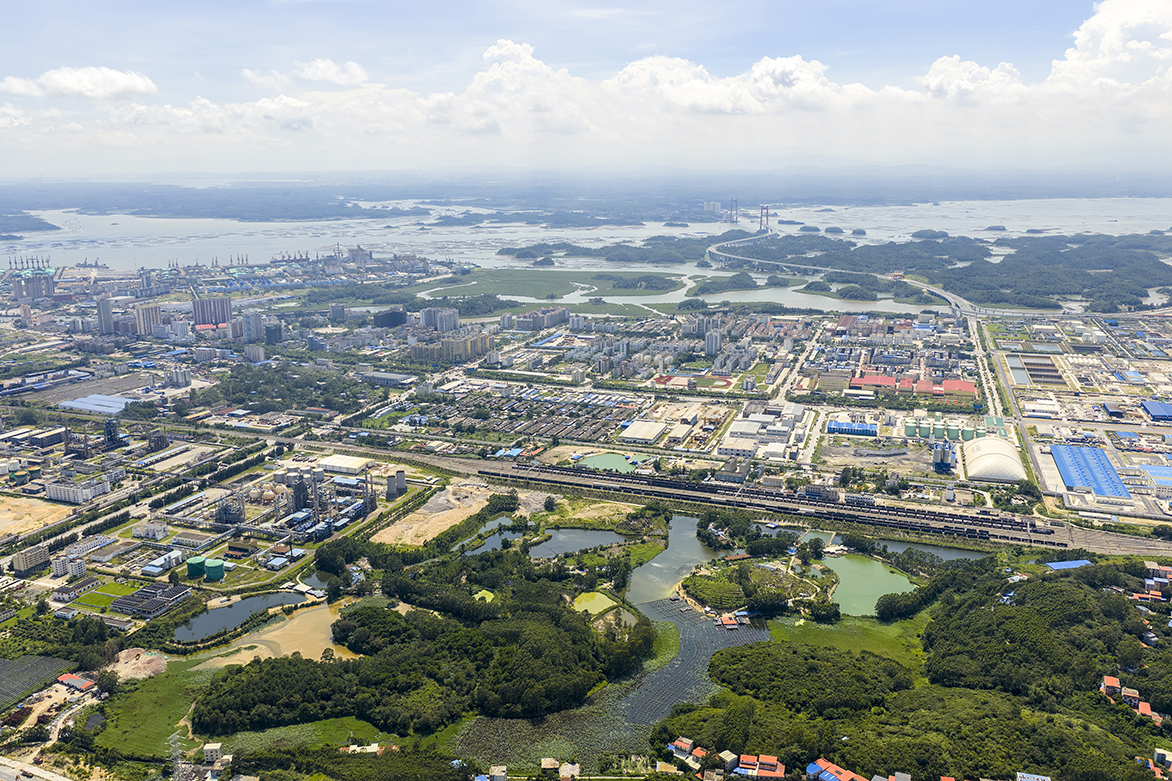
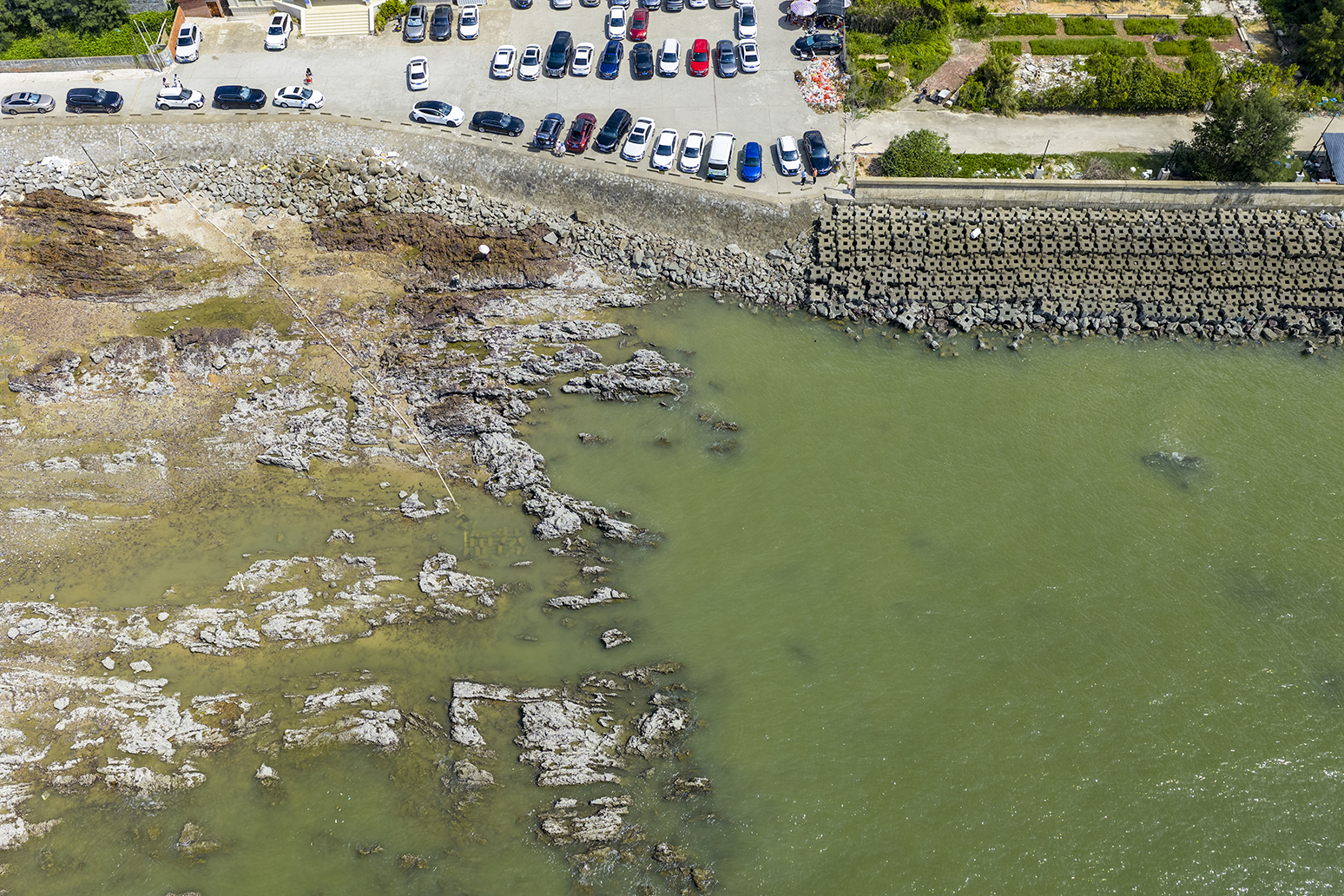
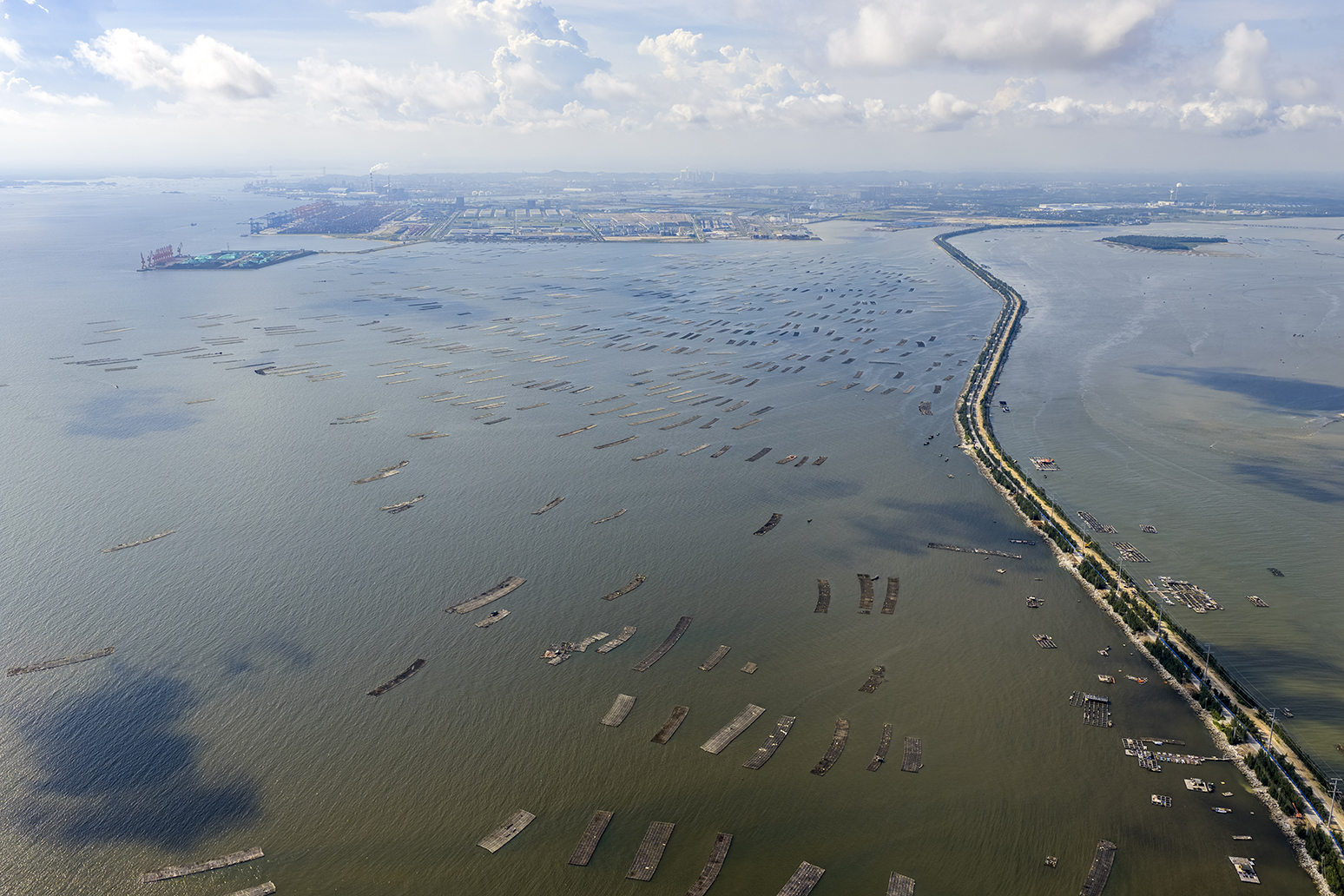
Beibu Bay is located in the northwestern part of the South China Sea in China, at 19°52.8’ north latitude and 107°49.0’ east longitude. It extends from the Leizhou Peninsula and the Qiongzhou Strait in the east, to Hainan Island in the southeast, to the Guangxi Zhuang Autonomous Region in the north, and to Vietnam in the west. It is a semi-enclosed bay, with its coastline jointly owned by China and Vietnam. Beibu Bay has a coastline of approximately 1,500 kilometres and a sea area of approximately 128,000 square kilometres. It has a generally good ecological environment, but also faces challenges such as nearshore pollution, mangrove degradation and biodiversity conservation.
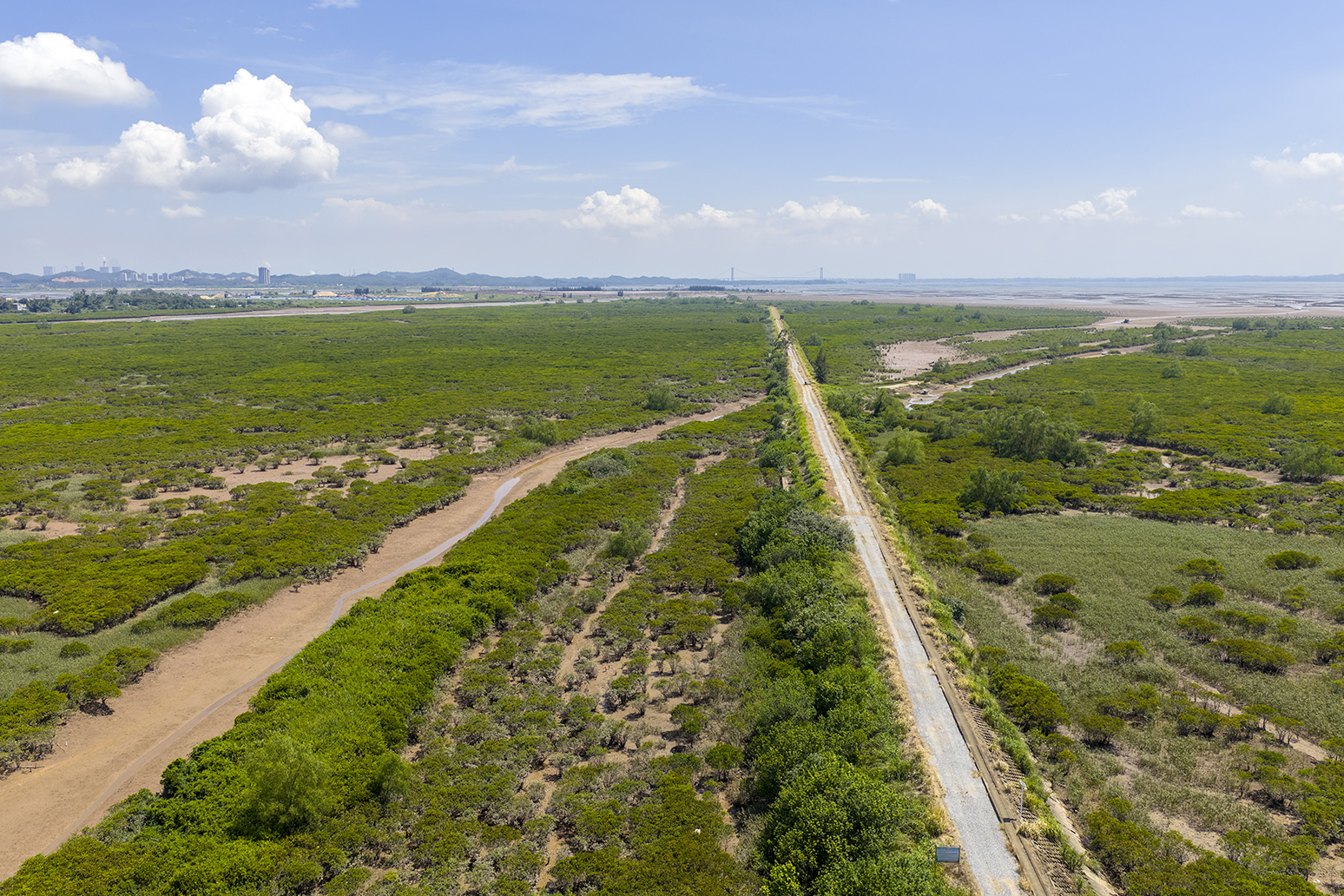
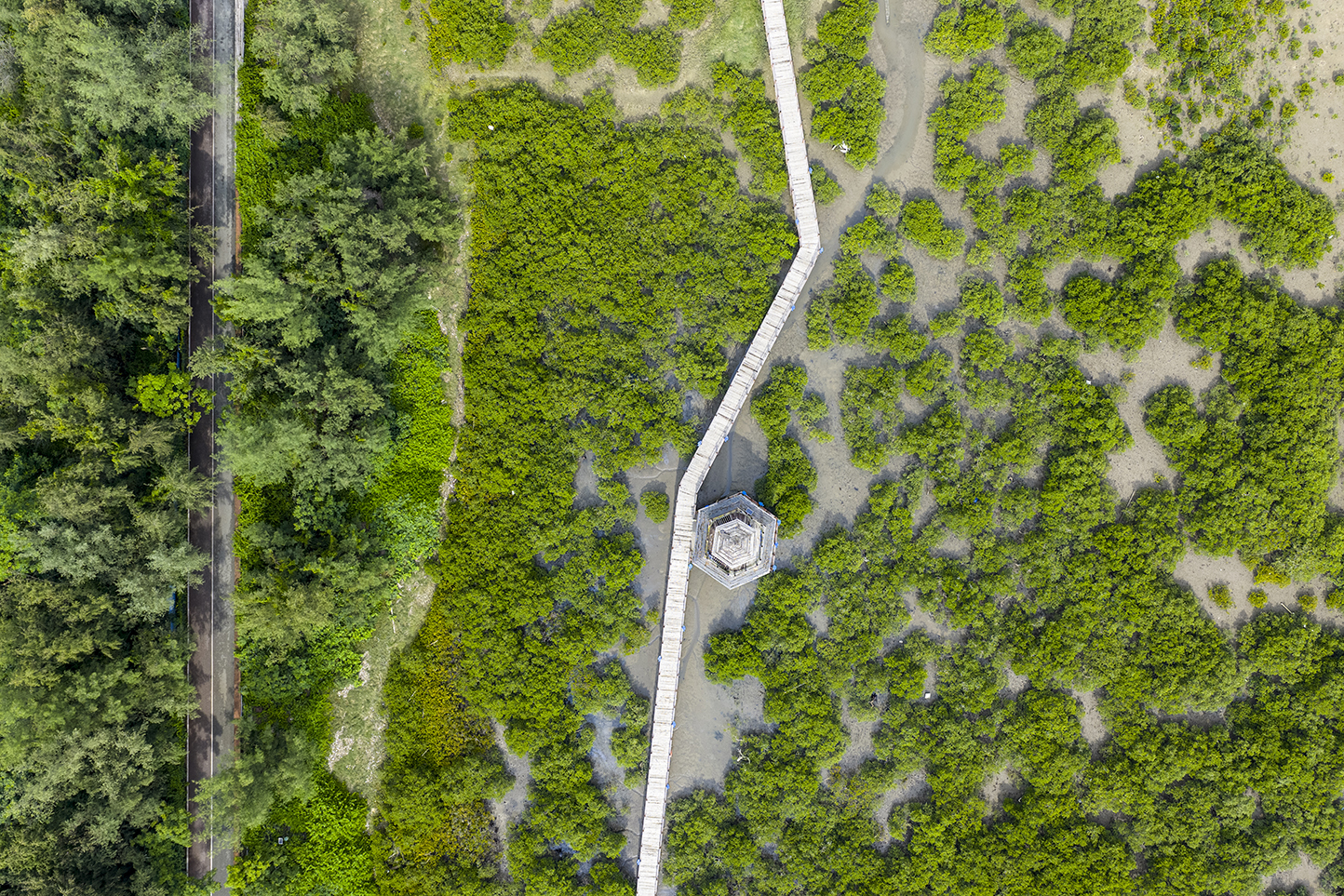
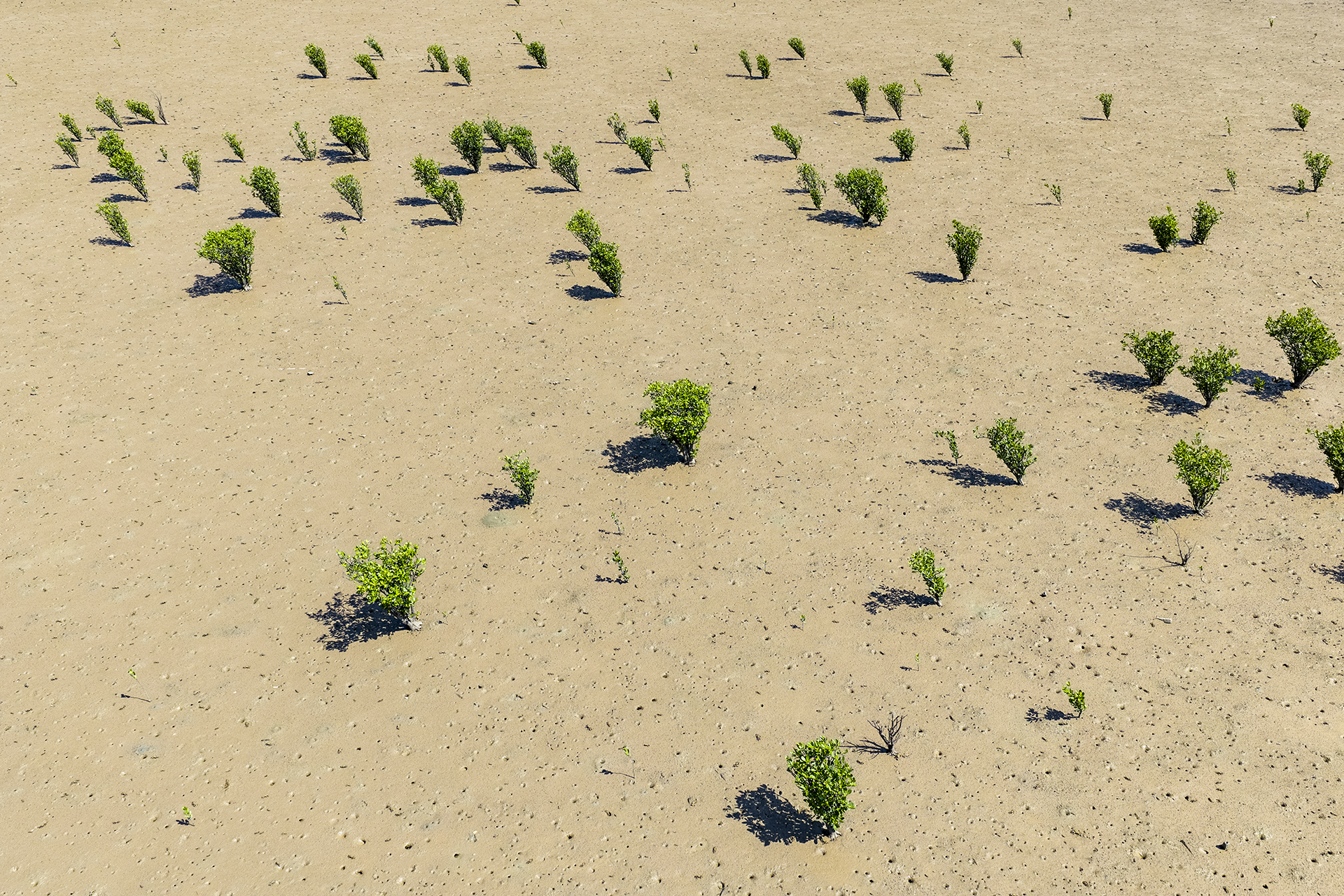
The mangrove forests of Beibu Bay have historically been very abundant, mainly distributed on the mudflats of Beihai City, Qinzhou City, and Fangchenggang City of Guangxi Zhuang Autonomous Region. For a long time, these mangroves have formed a natural green wall along the coast, effectively resisting the erosion of seawalls and land by typhoons and storm surges, protecting the farmland, villages and aquaculture ponds behind them. Their intricate root systems provide excellent spawning, feeding and nursery grounds for fish, shrimp, crabs and shellfish. Many migratory birds also inhabit and forage here, creating extremely high biodiversity. In the era of traditional agriculture and fishing, local residents coexisted harmoniously with the mangroves. They obtained firewood from the forest and fished for seafood, but on a limited scale, with a relatively small impact on the ecosystem.
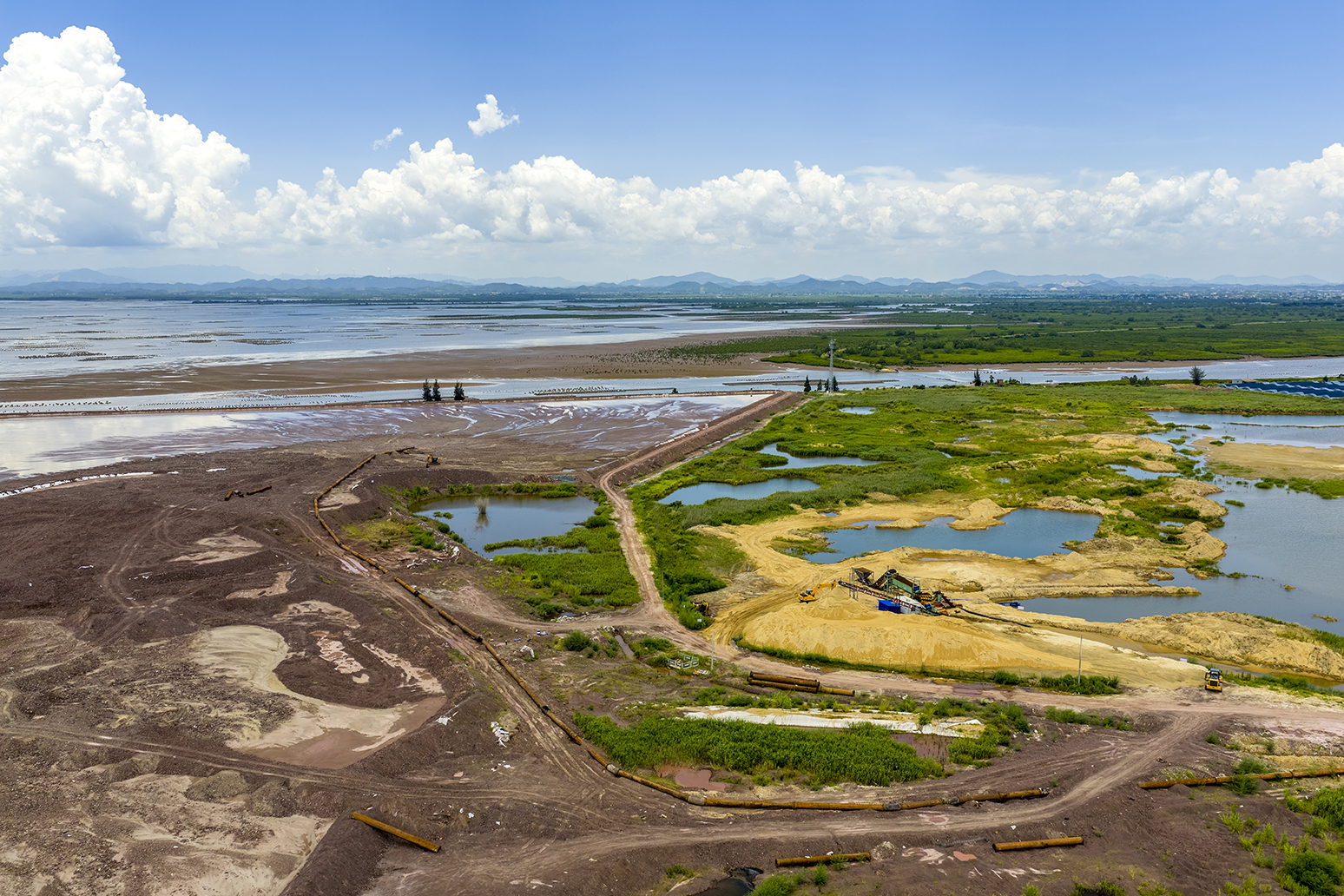
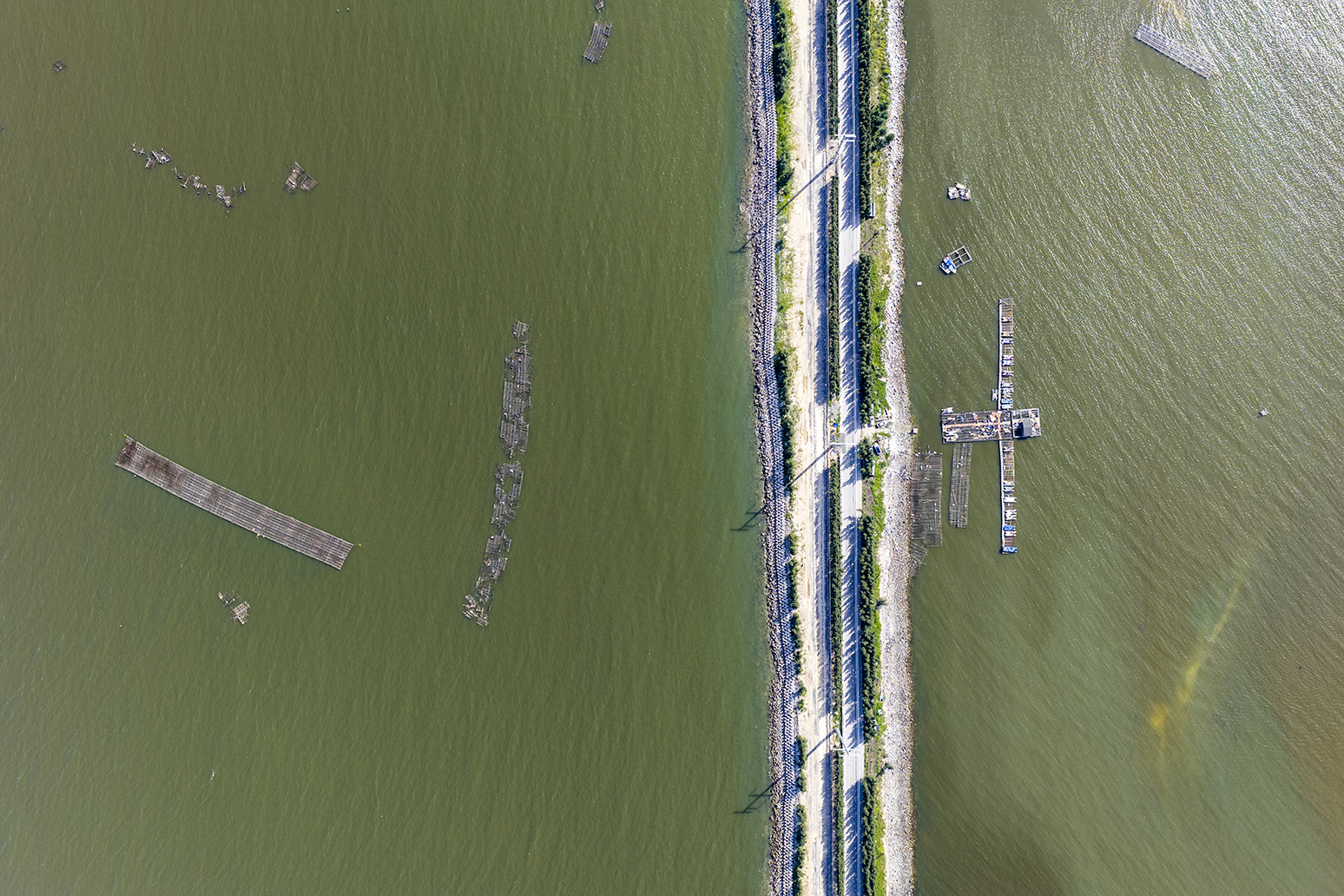
The large-scale destruction of mangroves in Beibu Bay mainly occurred from the 1950s to the late 1990s, especially after the 1980s when the pace of destruction accelerated with rapid economic development. In the 1960s and 70s, guided by the policy of ‘taking grain as the key link’, the government launched a large-scale land reclamation campaign, transforming mangrove mudflats into paddy fields or salt fields. However, much of the newly reclaimed land became severely salinised and thus unsuitable for grain cultivation, resulting in both ecological and economic losses. After the 1980s, with the development of the market economy, the demand for aquatic products such as shrimp boomed and brought extremely high economic benefits. Pond aquaculture became the main culprit in the destruction of mangroves. People cut down mangroves and dug aquaculture ponds, which was seen as a quick path to wealth at the time. Through land reclamation, large areas of mangroves were directly filled in and converted into land. According to historical data and satellite imagery, the mangrove area in Qinzhou City once decreased by more than 50%. Even without complete reclamation, large-scale coastal engineering projects such as roads and dikes, have fragmented large areas of mangroves into isolated patches, disrupting their ecological connectivity and affecting species migration and exchange. Since the beginning of the 21st century, particularly with the establishment of the China-ASEAN Free Trade Area and the Belt and Road Initiative, land reclamation activities in the Beibu Bay have entered a new stage dominated by industrialisation and urbanisation. Based on various reports and satellite imagery analysis, the area of land reclaimed in Beihai City, Qinzhou City, and Fangchenggang City in Guangxi Province alone likely exceeds 300 square kilometres, mainly concentrated in the industrial port areas of Qinzhou City and Fangchenggang City.
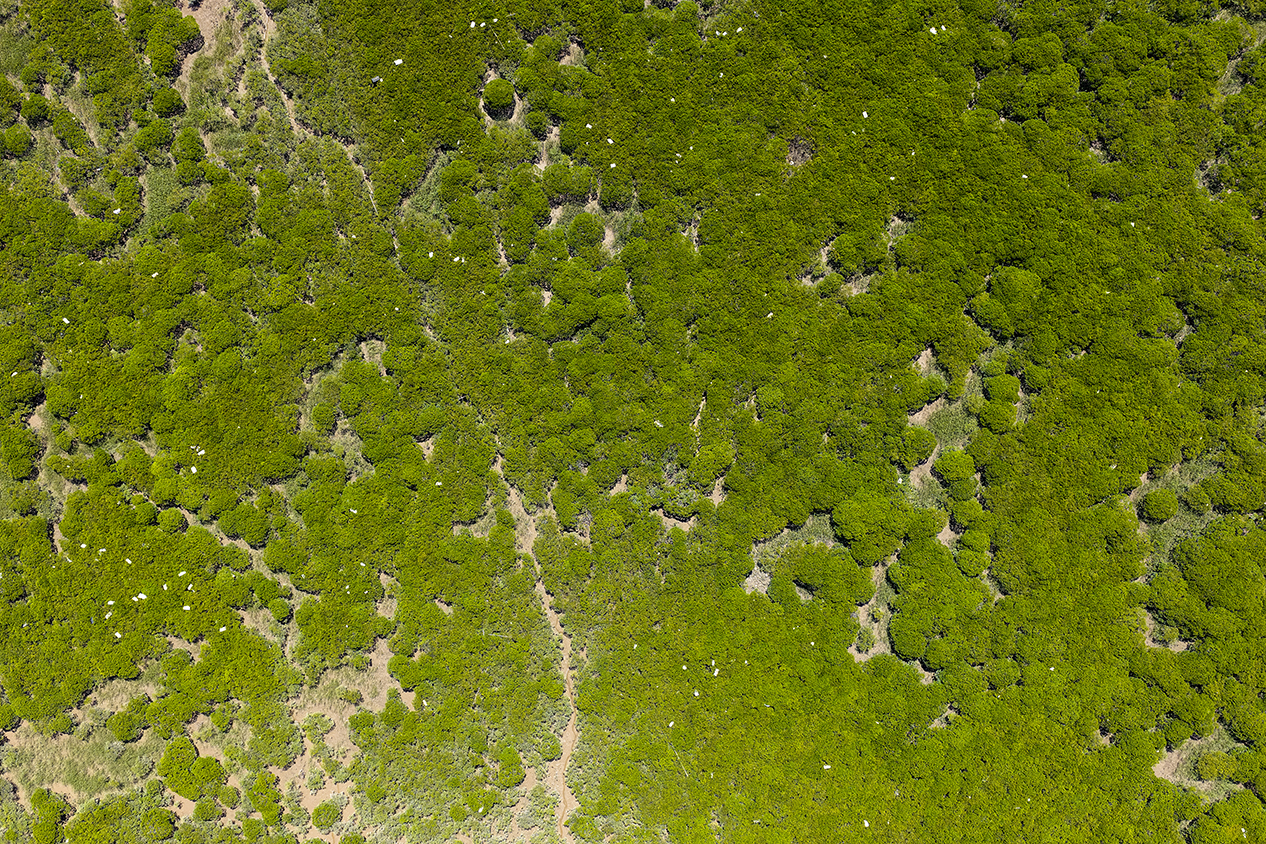
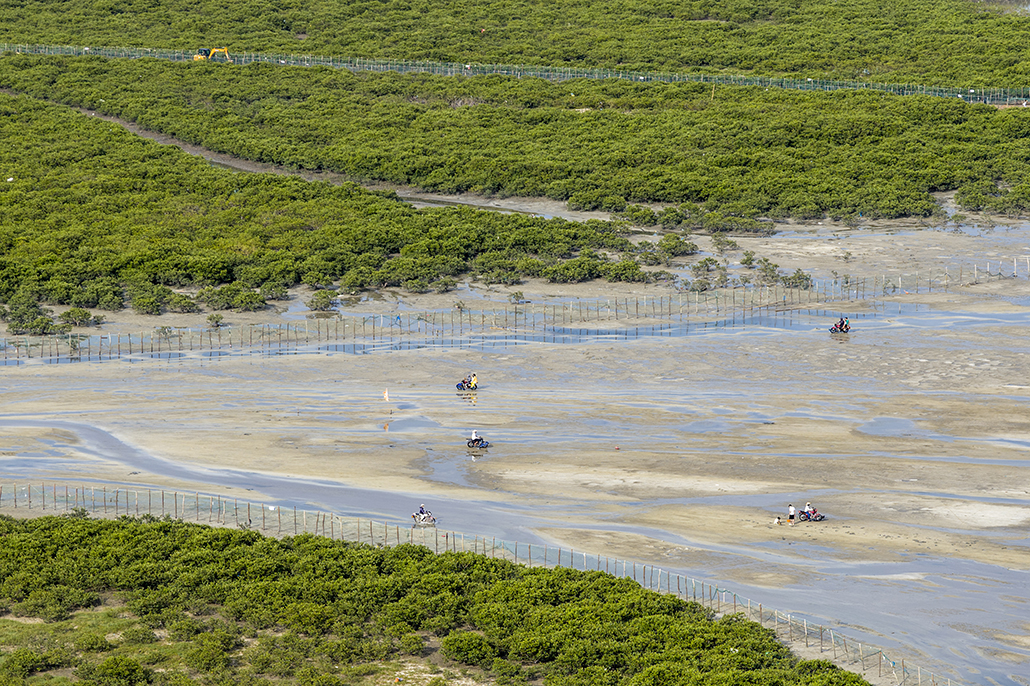
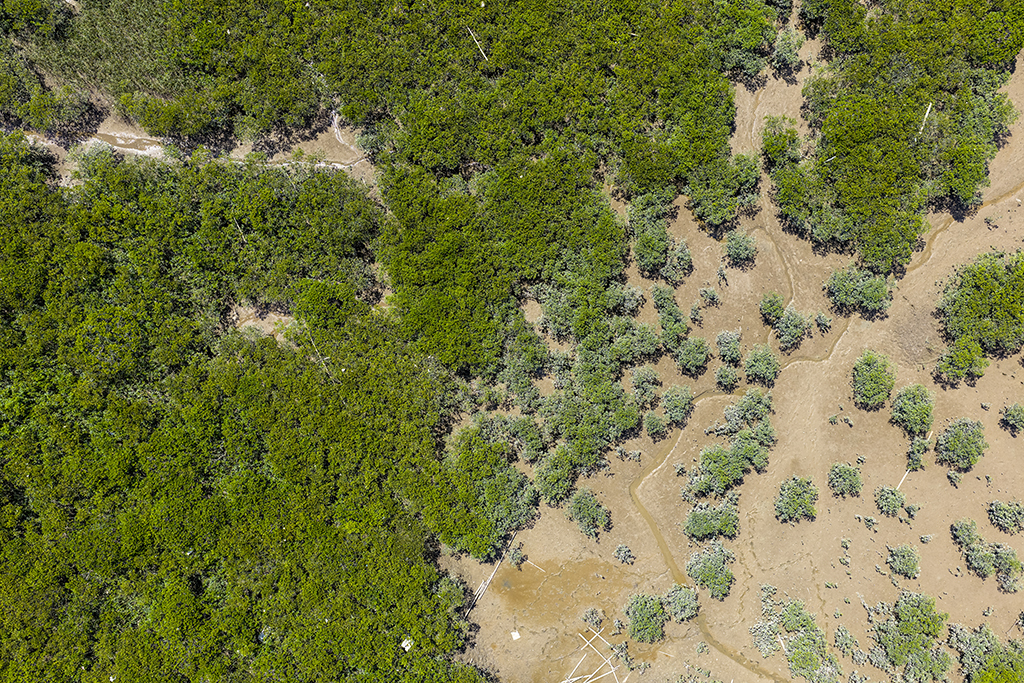
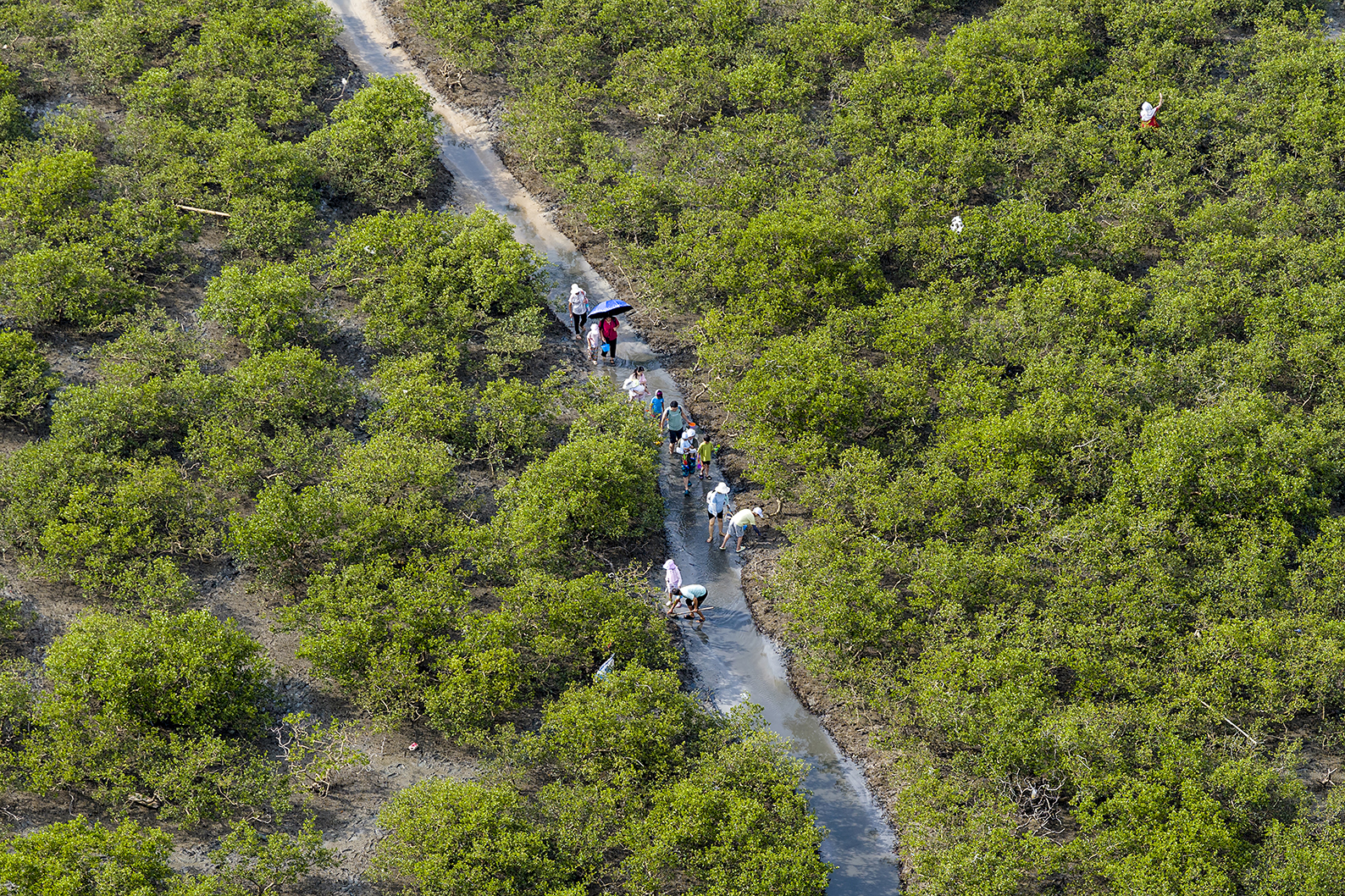
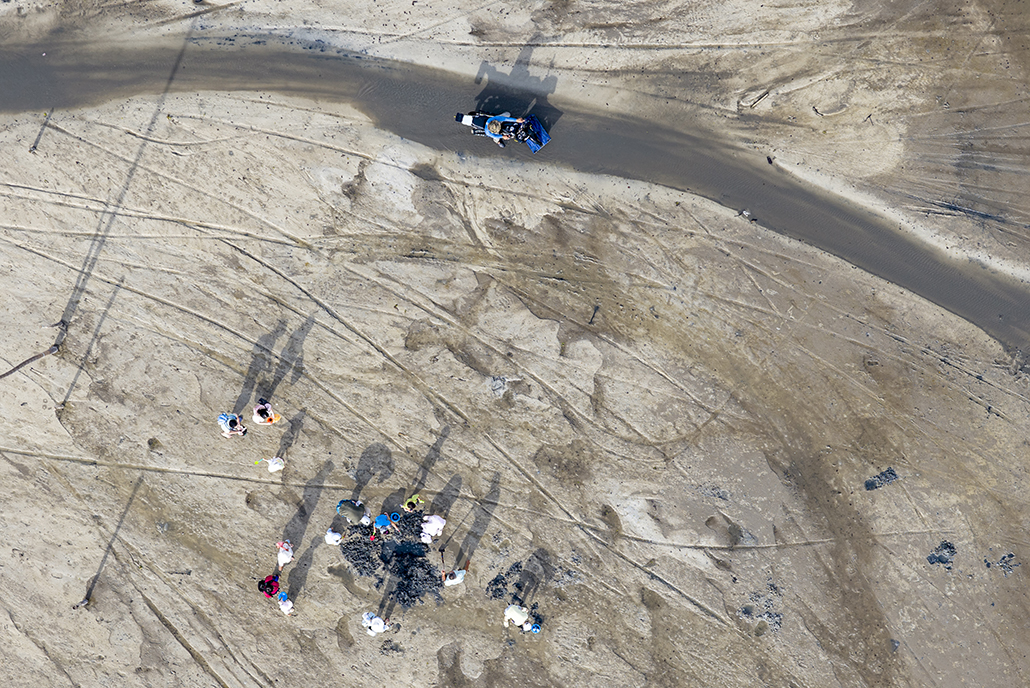
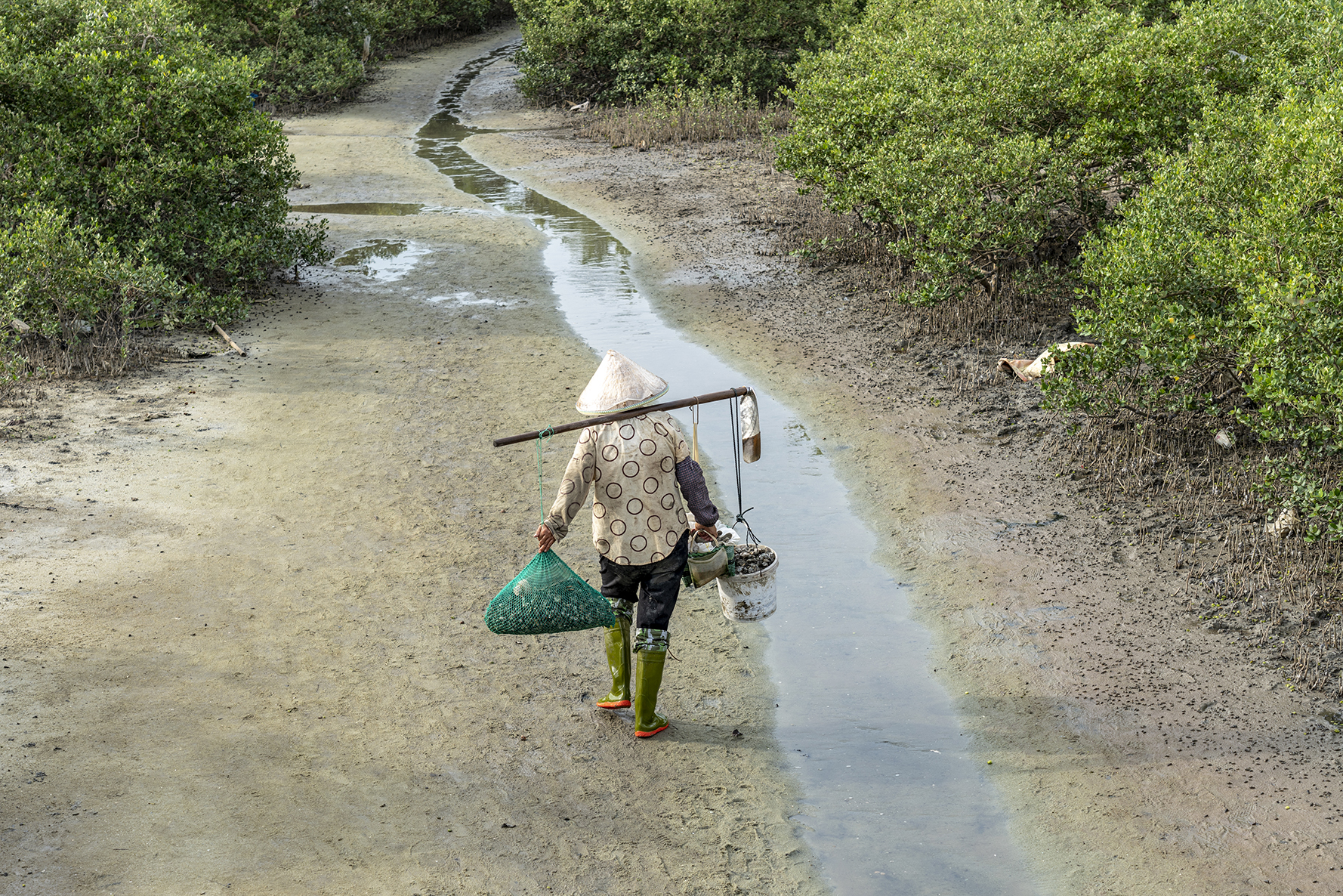
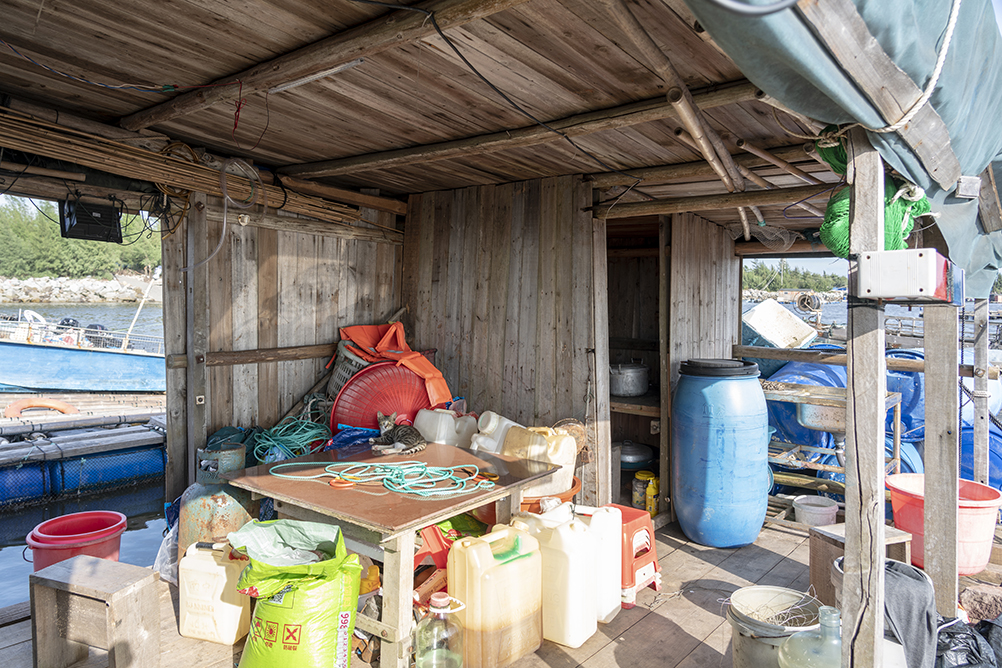
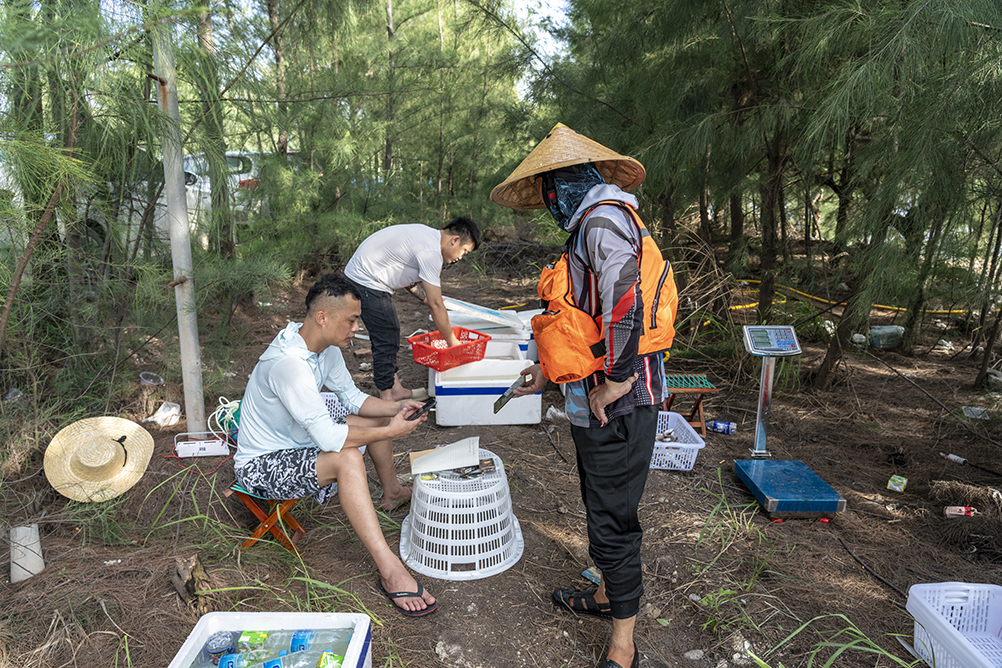
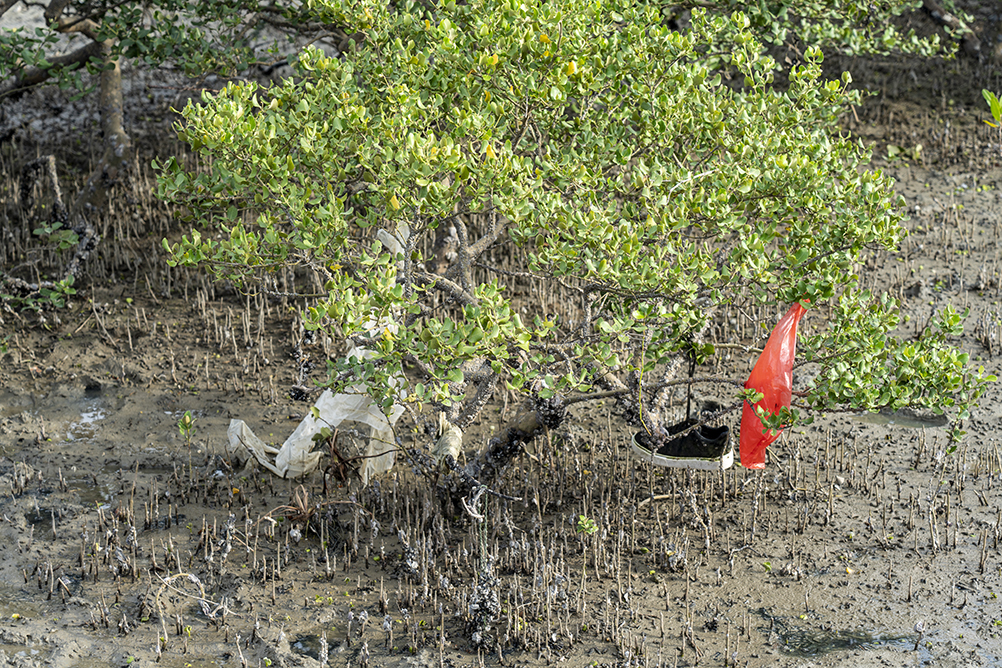
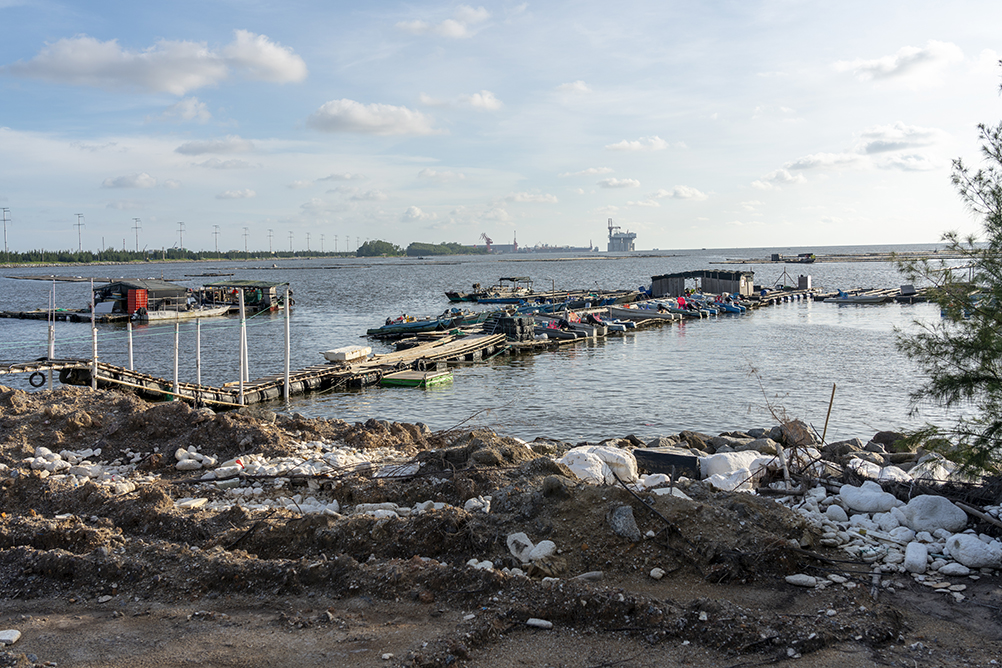
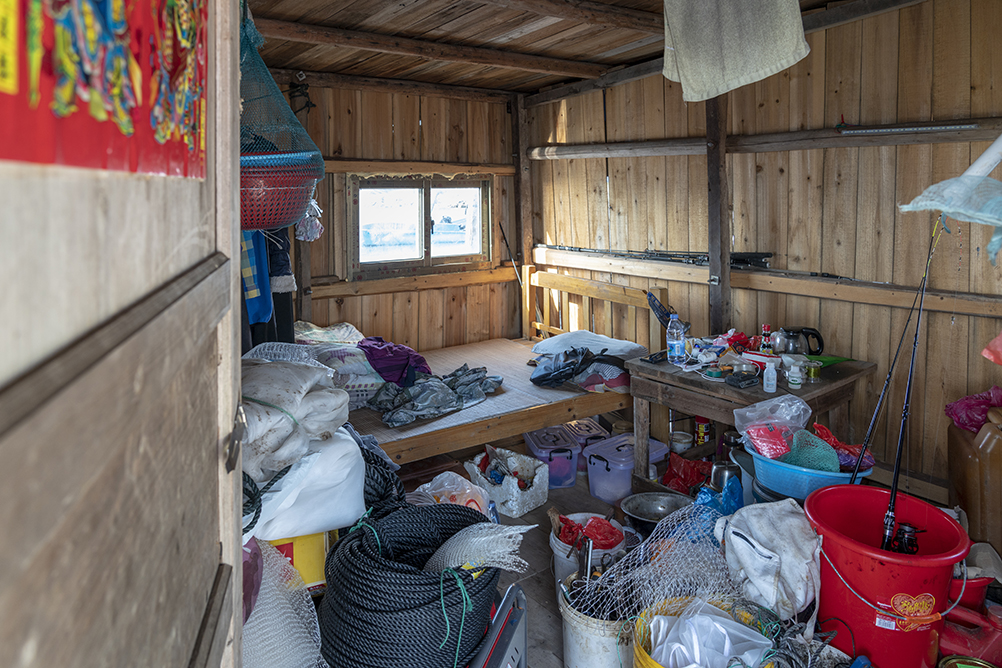
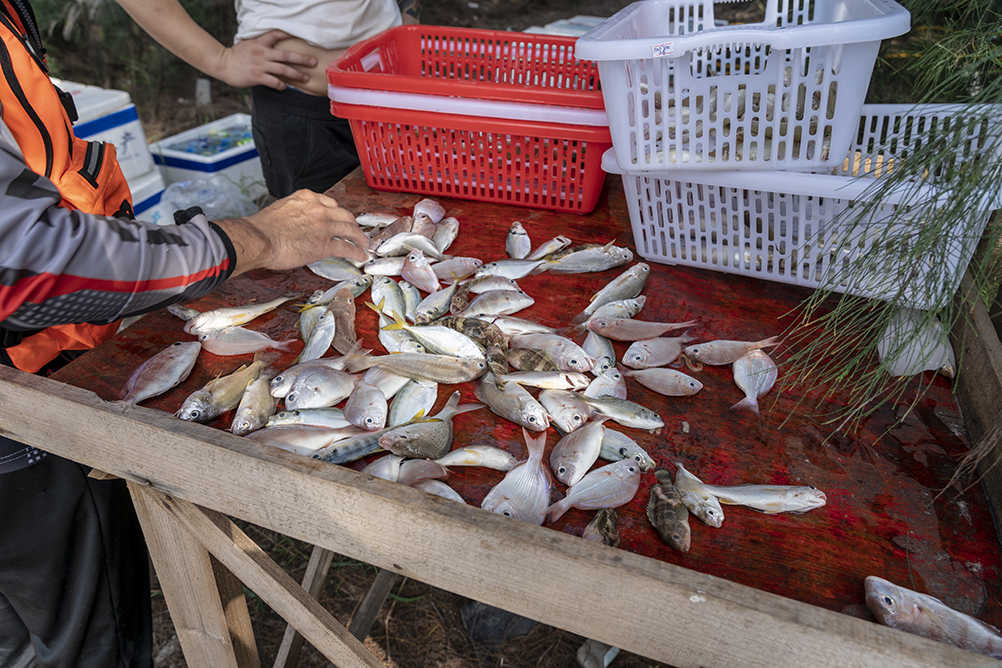
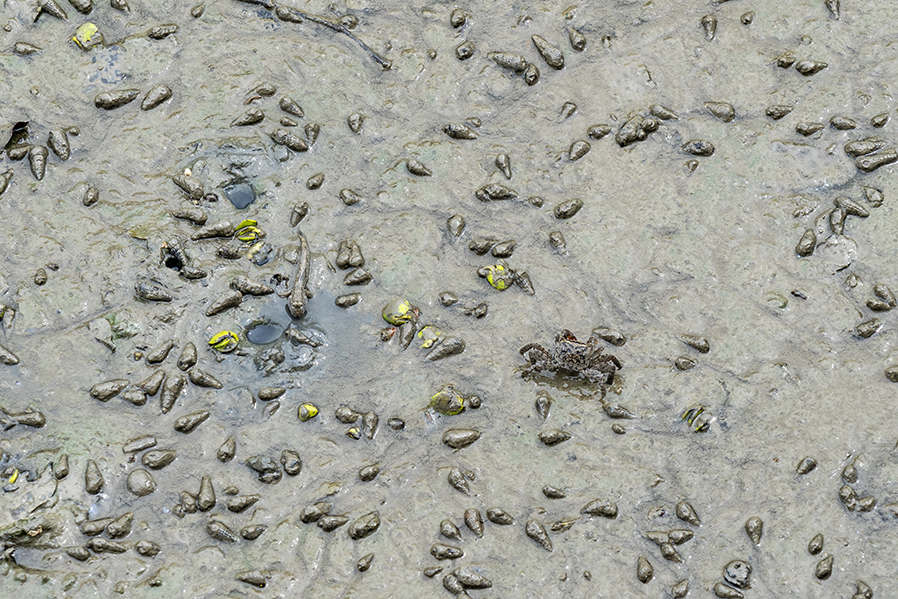
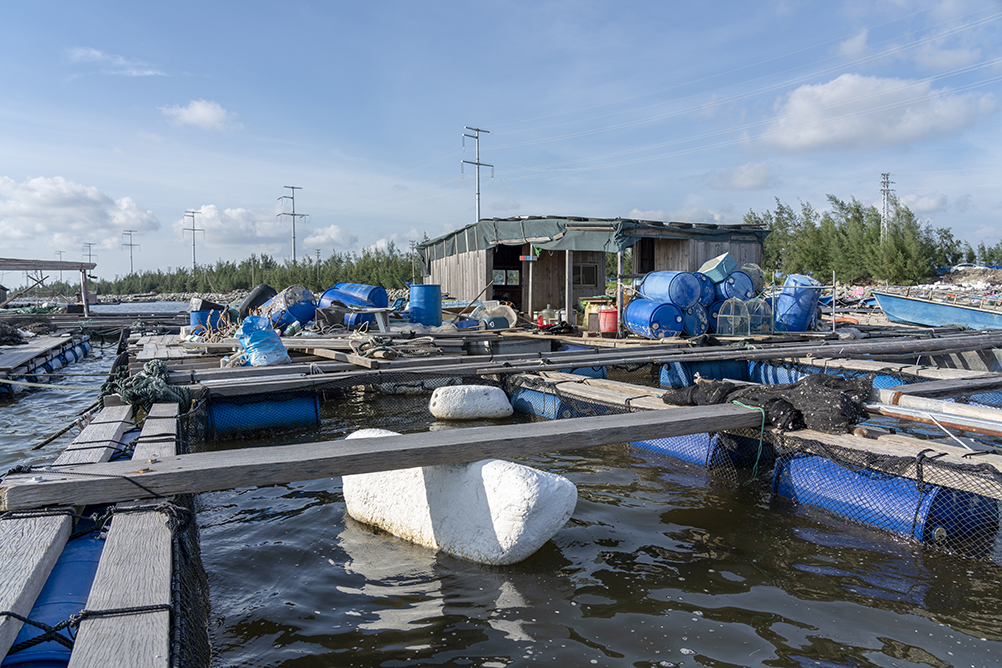
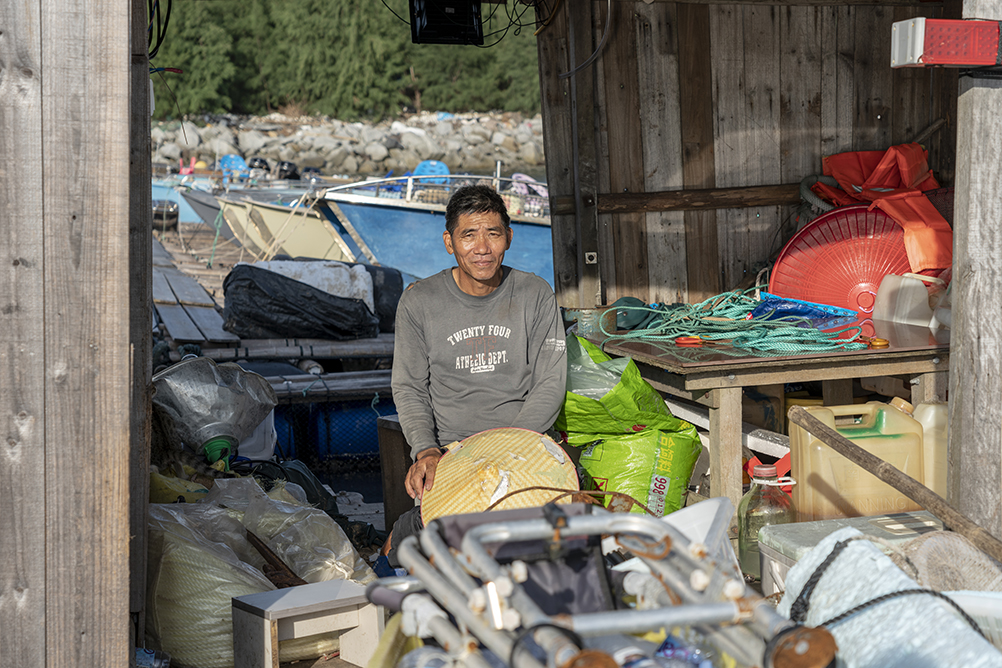
Today, the lives of local residents remain closely linked to mangroves. As shown below, local residents take tourists into the mangroves for a fee of 50-100 yuan (5.4-10.8 pounds) per person, with an additional 30 yuan (3.2 pounds) for a motorbike ride. Their activities include beachcombing, digging for mudskippers and fiddler crabs with shovels. Locals also collect conchs (Silver-mouthed monodont) from the mangroves and mudflats, and harvest mangrove fruits for cooking. They seem more concerned with making a living than with mangrove conservation. Mr. Gao owns a raft near Qinzhou Port, built from timber, foam, and plastic barrels. The raft has a wooden hut on top and several ponds for raising sea fish, while also providing mooring spots for sea anglers’ boats. He said anyone can bring materials to the coast to build a raft and then charge anglers a monthly boat maintenance fee of 200 yuan (21.5 pounds). He raises and sells sea fish on his raft, and with regular fishing trips, his annual income can reach around 200,000 yuan (21500 pounds). Waste generated during the raft construction process is dumped on the coast; hundreds of rafts are scattered along the coast, some of which have already rotted. These discarded waste may eventually flow into the ocean. As seawater gradually submerges mangroves, marine debris (such as white foam and the remains of abandoned rafts) inevitably becomes intertwined with them, as shown below in the third row.